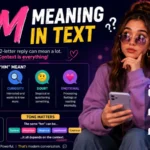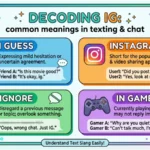
… meaning in text is something many people search after seeing three simple dots in a message. Imagine getting a text that says:
“I mean… okay.”
“So… you’re really doing that?”
“…”
Suddenly, you’re wondering what those three dots actually mean. Is the person uncomfortable? Are they upset? Are they judging you, thinking carefully, or simply leaving the conversation hanging?
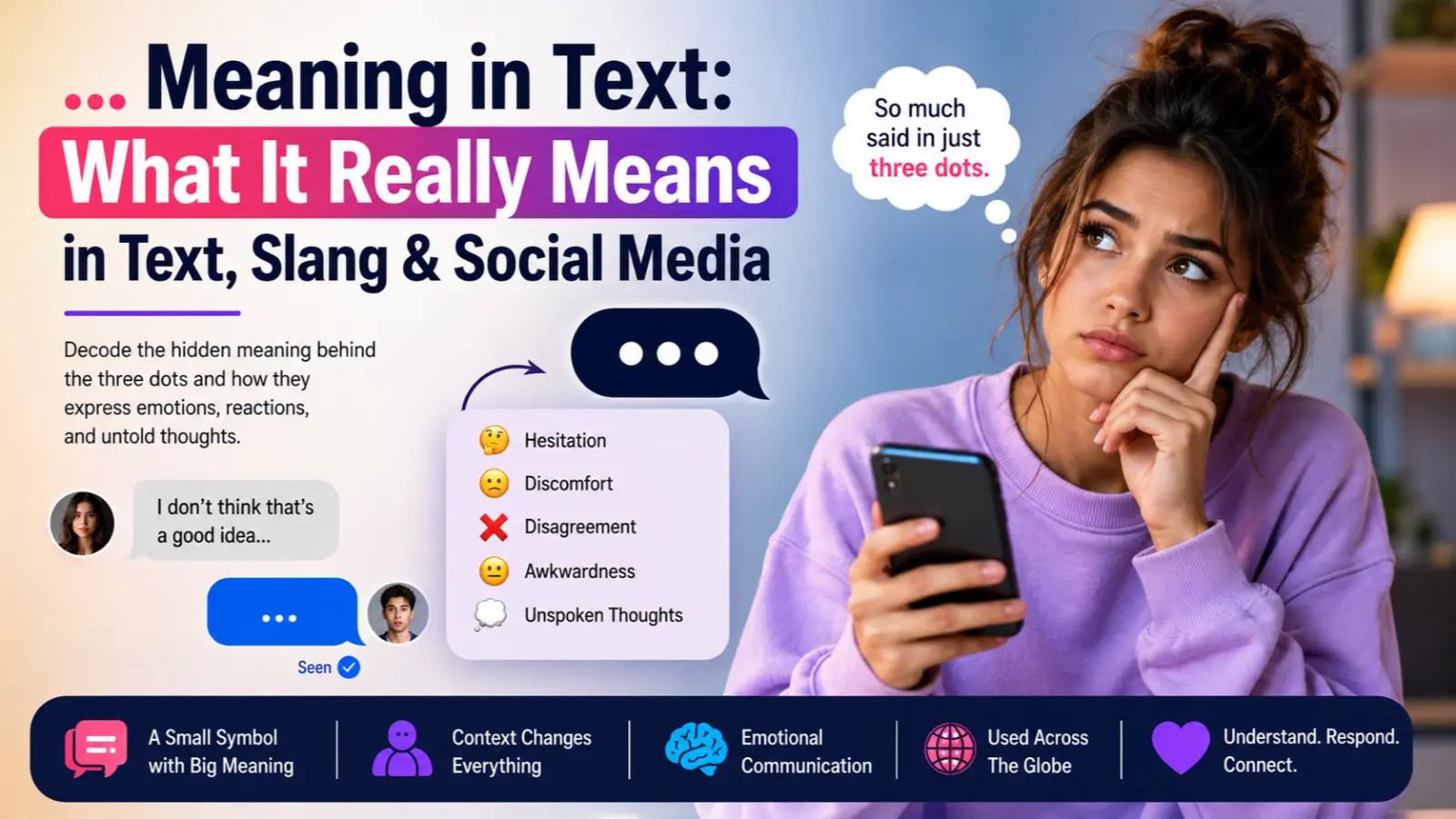
Unlike many internet slang terms, … (ellipsis) doesn’t have one fixed definition. Its meaning changes with emotion, context, and the relationship between the people chatting. Sometimes it creates suspense. Sometimes it signals awkward silence. Other times it quietly expresses discomfort, disagreement, hesitation, disappointment, or emotional distance.
People search … meaning in text because they’ve experienced that confusing moment when a simple punctuation mark carries more emotion than an entire sentence.
Let’s break it down in a way that actually makes sense.
Quick Definition
The … meaning in text usually depends on the conversation. It often represents an unfinished thought or an emotional pause instead of simply ending a sentence.
It may be used for:
- Noticing something unusual
- Reacting without saying everything
- Giving a compliment with suspense
- Showing disagreement politely
- Making a joke
- Calling someone out
- Flirting playfully
- Expressing awkwardness or discomfort
- Showing disappointment
- Creating dramatic effect
Example:
Alex: “I forgot your birthday…”
Taylor: “…”
That response says much more than words could.
At its core, the ellipsis often communicates emotion that someone doesn’t want to explain directly.
Noticing Meaning
Sometimes the three dots simply show that someone noticed something surprising.
Example:
“I saw your new profile picture…”
Here, the dots invite curiosity without fully explaining the reaction.
The emotional tone feels observant rather than direct.
Reacting Meaning
Many people use … as a reaction instead of typing an entire sentence.
Example:
“You actually quit your job?”
“…”
The silence becomes the reaction itself.
Complimenting Meaning
When flirting or complimenting, the ellipsis creates suspense.
Example:
“You look… amazing.”
The pause makes the compliment feel more thoughtful and emotional.
Insulting Meaning
The same punctuation can soften criticism.
Example:
“Interesting choice…”
Instead of openly insulting someone, the speaker lets the silence carry the judgment.
Joking Meaning
Internet humor often depends on timing.
Example:
“You cooked dinner?”
“…We ordered pizza.”
The pause makes the joke funnier.
Exposing Meaning
Sometimes the ellipsis quietly points out something obvious.
Example:
“You said you’d never text them again…”
The unfinished sentence lets the other person connect the dots.
Flirting Meaning
Flirty conversations often use pauses.
Example:
“So… when are you taking me out?”
The dots create playful anticipation.
Emotional Expression Meaning
Perhaps the most common use is emotional expression.
Examples include:
- discomfort
- hesitation
- disappointment
- awkwardness
- uncertainty
- sadness
Sometimes saying less communicates more.
What Does … Mean in Text?
The … meaning in text usually represents an emotional pause rather than missing words.
Depending on context, it can mean:
- “I’m thinking.”
- “I’m uncomfortable.”
- “I’m disappointed.”
- “I’m waiting for you to understand.”
- “I’m speechless.”
- “I’m not sure what to say.”
- “This conversation feels awkward.”
That’s why context matters far more than punctuation alone.
Origin & Background
The ellipsis existed in writing long before smartphones. Traditionally, writers used it to show omitted words or unfinished thoughts.
As texting became popular, people discovered something interesting.
Those three dots could communicate feelings.
Instead of writing long emotional paragraphs, users simply typed:
“…”
Platforms like MSN Messenger, Facebook Messenger, WhatsApp, Twitter, TikTok, Discord, Snapchat, and Instagram helped transform the ellipsis into emotional shorthand.
TikTok creators frequently use it in captions to express second-hand embarrassment, disbelief, awkwardness, or silent judgment.
Memes also turned … into a universal symbol for “I don’t even know what to say.”
Internet language evolves incredibly fast, and punctuation has become part of emotional communication—not just grammar.
Real-Life Conversations
Sarah: “I accidentally sent the screenshot to him.”
Emma: “…”
That silence shows shock.
Instagram DM
“I finally texted my crush…”
“…and?”
The pause builds excitement.
TikTok Comments
“Nobody:
Me at 3 AM…”
The dots create comedic timing.
Text Messages
“I’m outside.”
“…Already?”
The pause shows surprise.
Group Chat
“I deleted the project.”
“…”
Everyone instantly understands the tension.
The emotional pattern is simple.
The ellipsis lets readers imagine the missing emotion themselves, making conversations feel more natural and expressive.
Emotional & Psychological Meaning
The ellipsis often protects emotions.
Instead of arguing, someone pauses.
Instead of admitting disappointment, they leave silence.
Of sounding rude, they allow readers to interpret the feeling.
Psychologically, people use … when emotions are difficult to express directly.
It may signal:
- emotional awareness
- uncertainty
- attraction
- embarrassment
- sarcasm
- disappointment
- passive disagreement
- emotional restraint
Imagine two friends.
One cancels dinner five minutes before meeting.
The other replies:
“…It’s okay.”
Technically, they said everything was fine.
Emotionally?
Not really.
Those three dots reveal the disappointment hidden between the words.
That’s the deeper psychology behind it.
Usage in Different Contexts
Social Media
Creators use … to build suspense, humor, or dramatic effect.
Example:
“When you realize it’s Monday…”
Friends & Relationships
Among close friends, it often expresses playful disbelief.
Example:
“You forgot again…”
Work or Professional Settings
Using … at work may appear passive-aggressive.
Instead of:
“…”
Say:
“Could you clarify?”
Professional communication benefits from clarity.
Casual vs Serious Tone
Friends usually interpret the ellipsis emotionally.
Strangers may misunderstand it.
Context completely changes its meaning.
When NOT to Use It
Avoid relying on the ellipsis when communicating in:
- business emails
- job interviews
- customer support
- academic writing
- emotional conflicts
- conversations with older audiences unfamiliar with texting culture
- international communication where tone may be misunderstood
In these situations, direct language reduces confusion.
Context protects meaning.
Common Misunderstandings
Many people assume … always means someone is angry.
That’s incorrect.
Misunderstanding 1:
“It always means silence.”
Actually, it often represents emotion.
Misunderstanding 2:
“It’s always rude.”
Many people simply use it while thinking.
Misunderstanding 3:
“It means the conversation ended.”
Sometimes it’s an invitation for someone else to continue talking.
Misunderstanding 4:
“It always shows sarcasm.”
Tone depends entirely on context.
Comparison Table
| Expression | Meaning | Tone | Usage Context |
|---|---|---|---|
| … | Pause, hesitation, discomfort | Emotional | Texting |
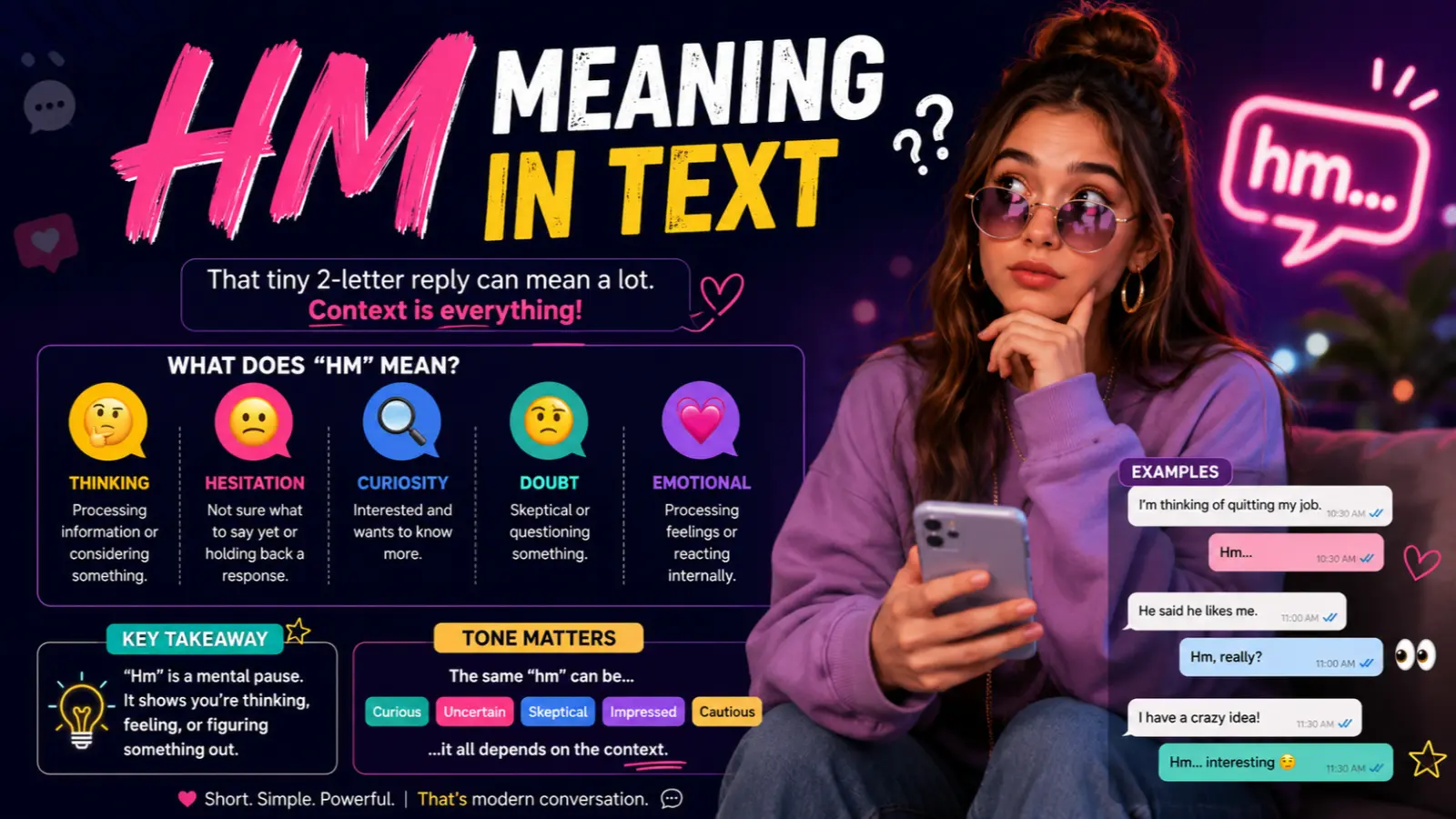
| Hmm | Thinking | Curious | Conversations |
| LOL | Laughter | Friendly | Casual chats |
| Oof | Sympathy or awkwardness | Emotional | Gaming & social media |
| Bruh | Disbelief | Casual | Friends |
| 😶 | Speechless | Quiet | Messaging |
Although these expressions all communicate emotion, the ellipsis is unique because it lets readers fill in the emotional gap themselves.
Variations & Types
Common variations include:
Single Ellipsis
“…”
The standard emotional pause.
Long Ellipsis
“………”
Adds dramatic tension.
Ellipsis with Emoji
“… 😅”
Shows awkward laughter.
Ellipsis with Question Marks
“…?”
Confused disbelief.
Ellipsis with Exclamation
“…!”
Unexpected surprise.
Meme Version
“So… yeah.”
Often used ironically.
Tiny changes create completely different emotional signals.
How to Respond When Someone Uses It
Casual Replies
- “What’s on your mind?”
- “Go ahead.”
Funny Replies
- “Those dots are judging me.”
- “Finish the sentence!”
Mature Replies
- “I feel like something’s bothering you.”
- “Want to talk about it?”
Respectful Replies
- “Take your time.”
- “I’m listening.”
Matching the other person’s emotional energy usually creates better conversations than reacting defensively.
Regional & Cultural Usage
Western Culture
People frequently use … to express sarcasm, suspense, or awkwardness.
Asian Culture
Many users combine the ellipsis with polite language to soften disagreement.
Middle Eastern Culture
It often appears in emotional conversations where direct confrontation is avoided.
Global Internet Usage
Thanks to TikTok, Instagram, Discord, and messaging apps, the ellipsis has become almost universally recognized.
Even across cultures, people understand that silence often communicates emotion.
Generational Differences
Gen Z
Uses … for irony, awkward humor, emotional pauses, and memes.
Millennials
Often use it while thinking or continuing conversations naturally.
Older Generations
Many simply use it as punctuation, without intending emotional meaning.
Language reflects digital identity as much as grammar.
Is It Safe for Kids?
Generally, yes.
The ellipsis itself is harmless.
However, children may misunderstand emotional silence during online conversations.
Parents can help by teaching that punctuation does not always reveal someone’s real feelings.
Healthy communication still depends on asking questions rather than making assumptions.
Frequently Asked Questions
What does … mean in text?
It usually represents hesitation, discomfort, silence, suspense, or an unfinished emotional thought.
Is … rude?
Not necessarily. It can sound passive-aggressive in some situations, but context determines the tone.
Why do people use … on TikTok?
Creators use it for dramatic timing, humor, awkward moments, and storytelling.
Can … mean disagreement?
Yes. Many people use it to quietly express disagreement without starting an argument.
Do different generations use … differently?
Yes. Gen Z often uses it emotionally, while older generations may simply use traditional punctuation.
Should I use … in professional messages?
Usually not. Clear, direct communication is better in workplaces and formal settings.
Conclusion
Understanding … meaning in text is about much more than punctuation. Those three dots have become an emotional language of their own, helping people express hesitation, discomfort, disagreement, awkwardness, curiosity, attraction, disappointment, and even humor without saying everything out loud.
The … meaning in text changes with context, relationships, and tone, which is exactly why it remains one of the most powerful symbols in modern digital communication. As internet culture continues to shape how we talk, even a small pause can carry a surprisingly big emotional message.
Sometimes, the loudest thing anyone says online is the silence between the words.

I’m Grace Punston, a playful writer with a passion for clever puns and joyful wordplay. I love crafting witty lines that make readers grin and giggle. My goal is to spread laughter through smart, lighthearted writing. Every pun I share is a little spark of fun meant to brighten your day.