Have you ever received a message that simply said “ofc” and wondered if the person was being friendly, sarcastic, or just in a hurry?
Imagine this conversation:
Alex: “Can you send me the notes?”
Sam: “ofc 😊”
Or maybe you’ve seen someone comment:
- “ofc I watched the finale.”
- “ofc you’re invited!”
- “ofc 😂”
The meaning looks obvious at first, but the tone can completely change depending on the conversation. Sometimes it’s warm and reassuring. Other times it’s playful, confident, or even slightly sarcastic.
That’s exactly why so many people search for OFC Meaning in text. They want to know not only what the abbreviation stands for but also what the sender actually means emotionally.
Let’s break it down in a way that actually makes sense.
Quick Definition
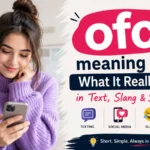
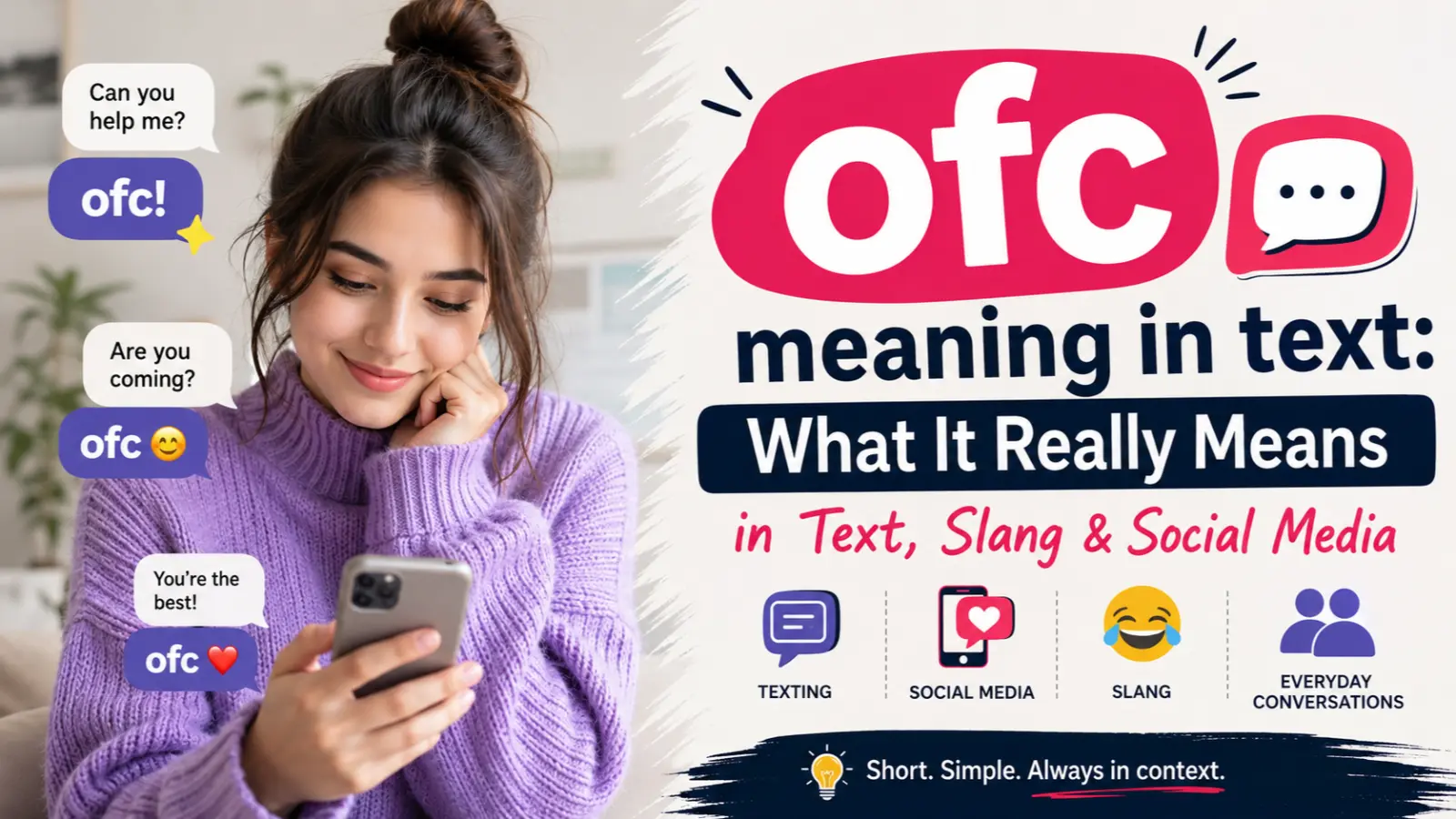
OFC is the short form of “Of Course.” In texting, social media, gaming, and online conversations, it expresses agreement, certainty, reassurance, or an obvious answer.
Depending on the situation, OFC can also sound:
- Friendly
- Supportive
- Funny
- Flirty
- Confident
- Slightly sarcastic
Example:
Friend: “Are you coming tonight?”
You: “ofc!”
The emotional message is simple:
“Yes—and I didn’t even have to think about it.”
What Does OFC Meaning in text?
In most conversations, ofc simply means “Of Course.” People use it because it’s faster than typing the full phrase, especially on platforms like Snapchat, TikTok, Instagram, WhatsApp, Discord, and X.
Rather than just saying “yes,” OFC often adds confidence and enthusiasm.
Example:
“ofc I’ll help you.”
This feels warmer than a simple “yes.”
OFC Meaning: Agreement
One of the most common uses is showing immediate agreement.
Example:
“Want to grab coffee?”
“ofc!”
The reply feels natural, positive, and effortless.
OFC Meaning: Reassurance
People often use OFC to comfort someone.
Example:
“Will you still be my friend?”
“ofc ❤️”
Here, the word carries emotional reassurance rather than simple agreement.
OFC Meaning: Excitement
Sometimes OFC expresses excitement.
Example:
“Are you watching the new season tonight?”
“ofc!!”
The extra exclamation marks increase enthusiasm.
OFC Meaning: Friendly Support
Friends use OFC to show they are willing to help.
“I’ll proofread your assignment.”
“ofc.”
The response feels caring and dependable.
OFC Meaning: Playful Sarcasm
Tone matters.
Someone might say:
“ofc my internet stopped working during the meeting.”
Nobody is actually answering a question. Instead, they’re joking that bad luck always happens.
OFFC Meaning: Flirting
In dating conversations, OFC can sound affectionate.
“You missed me?”
“ofc I did.”
It suggests the answer is obvious because the feelings are genuine.
Origin and Background
The phrase “of course” has existed in English for centuries, but OFC became popular as texting and instant messaging encouraged shorter messages. Modern social media platforms helped the abbreviation spread even faster, especially among younger users. Today, OFC is widely recognized as shorthand for “Of Course.” It may occasionally have other meanings in specific communities, but this is by far its most common use.
TikTok, Instagram, Discord, gaming chats, and Snapchat all reward quick communication. Typing “ofc” saves time while keeping conversations casual and friendly.
Internet language keeps evolving, and today’s abbreviations often become tomorrow’s everyday vocabulary.
Real-Life Conversations
Emma: “Can you call me later?”
Noah: “ofc.”
The response feels immediate and reassuring.
Instagram DM
“I loved your latest post.”
“ofc you noticed 😂”
Here, OFC adds humor.
TikTok Comments
“Did anyone else replay this video ten times?”
“ofc.”
This shows shared experience.
Group Chat
“Who’s bringing snacks?”
“ofc I’ll bring chips.”
It communicates willingness without sounding formal.
Text Messages
“Will you be there?”
“ofc ❤️”
Simple, caring, and confident.
Across these examples, OFC rarely communicates only information—it also communicates attitude.
Emotional and Psychological Meaning
The reason OFC feels so natural is that it often reflects certainty.
Instead of saying “yes,” people choose OFC because they want the other person to feel secure.
Imagine your best friend asking If you’ll attend their birthday.
You could reply:
“Yes.”
Or:
“ofc.”
The second answer feels warmer because it removes doubt.
Even in romantic conversations, OFC can signal emotional closeness.
Small abbreviations often build stronger digital relationships because they create a relaxed, familiar atmosphere.
That’s the deeper psychology behind it.
Usage in Different Contexts
Social Media
OFC keeps comments short and conversational.
Example:
“ofc this went viral.”
Friends and Relationships
Among close friends, OFC often means:
“I’ve got your back.”
Professional Settings
Avoid using OFC in formal emails.
Instead, write:
“Of course.”
It appears more professional.
Casual vs Serious Tone
In casual chats, OFC feels friendly.
During serious conversations, spelling out “Of course” often sounds more thoughtful and respectful.
When NOT to Use It
Avoid OFC in:
- Business emails
- Job applications
- Academic writing
- Formal customer communication
- Conversations with people unfamiliar with texting abbreviations
Some readers may misunderstand the abbreviation or view it as too casual.
Context protects meaning.
Common Misunderstandings
Many people think OFC always sounds sarcastic.
Not true.
Most of the time, it’s simply friendly.
Others assume it means only “yes.”
Actually, it often expresses confidence, reassurance, enthusiasm, or emotional closeness.
Finally, some believe everyone understands internet abbreviations.
Older audiences or international readers may not recognize OFC immediately.
Comparison Table
| Expression | Meaning | Tone | Best Used |
|---|---|---|---|
| OFC | Of Course | Friendly | Everyday texting |
| Yep | Yes | Casual | Friends |
| Sure | Agreement | Neutral | General conversations |
| Absolutely | Strong agreement | Enthusiastic | Personal and professional |
| Definitely | Certain | Confident | Texting and speech |
Choosing the right expression depends on both your relationship with the other person and the emotion you want to communicate.
Variations & Types of OFC
Like many internet abbreviations, OFC has evolved beyond a single spelling. People tweak it to match their mood, personality, or the energy of a conversation. While the meaning usually stays close to “Of Course,” the tone can change dramatically.
OFC
The standard version is the most common and simply means “Of Course.” It’s friendly, casual, and works in almost every personal conversation.
Example:
“Can you help me later?”
“ofc!”
OFCC
Some users type OFCC with an extra “C” to add emphasis. It’s not an official abbreviation, but it’s popular in fast-paced chats.
Example:
“You’re coming, right?”
“ofcc 😂”
The extra letter makes the reply feel more enthusiastic.
OFC!!
Adding multiple exclamation marks shows excitement.
Example:
“Did you save me a seat?”
“ofc!!”
This version sounds energetic and eager.
ofc lol
Combining OFC with “lol” creates a playful tone.
Example:
“Did you eat the last slice?”
“ofc lol.”
It softens the response with humor.
OFC 🙄
Adding an eye-roll emoji changes everything.
Instead of sounding supportive, it may express annoyance or sarcasm.
Example:
“Another meeting today.”
“ofc 🙄”
The emoji completely shifts the emotional meaning.
How to Respond When Someone Uses OFC
The best reply depends on the mood of the conversation. Matching someone’s energy helps conversations feel natural.
Casual Replies
- Thanks!
- Appreciate it.
- Awesome.
- Sounds good.
- Perfect.
Funny Replies
- I knew you’d say that.
- That’s why you’re my favorite.
- As expected. 😂
- You’re too predictable.
- Legend.
Mature Replies
- Thank you. I really appreciate it.
- That means a lot.
- I’m grateful for your help.
- Thanks for being reliable.
Respectful Replies
- Thank you for confirming.
- I appreciate your support.
- That’s good to hear.
- Thank you for letting me know.
People often mirror each other’s communication style online. When someone says “ofc,” responding with a relaxed tone usually keeps the conversation comfortable and authentic.
Regional & Cultural Usage
Although ofc meaning in text is widely understood online, cultural differences can influence how often people use it.
Western Culture
In countries like the United States, Canada, the United Kingdom, and Australia, OFC is a common part of texting culture. Friends use it naturally in everyday conversations, gaming communities, and social media comments.
Asian Culture
Many English-speaking internet users across Asia understand OFC because of TikTok, Instagram, YouTube, and online gaming. However, people may switch between English abbreviations and their native language depending on the conversation.
Middle Eastern Culture
Among younger users, especially those active on international social platforms, OFC appears frequently in English chats. In more formal conversations, people usually prefer writing the complete phrase instead of using abbreviations.
Global Internet Usage
Social media has removed many language barriers. A teenager in Brazil, Pakistan, Germany, or Japan might recognize OFC even if English isn’t their first language.
That’s one of the fascinating things about internet culture—it creates a shared digital language across different countries.
Generational Differences
Not every generation uses internet slang in the same way.
Gen Z
Gen Z uses OFC naturally in texts, memes, TikTok comments, Snapchat streaks, and gaming chats. For many young users, abbreviations make conversations feel quicker and more authentic.
Millennials
Millennials also use OFC, although they may mix abbreviations with full sentences depending on who they’re talking to.
Older Generations
Older adults may understand “Of Course” but not recognize the abbreviation immediately. In family chats, spelling out the full phrase can avoid confusion.
Language often reflects identity, and internet slang has become one of the ways younger generations express personality, humor, and belonging.
Is It Safe for Kids?
Yes. In most situations, OFC is a harmless abbreviation for “Of Course.” It doesn’t contain offensive language and is commonly used in friendly conversations.[^1]
However, parents should remember that tone matters online. Kids may encounter sarcastic or teasing uses of OFC, just as they would with many other everyday expressions.
Teaching children to understand context is more valuable than simply memorizing abbreviations.
Healthy online communication is about empathy, respect, and knowing how words affect others.
Frequently Asked Questions
What does OFC Meaning in text?
OFC usually stands for “Of Course.” It’s a quick way to express agreement, certainty, or reassurance in text messages and online conversations.
Is OFC rude?
No. Most of the time, OFC is friendly. However, depending on punctuation, emojis, or context, it can sometimes sound sarcastic.
What does OFC mean on TikTok?
On TikTok, OFC generally means “Of Course.” Users include it in comments, captions, and replies to agree with someone or react to relatable content.
Can I use OFC at work?
It’s better to avoid OFC in formal emails or professional documents. Writing “Of course” looks more polished and professional.
Why do people say OFC instead of “Of Course”?
Typing OFC is simply faster. It matches the fast-paced style of texting and social media while keeping conversations casual.
Is OFC only used by Gen Z?
No. Although Gen Z uses it frequently, Millennials and many other internet users also use OFC in everyday digital conversations.
Conclusion
Understanding OFC Meaning in text is about more than learning another internet abbreviation. At its core, OFC means “Of Course,” but its real value comes from the emotion behind it. Depending on the situation, it can express confidence, kindness, reassurance, excitement, humor, or even light sarcasm.
As online communication continues to evolve, small abbreviations like OFC help people communicate faster while still showing personality and emotion. If you’re chatting with friends, replying on TikTok, messaging a partner, or commenting on Instagram, understanding the tone behind OFC makes digital conversations much easier to navigate.
The next time someone replies with “ofc,” you’ll know they’re often saying much more than just “Of Course.” Sometimes, the shortest messages carry the strongest sense of connection.

I’m Grace Punston, a playful writer with a passion for clever puns and joyful wordplay. I love crafting witty lines that make readers grin and giggle. My goal is to spread laughter through smart, lighthearted writing. Every pun I share is a little spark of fun meant to brighten your day.