yw meaning in text is one of those internet abbreviations that almost everyone has seen but not everyone fully understands. Imagine this conversation:
Friend: “Thanks for helping me finish the project!”
You: “YW 😊”
Simple, right? But sometimes you might also see:
- “yw lol”
- “yw anytime!”
- “yw ❤️”
- “YW… I guess 😅”
Suddenly, the same two letters can sound warm, sarcastic, playful, or even slightly awkward. That’s exactly why so many people search for yw meaning in text. They want to know what it really means, how people use it on social media, and whether the tone changes depending on the conversation.
Modern texting isn’t just about words anymore. Tiny abbreviations often carry emotions, personality, and social cues. A short reply like “YW” can express kindness, confidence, humor, or even emotional distance depending on the situation.
Let’s break it down in a way that actually makes sense.
Quick Definition
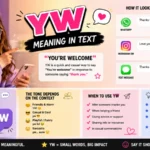
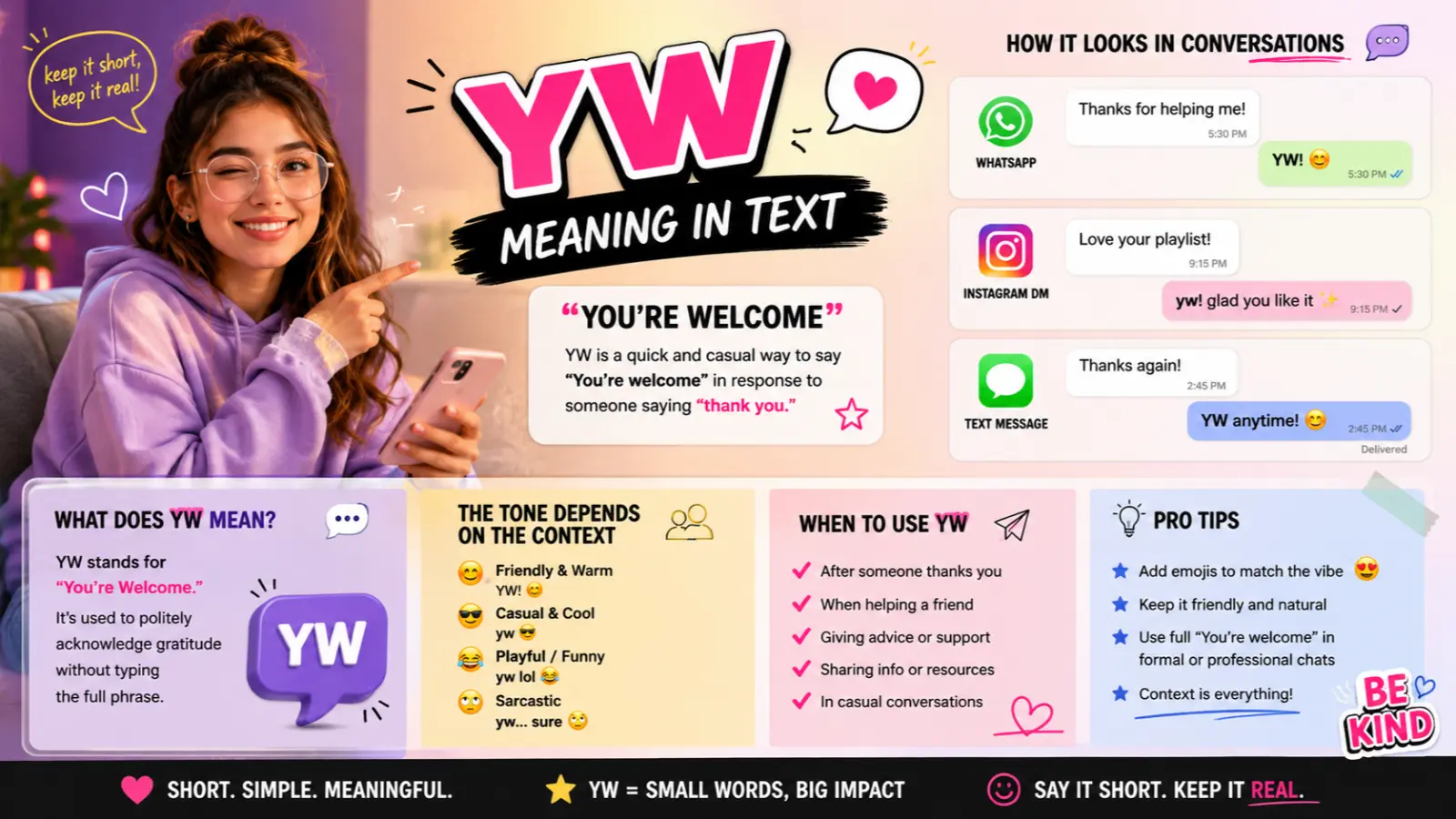
The most common yw meaning in text is “You’re Welcome.”
People use it after someone says “thank you” to acknowledge appreciation politely and casually.
Depending on context, YW may also express:
- Gratitude acknowledgment
- Friendliness
- Humor
- Playfulness
- Confidence
- Mild sarcasm
- Emotional warmth
- Casual internet conversation
YW Meaning as “You’re Welcome”
This is the standard meaning.
Example
Friend: “Thanks for the advice.”
You: “YW!”
The reply simply means you’re welcome.
YW Meaning as a Friendly Response
Sometimes YW feels warmer than the words themselves.
Example:
“I had fun today!”
“YW 😊”
Here, it feels caring and genuine.
YW Meaning as a Playful Reply
Friends often stretch the tone.
Example:
“Thanks for carrying me in the game.”
“YW… don’t get used to it 😂”
The abbreviation stays the same, but the personality changes.
YW Meaning with Flirting
Dating conversations sometimes use YW after compliments.
Example:
“You made my day.”
“YW ❤️”
The heart emoji makes the response feel affectionate instead of merely polite.
YW Meaning with Sarcasm
Tone changes everything.
Example:
“Thanks for making me wait an hour.”
“YW 🙄”
Here, it becomes sarcastic rather than sincere.
YW Meaning in Jokes
Internet humor loves short replies.
Example:
“You ruined my sleep schedule with that TV show recommendation.”
“YW 😂”
It’s used jokingly because the “damage” was enjoyable.
YW Meaning After Helping Someone
Many people use it after giving advice, sharing information, or solving a problem.
Example:
“Thanks for fixing my laptop.”
“YW! Happy to help.”
Core Emotional Meaning
At its heart, yw meaning in text is simply “You’re welcome.” However, emojis, punctuation, timing, and the relationship between two people shape whether it feels sincere, funny, flirty, confident, or sarcastic.
What Does yw Mean in Text?
In texting, YW is a shortened version of “You’re Welcome.” It saves time while keeping the conversation friendly.
People commonly use it after:
- Someone thanks them
- Giving advice
- Sharing information
- Doing a favor
- Offering emotional support
- Helping online
Unlike formal writing, texting values speed. Abbreviations like YW make conversations feel natural and relaxed without sounding robotic.
Origin & Background
YW became popular during the early years of texting when mobile phones had limited keyboards and character limits. Typing “You’re welcome” took longer than simply writing “YW.”
As instant messaging grew through MSN Messenger, AOL Instant Messenger, and SMS texting, abbreviations became everyday language.
Later, platforms like Twitter, Snapchat, Instagram, Discord, TikTok, and WhatsApp pushed shorter communication even further. Internet users learned to communicate entire emotions using only a few letters, emojis, or GIFs.
TikTok helped normalize casual abbreviations among younger users. Instead of writing complete sentences, creators and commenters often replied with quick expressions like “yw,” “np,” “ty,” and “idk.”
Memes also changed how people interpreted YW. Instead of always meaning politeness, creators started using it sarcastically, ironically, or humorously.
Online language evolves incredibly fast. Today’s simple abbreviation can become tomorrow’s meme, emotional signal, or internet inside joke.
Real-Life Conversations
Alex: Thanks for reminding me about the meeting.
Emma: YW 😊
The conversation feels friendly and genuine.
Instagram DM
“I love your photos!”
“YW! Glad they inspired you ❤️”
The reply creates a warm connection.
TikTok Comments
“Thanks for this tutorial.”
“yw 😂”
Short, casual, and common.
Text Messages
“I appreciate you checking on me.”
“YW anytime.”
This feels emotionally supportive.
Group Chat
“Thanks for ordering everyone’s food.”
“YW guys 😎”
The tone stays relaxed and social.
Across all these examples, YW isn’t just answering gratitude. It’s helping maintain positive social energy with very little effort.
Emotional & Psychological Meaning
Language is emotional—even when it’s only two letters.
Using YW often signals kindness without making a big deal out of helping someone. It communicates confidence because the speaker doesn’t expect praise in return.
1Sometimes it creates emotional closeness.
2Sometimes it softens awkward moments.
2Sometimes it adds humor.
Imagine helping a coworker prepare for an important presentation. Later they text:
“Seriously, thank you.”
Instead of writing a long reply, you answer:
“YW! You did all the hard work.”
That tiny response reduces emotional pressure while keeping the interaction warm.
In dating, YW may subtly communicate confidence.
Among close friends, it often becomes playful.
In sarcastic conversations, it protects emotions by hiding real feelings behind humor.
Online, these small abbreviations also shape personal identity. People who frequently use internet slang often appear more relaxed, socially aware, and digitally fluent.
That’s the deeper psychology behind it.
Usage in Different Contexts
Social Media
On TikTok, Instagram, Snapchat, and X, YW appears constantly.
Example:
“Thanks for the recommendation!”
“YW ❤️”
It feels quick and authentic.
Friends & Relationships
Friends use YW casually.
Example:
“Thanks for always listening.”
“YW anytime.”
In relationships, adding emojis makes it feel even more affectionate.
Work or Professional Settings
Professional communication usually benefits from writing the full phrase.
Instead of:
“YW”
Try:
“You’re welcome. Happy to help.”
It sounds more polished.
Casual vs Serious Tone
Casual conversations welcome abbreviations.
Serious discussions usually deserve complete sentences because they show greater care and respect.
Context always determines how YW will be received.
When NOT to Use It
Avoid using YW when:
- Sending formal business emails
- Speaking with clients
- Writing academic messages
- During emotional arguments
- Communicating with older people unfamiliar with internet slang
- Cross-cultural conversations where abbreviations may confuse readers
Someone unfamiliar with texting culture might not recognize YW at all.
Context protects meaning.
Common Misunderstandings
Many people misunderstand YW because internet tone isn’t always obvious.
Misunderstanding: It always sounds rude.
Reality: Most of the time it’s simply casual.
Misunderstanding: It only means “You’re Welcome.”
Reality: The emotional tone changes depending on emojis, punctuation, and relationship.
Misunderstanding: Younger people use it sarcastically every time.
Reality: Most Gen Z users still use it sincerely.
Misunderstanding: It’s appropriate everywhere.
Reality: Professional settings usually call for complete words.
Comparison Table
| Expression | Meaning | Tone | Usage Context |
|---|---|---|---|
| YW | You’re Welcome | Casual | Texting, social media |
| NP | No Problem | Relaxed | Friends, texting |
| Anytime | Happy to help | Warm | Friends, family |
| Glad to Help | Friendly | Professional | Work and email |
| My Pleasure | Polite | Formal | Customer service |
| No Worries | Relaxed reassurance | Casual | Everyday conversation |
Although all of these respond to gratitude, each creates a different emotional impression. Choosing the right reply helps match the mood of the conversation.
Variations & Types
People personalize YW in many ways.
- yw
- YW!
- yw 🙂
- yw ❤️
- yw lol
- yw anytime
- yw bro
- yw bestie
- you’re welcome!
- you’re very welcome
- always ❤️
- no worries!
Small additions completely change the emotional tone. Emojis make it warmer, while “lol” makes it playful.
How to Respond When Someone Uses It
Casual Replies
- Thanks again!
- Appreciate it.
- You’re the best.
- Awesome!
Funny Replies
- I owe you pizza.
- You’re officially my favorite person.
- I’ll remember this forever 😂
Mature Replies
- I really appreciate your help.
- Thanks for taking the time.
- That meant a lot.
Respectful Replies
- Thank you again.
- I truly appreciate it.
- Your support helped me a lot.
Matching someone’s energy usually creates smoother conversations than forcing a formal response into a casual chat.
Regional & Cultural Usage
Western Culture
YW is extremely common in texting and social media. It sounds relaxed rather than disrespectful.
Asian Culture
Many users understand YW through global internet culture, but formal conversations often favor complete phrases.
Middle Eastern Culture
Internet users commonly recognize YW among younger generations, while older speakers may prefer “You’re welcome.”
Global Internet Usage
Platforms like TikTok, Instagram, Discord, and WhatsApp have made YW recognizable worldwide. Internet culture spreads slang much faster than traditional language ever could.
Generational Differences
Gen Z
Uses YW naturally with emojis, memes, and internet humor.
Millennials
Frequently use YW but comfortably switch between abbreviations and complete sentences.
Older Generations
Some understand YW immediately, while others prefer traditional expressions because they grew up before texting abbreviations became common.
Language reflects identity as much as communication. Every generation leaves its own digital fingerprint.
Is It Safe for Kids?
Yes. YW is generally a harmless abbreviation for “You’re Welcome.”
Parents should still teach children that:
- Tone matters.
- Kindness matters.
- Formal situations require complete words.
- Sarcasm can easily be misunderstood online.
Teaching digital etiquette is just as important as teaching grammar.
Frequently Asked Questions
What does YW mean in text?
YW most commonly means “You’re Welcome.” It’s a quick and friendly response after someone says “thank you.”
Is YW rude?
No. Most people use it politely. However, sarcastic wording or emojis can change the tone.
What does YW mean on TikTok?
On TikTok, YW almost always means “You’re Welcome,” although creators may use it jokingly or sarcastically.
Can I use YW at work?
It’s better to write “You’re welcome” in professional emails and workplace communication.
Do Gen Z users say YW?
Yes. Gen Z frequently uses YW along with many other texting abbreviations because they’re faster and feel more natural online.
Is YW appropriate in relationships?
Absolutely. It often sounds warm, caring, and affectionate, especially when paired with friendly language or emojis.
Conclusion
Understanding yw meaning in text is about more than knowing two simple letters. In most conversations, YW means “You’re Welcome,” but its emotional impact depends on the relationship, timing, emojis, and the overall tone of the conversation.
From casual chats and TikTok comments to heartfelt conversations with friends, yw meaning in text shows how modern internet language packs emotion into the smallest possible space. A simple “You’re welcome” can become supportive, playful, humorous, flirty, or reassuring with just a slight change in context.
As online communication continues to evolve, abbreviations like YW remind us that digital language isn’t becoming less meaningful—it’s becoming more expressive in new ways. Sometimes, the shortest reply carries the biggest feeling.

I’m Grace Punston, a playful writer with a passion for clever puns and joyful wordplay. I love crafting witty lines that make readers grin and giggle. My goal is to spread laughter through smart, lighthearted writing. Every pun I share is a little spark of fun meant to brighten your day.