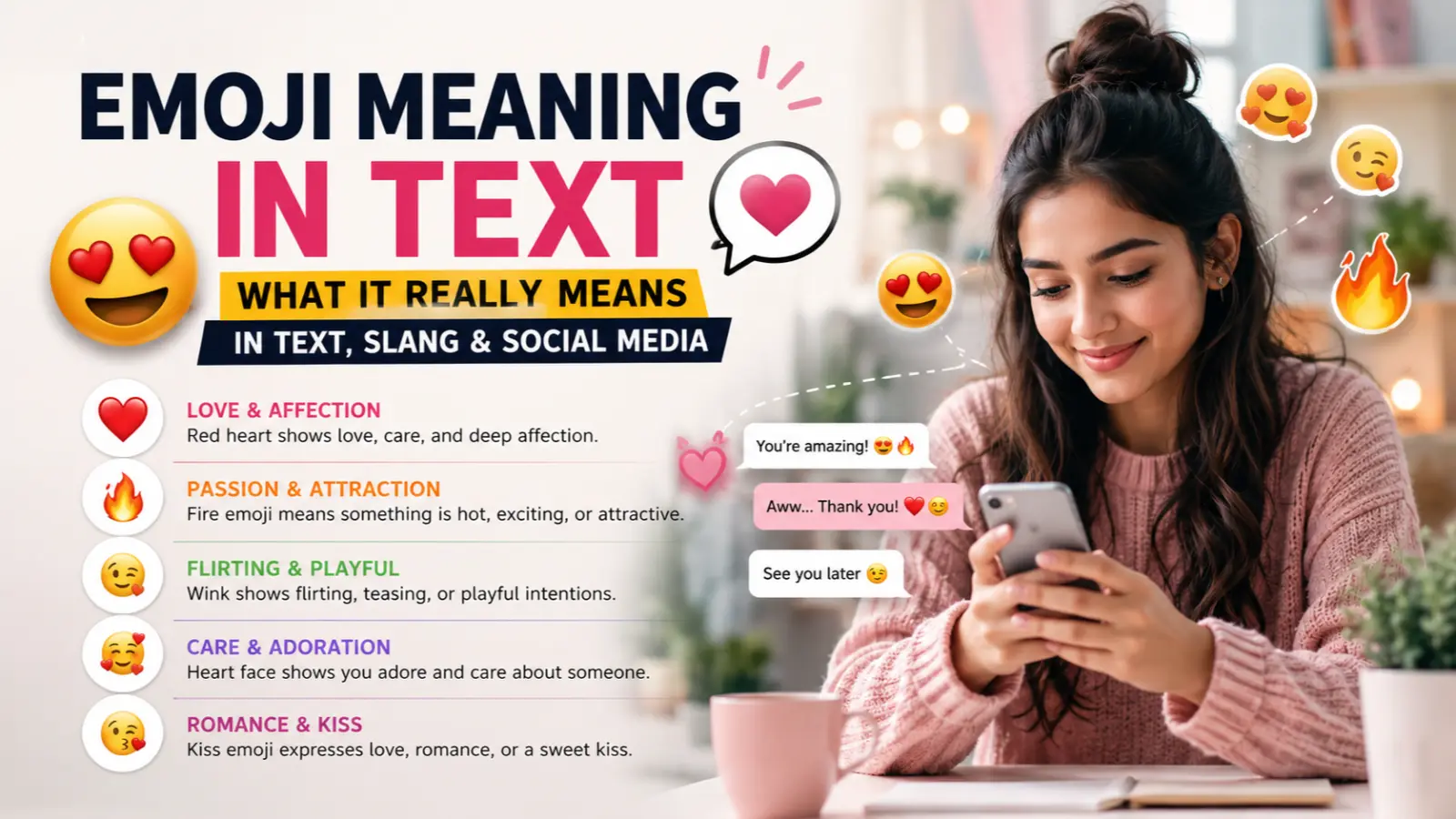
emoji meaning in text has become one of the most searched topics because a single emoji can completely change the mood of a message. Imagine getting a text that simply says:
“I’m fine 🙂”
Or:
“See you later ❤️🔥😉”
At first glance, they seem simple. But are they really?
Did the smile mean genuine happiness or hidden sarcasm? Was the heart romantic or friendly? Was the fire emoji admiration or flirting? These tiny digital symbols often carry emotions that words alone cannot express.
Today, emojis use facial expressions, gestures, and objects to communicate feelings, reactions, humor, love, passion, frustration, and personality. They help people add emotion to otherwise plain text, making online conversations feel more human.
That is exactly why millions of people search for emoji meaning in text before replying to a message or posting on social media.
Let’s break it down in a way that actually makes sense.
Quick Definition
Emoji meaning in text refers to the emotional or social message that an emoji adds to written communication. Instead of replacing words, emojis usually strengthen tone, reveal feelings, or provide context.
Depending on the conversation, one emoji can mean different things.
Emoji Meaning in Text for Noticing
Sometimes an emoji simply shows someone noticed your message.
Example
“I saw your story 👀”
Meaning: I’m paying attention.
Emoji Meaning in Text for Reacting
Reaction emojis replace longer responses.
Example
“That’s amazing! 😂”
Meaning: I found it hilarious.
Emoji Meaning in Text for Complimenting
Heart eyes or fire emojis often praise someone.
Example
“You look incredible 😍🔥”
Meaning: You look attractive.
Emoji Meaning in Text for Insulting
Certain emojis become sarcastic.
Example
“Great job 🙄”
Meaning: The speaker actually disagrees.
Emoji Meaning in Text for Joking
Laughing emojis make playful teasing feel harmless.
Example
“You’re impossible 😂”
Meaning: I’m teasing you.
Emoji Meaning in Text for Exposing
The eyes emoji often hints that someone noticed hidden drama.
Example
“I saw what happened 👀”
Meaning: Nothing stays secret online.
Emoji Meaning in Text for Flirting
Hearts, kisses, winks, and flames frequently signal attraction.
Example
“Good morning ❤️😉”
Meaning: I’m interested in you.
Emoji Meaning in Text for Emotional Expression
Sometimes words fail, but emojis explain feelings instantly.
Example
“I’m proud of you ❤️”
Meaning: Deep emotional support.
In short, emojis help people communicate feelings, personality, and intention far beyond plain text.
What Does Emoji Meaning in Text Mean?
Simply put, emoji meaning in text is the emotional layer behind digital conversations.
Unlike traditional punctuation, emojis provide emotional clues that prevent misunderstandings.
For example:
- ❤️ usually expresses love or affection.
- 😂 signals genuine laughter.
- 😭 may represent sadness or laughing so hard that someone cries.
- 👀 suggests curiosity or attention.
- 🔥 often means something is impressive, attractive, or trending.
Because online communication lacks facial expressions and body language, emojis fill that emotional gap.
Origin & Background
Emojis originated in Japan during the late 1990s as a way to make digital communication more expressive.
As smartphones became popular, emojis spread across messaging apps and social media platforms worldwide.
Then something interesting happened.
Internet communities started giving existing emojis completely new meanings.
TikTok creators transformed emojis into inside jokes.
Meme culture changed innocent symbols into hidden references.
Instagram users developed their own visual language.
Even simple hearts evolved.
❤️ became classic love.
🖤 represented mystery or emotional depth.
💛 often symbolized friendship.
💜 became associated with fandoms and support.
Online language changes incredibly fast. An emoji that means one thing today may communicate something completely different a year from now.
Real-Life Conversations
WhatsApp Chat
Sara: I passed my exam!
Ali: 🎉❤️
Meaning: celebration and genuine happiness.
Instagram DM
“You looked amazing today 😍🔥”
This feels like admiration mixed with flirting.
TikTok Comments
“Not me watching this ten times 😂”
The laughing emoji signals relatable humor.
Text Message
“I’m outside 😊”
The smile keeps the message warm instead of sounding cold.
Group Chat
“We’re definitely getting lost 😂”
Everyone understands the situation is funny rather than stressful.
Across these conversations, emojis reduce emotional uncertainty. They help readers understand whether someone is joking, flirting, supporting, or simply reacting.
Emotional & Psychological Meaning
Humans naturally search for emotional signals during conversations.
In face-to-face communication, we notice smiles, eye contact, gestures, and tone of voice.
Text removes all of those.
Emojis restore some of that emotional information.
A heart can create reassurance.
A laughing emoji softens criticism.
A wink suggests playful intent.
A sad face invites empathy.
Imagine a friend texting:
“I guess I failed.”
Without emojis, you might hesitate before responding.
Now compare it with:
“I guess I failed 😅”
Suddenly the message feels lighter. Your friend may be disappointed but is also trying to stay positive.
People also use emojis as emotional protection. Sometimes it’s easier to send “🙂” than to explain complicated feelings.
That’s the deeper psychology behind it.
Usage in Different Contexts
Social Media
Emojis increase engagement because they quickly communicate emotion.
Example:
“Vacation mode 🌴☀️”
Friends & Relationships
Friends often create their own emoji language.
A single inside-joke emoji may replace an entire sentence.
Couples frequently use:
❤️ 😘 🥰 💕
to express affection.
Work or Professional Settings
Professional messages should use emojis carefully.
A simple 🙂 or 👍 may feel friendly.
Too many playful emojis can appear unprofessional.
Casual vs Serious Tone
Casual:
“See you tonight 😂”
Serious:
“I’m sorry for your loss.”
Adding laughing emojis here would be inappropriate.
Context always changes interpretation.
When NOT to Use It
Avoid relying heavily on emojis when:
- Writing professional emails
- Discussing sensitive emotional issues
- Communicating with people unfamiliar with internet culture
- Speaking with older audiences who may interpret symbols differently
- Participating in cross-cultural conversations where meanings vary
Context protects meaning.
Common Misunderstandings
Many people believe every heart emoji means romantic love.
Not always.
Friends often exchange hearts as appreciation.
Some assume 😂 always means laughter.
Sometimes it softens awkwardness instead.
Others think 🙃 always means happiness.
In reality, it frequently represents sarcasm or playful frustration.
Another misunderstanding is believing emojis have universal meanings.
Culture, age, platform, and personal relationships all influence interpretation.
Comparison Table
| Expression | Meaning | Tone | Usage Context |
|---|---|---|---|
| ❤️ | Love, care | Warm | Relationships, family |
| 😂 | Genuine laughter | Funny | Friends, memes |
| 😭 | Sadness or laughing intensely | Emotional | Social media, texting |
| 👀 | Attention, curiosity | Curious | Gossip, trending topics |
| 🔥 | Attractive, amazing | Excited | Fashion, achievements |
| 😉 | Flirting or joking | Playful | Dating, casual chats |
| 👍 | Agreement | Neutral | Work and casual messages |
| 🙄 | Sarcasm | Negative | Friendly teasing or criticism |
The emotional difference comes from context. The same emoji can sound caring with one person and sarcastic with another.
Variations & Types
Emoji meanings continue evolving.
Classic Love and Passion
❤️ 💕 💖 💘 💋
These express romance, affection, and emotional closeness.
Facial Expressions
😊 😂 😭 😒 😍 😡 😅
They mirror real human emotions.
Gestures
👍 👏 🙏 👋 🤝 👌
These represent actions instead of feelings.
Objects
🔥 🎉 💯 🎁 🌹
Objects often symbolize achievements, celebrations, admiration, or special occasions.
Playful Variations
😂😂😂
Multiple emojis amplify emotion.
Sarcastic Versions
🙂
A simple smile sometimes hides frustration.
Meme Variations
💀
Originally representing death, it now often means “I’m laughing so hard.”
How to Respond When Someone Uses It
Casual Replies
- “Haha, I know 😂”
- “Exactly!”
- “Same here.”
Funny Replies
- “You’re impossible 😂”
- “That made my day.”
Mature Replies
- “Thanks, I appreciate that ❤️”
- “I’m glad you told me.”
Respectful Replies
- “I understand.”
- “I’m here if you need anything.”
Matching someone else’s emotional energy helps conversations feel more natural.
Regional & Cultural Usage
Western Culture
Emojis are commonly used to express humor, dating interest, personality, and casual friendliness.
Asian Culture
Many users rely heavily on emojis to soften messages and maintain politeness.
Middle Eastern Culture
Heart emojis often express friendship and family affection in addition to romance, though interpretations vary by relationship and community.
Global Internet Usage
Social media has created a shared visual language. A trending emoji on TikTok today may become popular worldwide within days.
Generational Differences
Gen Z
Uses emojis creatively, ironically, and alongside memes.
Millennials
Use emojis mainly for emotional clarity and friendliness.
Older Generations
Often interpret emojis more literally and may avoid newer internet meanings.
Language reflects identity, and emoji usage often reveals how different generations experience online culture.
Is It Safe for Kids?
Most emojis are harmless.
They help children express emotions and make digital conversations more engaging.
However, parents should know that some emojis develop hidden slang meanings online.
Teaching children that context matters is more helpful than banning emojis altogether.
Healthy communication always matters more than the symbols themselves.
FAQs
What does emoji meaning in text mean?
It refers to the emotional message an emoji adds to written communication.
Are emojis always positive?
No. Some express happiness, while others communicate sarcasm, anger, sadness, or frustration.
Can emojis be rude?
Yes. Certain emojis can appear dismissive or sarcastic depending on context.
Why are emojis so popular in texting?
They replace facial expressions and tone, making conversations feel more natural.
Why do TikTok users give emojis new meanings?
Internet communities constantly create inside jokes, trends, and meme meanings that evolve over time.
Can I use emojis at work?
Yes, but use them sparingly. Simple emojis like 🙂 or 👍 are usually more appropriate than playful or romantic ones.
Conclusion
Understanding emoji meaning in text is about much more than recognizing colorful symbols. Emojis use facial expressions, gestures, and objects to communicate emotions that words sometimes cannot. They help people express love, humor, excitement, sympathy, sarcasm, confidence, and personality in fast-moving digital conversations.
As internet culture continues to evolve, emoji meanings will keep changing alongside the way people connect online. Paying attention to context, relationships, and emotional intent helps you interpret these symbols more accurately and communicate with greater empathy.
In the end, emoji meaning in text reminds us that even the smallest digital symbol can carry a surprisingly powerful human emotion.

I’m Jake Punman, a humor writer who lives for clever wordplay and laugh-out-loud puns. I love crafting witty lines that turn simple moments into bursts of laughter. My passion is making people smile through creative twists of language. With every pun I write, I aim to add a little more fun to your day.