Aura meaning slang has exploded across TikTok, Instagram, X, and group chats. Maybe you’ve seen comments like:
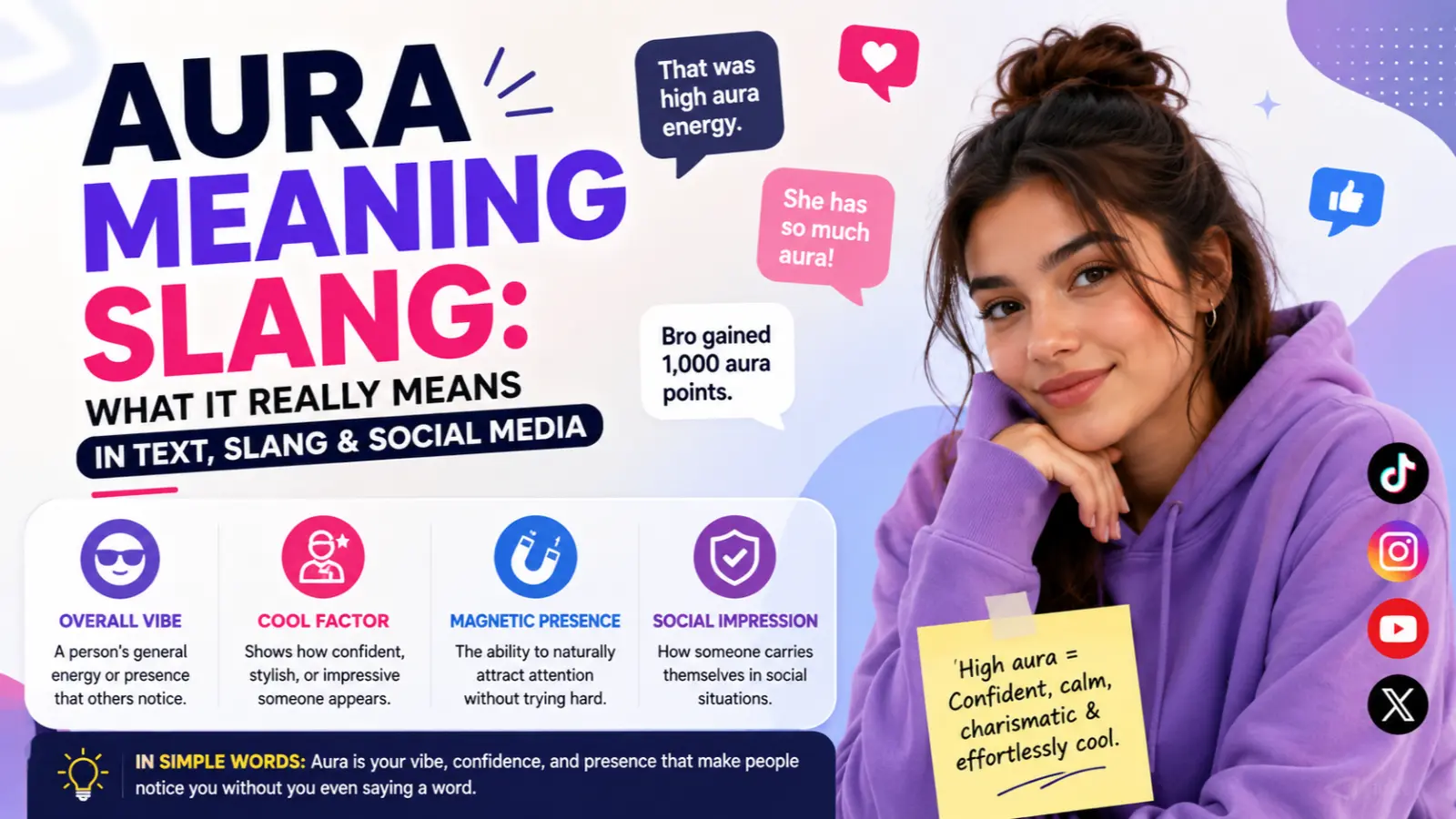
“Bro gained 1,000 aura points.”
“She walked into the room with insane aura.”
“That was a high-aura move.”
At first glance, it can be confusing. Are people talking about spiritual energy? Personality? Confidence? Or is it just another Gen Z joke?
The truth is that modern internet slang gives old words entirely new meanings. Online, “aura” isn’t about mystical energy as much as it’s about the impression someone leaves on everyone around them. It’s the kind of confidence that doesn’t need to be announced, the effortless cool that people notice without explanation.
Many people search aura meaning slang because they keep seeing the word in TikTok comments, gaming communities, sports edits, and meme pages. The meaning changes slightly depending on the situation, which makes it even more confusing for newcomers.
The good news is that once you understand the emotional idea behind the slang, you’ll start noticing it everywhere.
Let’s break it down in a way that actually makes sense.
Quick Definition
In internet slang, aura refers to a person’s overall vibe, cool factor, confidence, or magnetic presence. Someone with high aura naturally attracts attention without trying too hard. It’s a compliment that suggests they appear calm, charismatic, stylish, or effortlessly impressive. This modern slang usage became especially popular through social media and meme culture, where people jokingly talk about gaining or losing “aura points.” Depending on the conversation, “aura” can express different emotions.
Aura Meaning as a Compliment
People often use it to praise someone’s confidence or presence.
Example:
“She didn’t even say anything, but everyone noticed her. That’s real aura.”
Here, aura means quiet confidence that speaks louder than words.
Aura Meaning as Admiration
Sometimes the word shows respect for someone who handles situations with style.
Example:
“Walking away without arguing added serious aura.”
The compliment isn’t about winning. It’s about maturity and self-control.
Aura Meaning as a Joke
Internet users frequently exaggerate aura for humor.
Example:
“Dropped my phone in front of everyone. Lost 500 aura points.”
Nobody is literally keeping score. The joke is that embarrassing moments temporarily damage your “cool factor.”
Aura Meaning as Social Approval
Friends may use aura to recognize someone’s impressive behavior.
Example:
“Helping that stranger without recording it? Massive aura.”
The focus is on authentic character rather than showing off online.
Aura Meaning While Flirting
In dating conversations, aura can describe someone’s attractive presence.
Example:
“I don’t know why, but he has so much aura.”
This usually means they’re appealing because of confidence, attitude, or personality—not just physical appearance.
Aura Meaning as Gentle Criticism
Sometimes the slang works sarcastically.
Example:
“Talking loudly in the movie theater? Negative aura.”
Here the speaker is teasing someone’s behavior rather than seriously insulting them.
At its core, aura is emotional shorthand for the energy, confidence, and impression someone creates without needing to explain themselves.
What Does Aura Mean in Text?
When someone texts “you have aura” or “that’s high aura,” they’re usually saying you handled a situation in a way that looked naturally confident, stylish, or impressive. The compliment isn’t always about looks. More often, it’s about behavior.
For example:
- Friend: “He stayed calm even when everyone blamed him.”
- Reply: “That’s high aura.”
Or:
- Friend: “She smiled, thanked everyone, and left.”
- Reply: “Her aura is unmatched.”
In text messages, the slang is intentionally simple. One word communicates admiration, respect, confidence, and social approval all at once. That’s one reason it has spread so quickly across online conversations.
Origin & Background
Although the word aura has existed for centuries to describe an invisible atmosphere or energy surrounding a person, its modern slang meaning is much newer. Social media communities transformed it into a playful way of measuring someone’s confidence, presence, and overall “coolness.”
TikTok accelerated the trend by introducing the idea of “aura points.” Users jokingly award positive points for confident actions and deduct points for awkward or embarrassing moments. Sports edits, anime clips, celebrity videos, and viral memes helped popularize the concept even further.
Today, you’ll hear phrases like:
- “Infinite aura.”
- “Negative aura.”
- “Aura farming.”
- “That move gained him 10,000 aura points.”
The popularity of this slang shows how quickly internet language evolves. Words that once had spiritual or philosophical meanings can become everyday expressions for confidence, charisma, and social perception in just a few viral trends.
Real-Life Conversations
The best way to understand aura meaning slang is to see how people naturally use it in everyday conversations. Unlike dictionary definitions, real chats show the emotion behind the word.
WhatsApp Chat
Ali: “I accidentally spilled coffee on my shirt before the interview.”
Hamza: “Ouch.”
Ali: “Still walked in confidently and got the job.”
Hamza: “Bro gained 5,000 aura points.”
Meaning: Confidence after an embarrassing moment makes someone seem even cooler.
Instagram DM
Sara: “She wore the simplest outfit but somehow looked amazing.”
Ayesha: “She has effortless aura.”
Meaning: The compliment isn’t really about fashion. It’s about natural presence.
TikTok Comments
Video: Someone helps an elderly stranger cross the road without filming it.
Comments:
- “Infinite aura.”
- “That’s what real confidence looks like.”
- “Respect. Massive aura.”
Meaning: People admire genuine actions more than attention-seeking behavior.
Text Message
Friend: “He apologized first after the argument.”
Reply: “High aura move.”
Meaning: Emotional maturity often earns more respect than trying to win.
Group Chat
Friend 1: “He slipped on stage.”
Friend 2: “Then he laughed at himself.”
3: “Recovered instantly. Aura restored.”
Meaning: Being able to laugh at yourself actually increases your social confidence.
Across all these examples, one pattern appears again and again. People rarely use aura to describe someone’s appearance alone. They’re usually reacting to confidence, emotional control, kindness, authenticity, or the way someone handles pressure.
Emotional & Psychological Meaning
Internet slang often says much more than it appears to on the surface. Aura is a perfect example.
When someone says you have aura, they’re not simply calling you cool. They’re recognizing something people naturally notice but struggle to explain.
Sometimes it’s quiet confidence.
Sometimes it’s emotional intelligence.
It’s simply being comfortable with who you are.
Psychologically, humans constantly make quick judgments about the people around them. Before anyone speaks, we notice posture, facial expressions, body language, tone of voice, and reactions under pressure. Modern slang bundles all of these tiny observations into one simple word: aura.
People with “high aura” usually share qualities like:
- Confidence without arrogance.
- Calmness during stressful moments.
- Authenticity instead of pretending.
- Emotional control.
- Quiet leadership.
- Natural charisma.
Interestingly, social media has changed how people think about confidence. Years ago, being loud often looked impressive. Today, many internet users admire people who stay composed, avoid unnecessary drama, and remain genuine.
Imagine this situation.
You’re having dinner with friends. A waiter accidentally spills water on your clothes.
One person gets angry, complains loudly, and blames everyone.
Another smiles, says, “No worries—it happens,” and continues enjoying the evening.
Guess which person people later describe as having more aura?
The second person.
Not because they looked perfect, but because they handled an awkward moment with confidence and emotional maturity.
The same idea appears in dating.
Many people discover they’re attracted less to perfect looks and more to someone who feels comfortable in their own skin. That’s why comments like “He has so much aura” or “She walks into every room with confidence” have become common across TikTok and Instagram.
In many ways, aura has become shorthand for emotional security.
That’s the deeper psychology behind it.
Usage in Different Contexts
Social Media
This is where the slang is most popular.
People award imaginary “aura points” whenever someone does something confident, funny, generous, or unexpectedly impressive.
Example:
“Helping someone without posting it? Infinite aura.”
Friends & Relationships
Among friends, aura is usually playful.
It can compliment someone’s confidence, tease an embarrassing mistake, or celebrate personal growth.
Example:
“You finally asked her out. High aura.”
In relationships, the word often describes someone’s overall attractiveness beyond physical appearance.
Work or Professional Settings
Using aura at work depends on the environment.
In casual conversations with younger coworkers, saying someone has “great aura” may simply mean they have a confident presence.
However, during meetings, interviews, presentations, or professional emails, it’s usually better to say:
- Professional presence
- Executive presence
- Confident personality
- Strong leadership presence
- Positive energy
These expressions communicate the same idea more clearly.
Casual vs Serious Tone
Context changes everything.
Among friends:
“Negative aura after forgetting your wallet.”
This sounds playful.
During an emotional conversation:
“You have negative aura.”
This could feel insulting or dismissive.
Always pay attention to tone, relationship, and situation before using internet slang.
When NOT to Use It
Like many online expressions, aura isn’t appropriate everywhere.
Avoid using it in:
- Job interviews.
- Business emails.
- Academic papers.
- Serious family discussions.
- Emotional conflicts.
- Conversations with people unfamiliar with internet slang.
Older audiences or people from different cultural backgrounds may interpret the word literally or misunderstand the joke.
Similarly, using “negative aura” during an argument can make someone feel mocked rather than understood.
Good communication isn’t just about choosing trendy words. It’s about choosing words your audience understands.
Context protects meaning.
Common Misunderstandings
One of the biggest misconceptions is believing aura only refers to physical attractiveness.
In reality, most people use it to describe confidence, presence, and behavior.
Another misunderstanding is thinking aura is always serious.
Many TikTok users exaggerate “aura points” purely for comedy.
Some people also assume “negative aura” is a harsh insult.
Often it’s nothing more than light teasing after an awkward or embarrassing moment.
Finally, many confuse modern slang with the traditional spiritual meaning of aura.
While the original word refers to an invisible energy field in spiritual beliefs, today’s internet slang usually has nothing to do with spirituality. Instead, it focuses on social perception, confidence, and personal vibe.
Understanding these differences helps you recognize why the same word can mean different things in different conversations.
Aura vs Similar Expressions
| Expression | Meaning | Tone | Usage Context |
|---|---|---|---|
| Aura | Overall vibe, confidence, magnetic presence | Positive or playful | Social media, texting, conversations |
| Vibe | General feeling or atmosphere | Casual | Everyday conversation |
| Rizz | Romantic charm or flirting ability | Playful | Dating and TikTok |
| Charisma | Natural ability to attract people | Neutral | Personal and professional |
| Presence | Strong personal impact | Professional | Leadership and workplace |
| Cool | Generally impressive or likable | Casual | Everyday speech |
Although these words overlap, aura is unique because it combines confidence, personality, emotional intelligence, and social perception into one simple internet expression. That’s why it has become one of the internet’s favorite compliments.
Variations & Types
Like most internet slang, aura has evolved into several playful variations. While the core meaning stays the same, each version adds a slightly different emotional tone.
High Aura
This is the most common version. It describes someone who appears naturally confident, calm, stylish, or charismatic.
Example:
“Showing kindness without expecting praise is such a high-aura move.”
Low Aura
People use this jokingly when someone makes an awkward decision or loses confidence.
Example:
“Forgetting your own birthday? Low aura.”
Negative Aura
This exaggerates criticism for comedic effect.
Example:
“Cutting in line? Negative aura.”
It’s usually playful rather than genuinely mean.
Aura Points
Perhaps the most popular variation, aura points are imaginary points people gain or lose based on their actions.
Example:
- Helping someone carry groceries = +500 aura points
- Tripping over nothing = -200 aura points
Nobody actually keeps score. That’s part of the joke.
Infinite Aura
Used when someone does something exceptionally admirable, brave, or effortlessly cool.
Example:
“He defended his friend even when nobody else did. Infinite aura.”
Aura Farming
This phrase describes someone who intentionally acts a certain way just to appear cool or gain admiration online.
Example:
“Recording yourself helping people just for likes? That’s aura farming.”
Each variation reflects how internet culture turns simple words into playful social commentary.
How to Respond When Someone Uses It
If someone says you have aura, your reply depends on the mood of the conversation.
Casual Replies
- “I’ll take that!”
- “Appreciate it.”
- “Thanks, that means a lot.”
- “Haha, I’ll try to keep it.”
Funny Replies
- “Protecting my aura points.”
- “Infinite aura unlocked.”
- “Mission accomplished.”
- “I’m trying not to lose any aura today.”
Mature Replies
- “Thanks, I just try to stay authentic.”
- “Confidence comes with experience.”
- “I appreciate the compliment.”
Respectful Replies
- “That’s really kind of you.”
- “Thank you, I appreciate it.”
- “Glad it came across that way.”
One of the unwritten rules of internet slang is matching the other person’s energy. If they’re joking, joke back. If they’re being sincere, a genuine thank-you is usually the best response.
Regional & Cultural Usage
Western Culture
In North America and much of Europe, aura is closely tied to TikTok, sports culture, gaming communities, and meme pages. It often celebrates confidence, authenticity, and personal style.
Asian Culture
Across many Asian countries, younger internet users have adopted the slang through global social media. While the English word “aura” is often used directly, local languages sometimes have similar expressions describing someone’s strong presence or positive vibe.
Middle Eastern Culture
Gen Z users in the Middle East increasingly use aura in English-language conversations, especially on TikTok, Instagram, and X. It usually carries the same meaning of confidence, charisma, or a naturally impressive personality.
Global Internet Usage
The internet has made slang travel faster than ever before. A phrase that starts on TikTok in one country can become part of conversations around the world within weeks. That’s exactly what happened with aura and aura points.
Although accents, languages, and cultures differ, the emotional idea behind the slang remains surprisingly universal: people admire confidence, kindness, authenticity, and self-assurance.
Generational Differences
Gen Z
Gen Z made aura one of the internet’s most recognizable compliments. They’re also responsible for popularizing phrases like high aura, negative aura, and aura points.
Millennials
Many Millennials understand the slang but tend to use it less frequently. Instead, they often describe someone as having “good energy,” “great vibes,” or “strong charisma.”
Older Generations
Older adults may recognize aura only from its traditional spiritual meaning. Without internet context, phrases like “you gained aura points” can sound confusing or completely unfamiliar.
Language often reflects identity. Every generation creates expressions that capture its humor, values, and way of connecting with others. Aura is one of those defining expressions for today’s online culture.
Is It Safe for Kids?
In most situations, aura is a harmless piece of internet slang.
Kids and teenagers usually use it to compliment friends, joke about awkward moments, or describe someone they admire.
However, like many social media trends, it can occasionally become part of teasing.
For example:
- “You lost all your aura.”
Among close friends, this may be playful.
For someone already feeling insecure, though, repeated comments like this could affect confidence.
Parents and teachers don’t need to worry about the word itself. It’s generally positive. The more important lesson is encouraging respectful communication and reminding young people that confidence isn’t measured by internet trends or imaginary “aura points.”
Frequently Asked Questions
What does aura mean in slang?
In modern slang, aura refers to someone’s overall vibe, confidence, charisma, or magnetic presence. It describes the impression they naturally leave on others.
What does “high aura” mean?
High aura means someone appears effortlessly cool, confident, authentic, or emotionally composed. It’s considered a compliment.
Is aura a rude slang word?
No. Most of the time it’s positive or humorous. However, phrases like “negative aura” can sound teasing depending on the situation.
What does aura mean on TikTok?
On TikTok, aura often refers to someone’s cool factor or confidence. Users also joke about gaining or losing “aura points” based on their actions.
Why is Gen Z always talking about aura?
Gen Z enjoys turning emotions and social behavior into playful internet expressions. Aura is an easy way to describe confidence, personality, and authenticity in a single word.
Can I use aura in professional conversations?
It’s better to avoid internet slang in formal settings. Instead, use phrases like “confident presence,” “professional demeanor,” or “strong leadership presence.”
Conclusion
The rise of aura meaning slang shows how internet language continues to evolve with culture. A word that once referred mainly to a spiritual or invisible energy has become a modern way to describe someone’s confidence, cool factor, charisma, and overall presence.
Whether someone says you have high aura, jokes about aura points, or compliments your calm attitude during a difficult moment, the message is usually the same: your behavior left a positive impression.
More than just another viral trend, aura reflects what many people value today—authenticity, emotional intelligence, kindness, confidence, and the ability to stay true to yourself without trying too hard.
In the end, the strongest aura isn’t about looking perfect. It’s about making people feel your confidence, character, and genuine personality long after you’ve left the room.

I’m Jake Punman, a humor writer who lives for clever wordplay and laugh-out-loud puns. I love crafting witty lines that turn simple moments into bursts of laughter. My passion is making people smile through creative twists of language. With every pun I write, I aim to add a little more fun to your day.