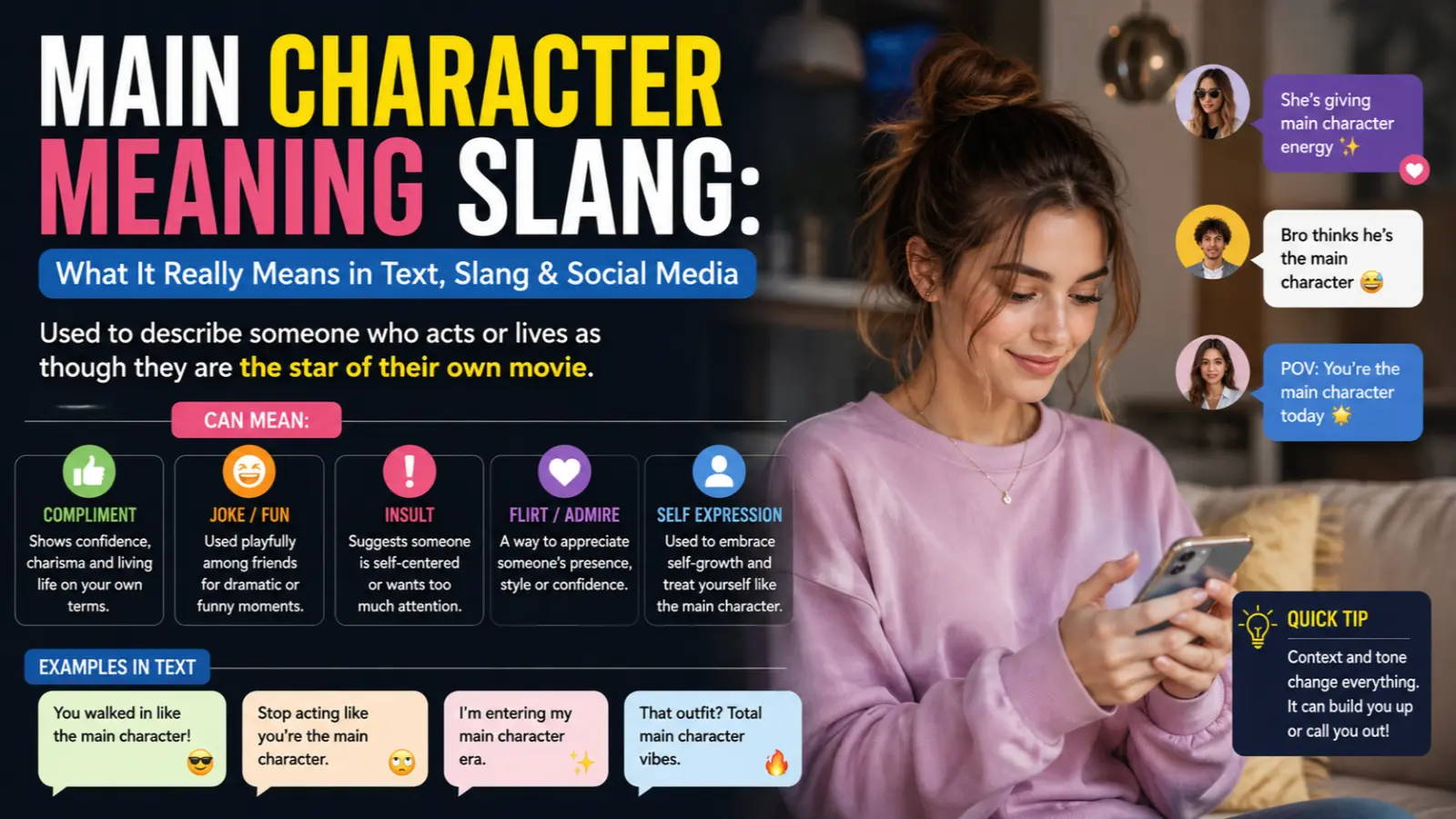
Main character meaning slang has become one of the most talked-about internet phrases on TikTok, Instagram, X, and everyday text messages. Maybe you’ve seen someone comment, “She’s giving main character energy,” or a friend jokingly says, “Stop acting like the main character.” At first glance, it sounds flattering—but is it always a compliment?
Imagine these conversations:
Friend 1: “Did you see Jake filming himself walking through the airport?”
Friend 2: “Total main character moment.”
Or maybe you’ve seen a TikTok caption that says:
“POV: You’re finally living your main character era.”
So, what does it actually mean? Is it about confidence, attention-seeking, self-love, or something completely different?
The truth is that this modern slang can express admiration, sarcasm, humor, or even criticism depending on the situation. That’s exactly why so many people search for its meaning.
Let’s break it down in a way that actually makes sense.
Quick Definition
In internet slang, main character refers to someone who acts or lives as though they are the star of their own movie or story. The phrase often describes a person who behaves as if they are the center of attention or the most important person in a situation.
Depending on the tone, it can have several meanings.
Main Character Meaning Slang as a Compliment
Sometimes the phrase celebrates confidence.
Example:
“She’s finally chasing her dreams. Main character energy!”
Here, it means someone is taking control of their own life instead of living for other people’s expectations.
Main Character Meaning Slang as an Insult
Other times it’s sarcastic.
Example:
“He interrupted everyone because he thought the meeting was about him. Such a main character.”
In this context, it suggests someone is self-centered or overly dramatic.
Main Character Meaning Slang as a Joke
Friends often use it playfully.
Example:
“You put on sunglasses just because the wind started blowing? Main character vibes.”
The humor comes from pretending everyday moments are part of a movie scene.
Main Character Meaning Slang While Flirting
Occasionally, people use it to admire someone’s confidence or charisma.
Example:
“You walked into the room like the main character.”
This usually praises someone’s presence rather than criticizing them.
Main Character Meaning Slang as Emotional Expression
People also use it to encourage self-growth.
Example:
“Start treating yourself like the main character of your own life.”
This reflects self-respect, healing, and personal growth.
Main Character Meaning Slang as Social Commentary
Online, the phrase can expose people who constantly seek attention.
Example:
“Everything somehow becomes about him. Classic main character syndrome.”
The emotional message is simple: people notice whether someone inspires confidence or demands attention.
What Does Main Character Meaning Slang Mean in Text?
When someone texts “main character”, they usually mean one of these:
- You’re acting like the star of the story.
- You’re getting everyone’s attention.
- You’re confident.
- You’re dramatic.
- You’re making everything about yourself.
- You’re having a cinematic life moment.
Because texting removes facial expressions and voice tone, context becomes everything.
Compare these messages:
“Girl, you’re the main character today ❤️”
Positive.
“Bro really thinks he’s the main character 💀”
Sarcastic.
“Time to enter my main character era.”
Motivational.
Origin & Background
Although the phrase “main character” has existed in books and movies for decades, its slang meaning exploded during the early 2020s.
TikTok creators began encouraging viewers to romanticize everyday life. Suddenly, making coffee, walking in the rain, listening to music, or watching sunsets became “main character moments.”
People started filming ordinary experiences with cinematic music, slow-motion editing, and aesthetic visuals. The message wasn’t about narcissism—it was about appreciating your own life.
Soon, the internet added another layer.
Instead of simply describing confidence, people began using “main character” sarcastically to call out selfish behavior.
Today, the phrase carries two opposite meanings:
- Healthy confidence
- Excessive self-importance
That’s one reason it became so popular across TikTok, Instagram, YouTube Shorts, and meme culture.
Internet language evolves incredibly fast. A phrase that begins as motivation can quickly become a joke, a meme, or even social criticism.
Real-Life Conversations
WhatsApp Chat
Sara: “I finally booked my solo trip.”
Maya: “Main character energy! I’m proud of you.”
Here, the slang celebrates independence.
Instagram DM
Alex: “Did you notice he recorded himself entering the café?”
Ryan: “Bro thinks he’s the main character.”
This is playful criticism.
TikTok Comments
“This outfit is giving main character vibes.”
“POV: Main character walking into school after summer break.”
“Why is this so cinematic?”
These comments celebrate confidence and aesthetic storytelling.
Text Messages
Emma: “I got the promotion!”
Lily: “YES! Main character moment!”
The phrase becomes encouragement.
Group Chat
Friend 1: “Mark ordered for everyone without asking.”
Friend 2: “Main character syndrome 😂”
Everyone understands that the joke isn’t about movies—it’s about behavior.
Across social media and texting, the emotional pattern stays the same. Sometimes the phrase celebrates confidence and personal growth. Other times, it gently mocks someone for acting as though the world revolves around them. Understanding the tone is what makes internet slang so fascinating.
Emotional & Psychological Meaning
The popularity of main character meaning slang goes far beyond social media trends. At its core, the phrase reflects how people see themselves—and how they want others to see them.
Sometimes, calling someone the “main character” is a compliment. It recognizes confidence, independence, and the courage to enjoy life without constantly seeking approval. Think of someone dancing in the rain, taking a solo vacation, or celebrating a personal achievement. They aren’t trying to impress everyone else; they’re simply embracing their own story.
On the other hand, the phrase can also point out unhealthy attention-seeking. If someone constantly interrupts conversations, exaggerates every situation, or believes every event revolves around them, people may jokingly call them the “main character.”
This dual meaning makes the slang emotionally powerful.
Imagine a group of friends planning dinner. One friend changes the restaurant, the meeting time, and even the activity without asking anyone else.
Later, someone laughs and says:
“Okay, enough main character energy today.”
Everyone smiles because the message isn’t necessarily cruel. It’s a gentle reminder that every story has more than one important person.
That’s the deeper psychology behind it.
Usage in Different Contexts
Main Character Meaning Slang on Social Media
Social media is where the phrase truly thrives.
People often post aesthetic videos with captions like:
- “Entering my main character era.”
- “Every walk deserves a movie soundtrack.”
- “Protecting my peace like the main character.”
Here, the phrase encourages confidence and self-expression.
Main Character Meaning Slang Among Friends & Relationships
Friends usually use it humorously.
Example:
“You’re definitely the main character today after that entrance.”
In relationships, it may describe someone who enjoys attention—or someone who inspires others through confidence.
Main Character Meaning Slang at Work
Professional settings require more caution.
Calling a coworker the “main character” could sound like criticism, suggesting they dominate meetings or seek unnecessary attention.
Unless everyone shares the joke, it’s better avoided in formal communication.
Casual vs Serious Tone
Tone changes everything.
Casual:
“She’s giving main character vibes today.”
Serious:
“He acts like everyone else is just an extra.”
The same slang can sound supportive, funny, or critical depending on context.
When NOT to Use It
Although popular, main character meaning slang isn’t appropriate everywhere.
Avoid using it:
- During serious workplace discussions.
- In emotional family arguments.
- With older relatives unfamiliar with internet slang.
- During professional emails or presentations.
- In cross-cultural conversations where the phrase may not translate well.
Someone unfamiliar with internet culture might misunderstand your intention completely.
Context protects meaning.
Common Misunderstandings
Many people misunderstand this slang.
It Always Means Narcissistic
Not true.
Many people simply use it to celebrate confidence and personal growth.
It’s Always a Compliment
Also incorrect.
Depending on tone, it may criticize selfish behavior.
It Only Exists on TikTok
While TikTok popularized the phrase, it’s now common across Instagram, X, YouTube, Reddit, and everyday texting.
Everyone Uses It the Same Way
Internet communities develop their own meanings. Context always matters.
Comparison Table
| Expression | Meaning | Tone | Usage Context |
|---|---|---|---|
| Main Character | Acting like the star of the story | Positive or sarcastic | Social media, texting |
| Main Character Energy | Confident, cinematic, memorable | Positive | TikTok, Instagram |
| Pick Me | Seeks validation or attention | Mostly negative | Online discussions |
| Attention Seeker | Wants constant focus | Negative | Everyday conversation |
| Main Character Syndrome | Believes everything revolves around them | Critical | Memes and jokes |
Although these expressions overlap, they aren’t identical. “Main character” often celebrates confidence, while “pick me” and “attention seeker” usually criticize someone’s behavior.
Variations & Types
Internet slang evolves constantly, and “main character” has inspired several popular variations.
Main Character Energy
The most common version.
Example:
“She’s got main character energy today.”
Main Character Era
Used when someone starts prioritizing themselves or making positive life changes.
Main Character Syndrome
A sarcastic way to describe someone who believes they’re the center of everyone’s world.
Main Character Vibes
A lighter, playful version often used on Instagram and TikTok.
Main Character Moment
Describes a memorable or cinematic experience.
Example:
“Watching the sunset with music playing felt like a main character moment.”
How to Respond When Someone Uses It
Casual Replies
- “I’ll take that!”
- “Haha, maybe a little.”
- “That’s the goal.”
Funny Replies
- “Where’s my movie soundtrack?”
- “Don’t forget the slow-motion scene.”
- “I’m waiting for the plot twist.”
Mature Replies
- “I’m just trying to enjoy life.”
- “Everyone deserves to feel like the hero of their own story.”
Respectful Replies
- “Thanks, I appreciate that.”
- “That’s kind of you to say.”
Matching the other person’s energy makes conversations feel more natural.
Regional & Cultural Usage
Western Culture
In North America and Europe, “main character” is widely used as both encouragement and playful criticism. Self-confidence is often celebrated, but excessive self-focus may also be mocked.
Asian Culture
Many younger users recognize the phrase through TikTok, K-dramas, anime edits, and influencer content. It often emphasizes personal growth rather than arrogance.
Middle Eastern Culture
Among younger internet users, the slang appears frequently in English-language memes and social media. However, older generations may not recognize the expression.
Global Internet Usage
Thanks to TikTok, Instagram Reels, and YouTube Shorts, “main character” has become part of global internet culture. Even when translated into other languages, the emotional idea remains similar.
Generational Differences
Gen Z
Gen Z uses the phrase daily. For them, it’s part of online identity, humor, and self-expression.
Millennials
Millennials understand the slang but often use it more sparingly, usually in memes or casual conversations.
Older Generations
Many older adults understand the literal meaning but may miss the internet humor behind it.
Language often reflects the generation that creates it, and “main character” is a perfect example of modern digital culture shaping everyday communication.
Is It Safe for Kids?
Generally, yes.
The phrase itself is harmless and often encourages confidence and self-belief.
However, parents and educators should also explain the difference between healthy confidence and believing the world revolves around you.
Teaching empathy alongside confidence helps young people understand that everyone is the main character in their own story.
Frequently Asked Questions
What does main character mean in slang?
It refers to someone acting or living as though they are the star of their own movie or the center of attention.
Is main character a compliment?
Sometimes. It can praise confidence or criticize attention-seeking depending on the tone.
What does main character mean in text messages?
It usually comments on someone’s behavior, confidence, or dramatic moment.
Why is main character popular on TikTok?
TikTok popularized videos encouraging people to romanticize everyday life and embrace self-confidence.
Can main character be rude?
Yes. If used sarcastically, it may imply someone is selfish or overly dramatic.
Do older people understand main character slang?
Not always. The expression is most common among Gen Z and younger Millennials who spend time on social media.
Conclusion
Understanding main character meaning slang is about more than learning another internet phrase. It’s about recognizing how modern language reflects confidence, identity, humor, and social awareness.
If someone is genuinely embracing their personal journey or simply acting as though they’re the center of attention, the phrase captures a uniquely modern way of describing human behavior.
As internet culture continues to evolve, slang like main character reminds us that every generation creates new ways to express emotions, relationships, and personality. The real meaning of main character meaning slang isn’t just being the star of your own movie—it’s understanding when confidence inspires others and when attention begins to overshadow everyone else.
After all, the best stories aren’t about one person alone—they’re about knowing when to shine and when to let others have their moment too.

I’m Grace Punston, a playful writer with a passion for clever puns and joyful wordplay. I love crafting witty lines that make readers grin and giggle. My goal is to spread laughter through smart, lighthearted writing. Every pun I share is a little spark of fun meant to brighten your day.