You’re scrolling through your messages… someone replies with just:
“mm”
No emoji. No punctuation. Just that.
And suddenly your brain starts overthinking everything.
👉 Are they agreeing?
👉 Are they annoyed?
Was that dry… or calm?
If you’ve ever paused over a simple “mm” and felt confused, you’re not alone. The phrase MM Mean in Text is one of those tiny internet responses that carries way more emotional weight than it looks.
At its core, “mm” means “yes” or “affirmative”, but the real story? It’s all about tone, timing, and vibe.
Let’s break it down in a way that actually makes sense.
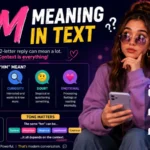
Quick Answer:
“MM” in text usually means:
👉 Yes
👉 Affirmative
👉 I hear you / I agree
But here’s where it gets interesting…
Depending on how it’s used, “mm” can also express:
- quiet agreement
- passive listening
- mild interest
- emotional distance
- sarcasm
- boredom
- subtle attitude
Simple Examples:
- “You coming tonight?”
→ “mm” (yes, but low energy) - “That movie was amazing”
→ “mm” (I kinda agree… not fully) - “I miss you”
→ “mm” (emotionally unclear… could be awkward)
👉 Core emotional meaning:
“MM” isn’t just a yes — it’s a low-effort, tone-heavy acknowledgment.
What Does MM Mean in Text
At a basic level, MM Mean in Text = yes or affirmative, but socially, it means:
👉 “I’m responding… but not fully engaging.”
It’s like a quiet nod in conversation.
Not rude. Not excited. Just… there.
And that’s exactly why it’s so confusing.
Origin & Background
“MM” didn’t start as internet slang.
It actually comes from real-life speech — that soft humming sound people make:
👉 “mm-hmm” (agreement)
👉 “mmm” (thinking or reacting)
Over time, texting culture simplified everything. So:
- “mm-hmm” → “mm”
- “mmm okay” → “mm”
Then social media platforms like TikTok and Instagram made it even more common.
Now it’s everywhere:
- quick replies
- lazy texting
- emotional buffering
- subtle reactions
And here’s the truth:
👉 Online language evolves faster than emotions can keep up.
So something simple like “mm” becomes layered with meaning.
Real-Life Conversations
WhatsApp Chat
You: “I got the job!”
Them: “mm”
👉 Feels off, right?
Instagram DM
You: “You looked really good today”
Them: “mm thanks”
👉 Slightly shy… or slightly uninterested?
Group Chat
Friend 1: “Let’s go out tonight”
Friend 2: “mm”
👉 That’s a maybe, not a yes.
TikTok Comments
“mm this kinda mid”
👉 Agreement… but low enthusiasm.
Emotional Pattern
People use “mm” when they want to:
- respond without effort
- avoid long replies
- stay neutral
- hide real emotions
Emotional & Psychological Meaning
This is where things get deeper.
Using “mm” often signals:
- emotional restraint
- social caution
- passive communication
- low energy
- quiet judgment
Sometimes it’s not about what they say… it’s about what they don’t say.
Mini Story
You text someone you like:
“I really enjoy talking to you”
They reply:
“mm”
Now your brain goes into analysis mode.
Do they like me?
Are they unsure?
Did I say too much?
That one “mm” creates emotional ambiguity.
And honestly?
👉 That’s the deeper psychology behind it.
Usage in Different Contexts
Social Media
- Used casually
- Often neutral or slightly dismissive
- Common in comments and DMs
Example:
“mm yeah I’ve seen better”
Friends & Relationships
- Can feel dry or distant
- Sometimes playful, sometimes cold
Example:
“mm okay whatever”
Work or Professional Settings
- Rarely used
- Can seem unprofessional or unclear
Better to say:
“Got it” or “Understood”
Casual vs Serious Tone
- Casual: normal, chill
- Serious: can feel dismissive or awkward
Context changes everything.
When NOT to Use It
Avoid “mm” when:
- you’re in serious conversations
- someone is emotional
- you’re talking professionally
- clarity matters
- you’re texting older people
Because “mm” can feel:
- careless
- uninterested
- emotionally unavailable
👉 Context protects meaning.
Common Misunderstandings
❌ “MM always means yes”
✔ Sometimes it means bare minimum acknowledgment
❌ “It’s always rude”
✔ Not rude — just low effort
“It shows agreement”
✔ Sometimes it shows indifference
“It’s clear communication”
✔ Actually, it’s emotionally vague
Comparison Table
| Expression | Meaning | Tone | Usage Context |
|---|---|---|---|
| MM | Yes / acknowledgment | Neutral / low energy | Casual chats |
| Yeah | Clear agreement | Friendly | Everyday texting |
| Ok | Acceptance | Neutral | General use |
| K | Minimal response | Cold / dry | Informal |
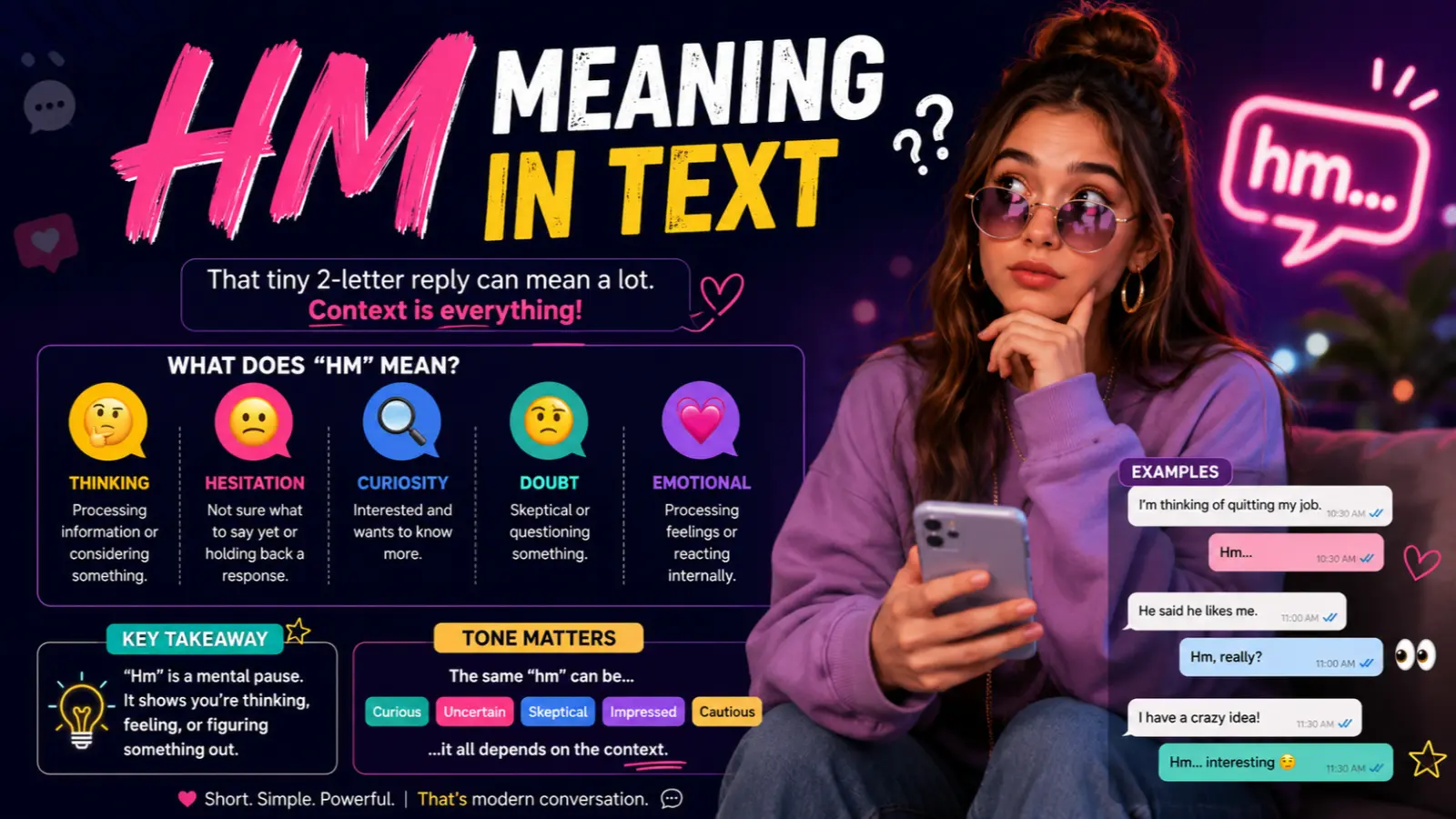
| Hmm | Thinking / unsure | Curious | Conversations |
Insight
“MM” sits in that gray zone between engaged and detached.
That’s why it feels confusing.
Variations & Types
- mmm → more emotional, sometimes appreciative
- mmhmm → stronger agreement
- mm okay → passive acceptance
- mm… → hesitation or doubt
- mhm → casual agreement
Each variation slightly shifts tone.
That’s how subtle internet language is.
How to Respond When Someone Uses It
Casual Replies
- “haha okay”
- “got you”
Funny Replies
- “that’s all I get? 😂”
- “mm? that’s it??”
Mature Replies
- “is that a yes?”
- “you seem unsure”
Respectful Replies
- “alright, let me know what you think”
👉 Matching energy matters more than words.
Regional & Cultural Usage
Western Culture
- Very common
- Often casual and neutral
Asian Culture
- Can feel more polite or reserved
- Less emotional expression
Middle Eastern Culture
- Sometimes seen as dry
- Tone matters more
Global Internet Usage
Social media made “mm” universal.
But interpretation still depends on culture.
Generational Differences
Gen Z
- Uses it casually
- Understands tone instantly
Millennials
- Uses it, but reads into it more
Older Generations
- May find it confusing or rude
👉 Language reflects identity.
Is It Safe for Kids
Yes — mostly harmless.
But:
- can be used to dismiss others
- may create confusion
- lacks emotional clarity
Parents should encourage clearer communication.
FAQs
What does MM mean in texting?
It means yes or acknowledgment, but tone can change everything.
Is MM rude?
Not always. It depends on context and deliveryDoes MM mean yes?
Yes — but often a low-energy yes.
What does MM mean on TikTok?
Usually agreement or reaction, often casual or slightly dismissive.
Can MM be used professionally?
Not recommended. It feels unclear and informal.
Why do people use MM instead of yes?
Because it’s quicker, softer, and emotionally less committed.
Conclusion
At first glance, MM Mean in Text looks simple — just “yes” or “affirmative.”
But in real conversations?
It’s layered.
It’s subtle.
emotional.
It can mean:
- agreement
- hesitation
- distance
- calm acknowledgment
And that’s what makes internet language so powerful.
👉 It’s not just what we say… it’s how little we say and still mean something.
Because sometimes, a single “mm” says more than a full sentence ever could.

I’m Jake Punman, a humor writer who lives for clever wordplay and laugh-out-loud puns. I love crafting witty lines that turn simple moments into bursts of laughter. My passion is making people smile through creative twists of language. With every pun I write, I aim to add a little more fun to your day.