You’re scrolling through your messages, half-awake, and suddenly someone texts:
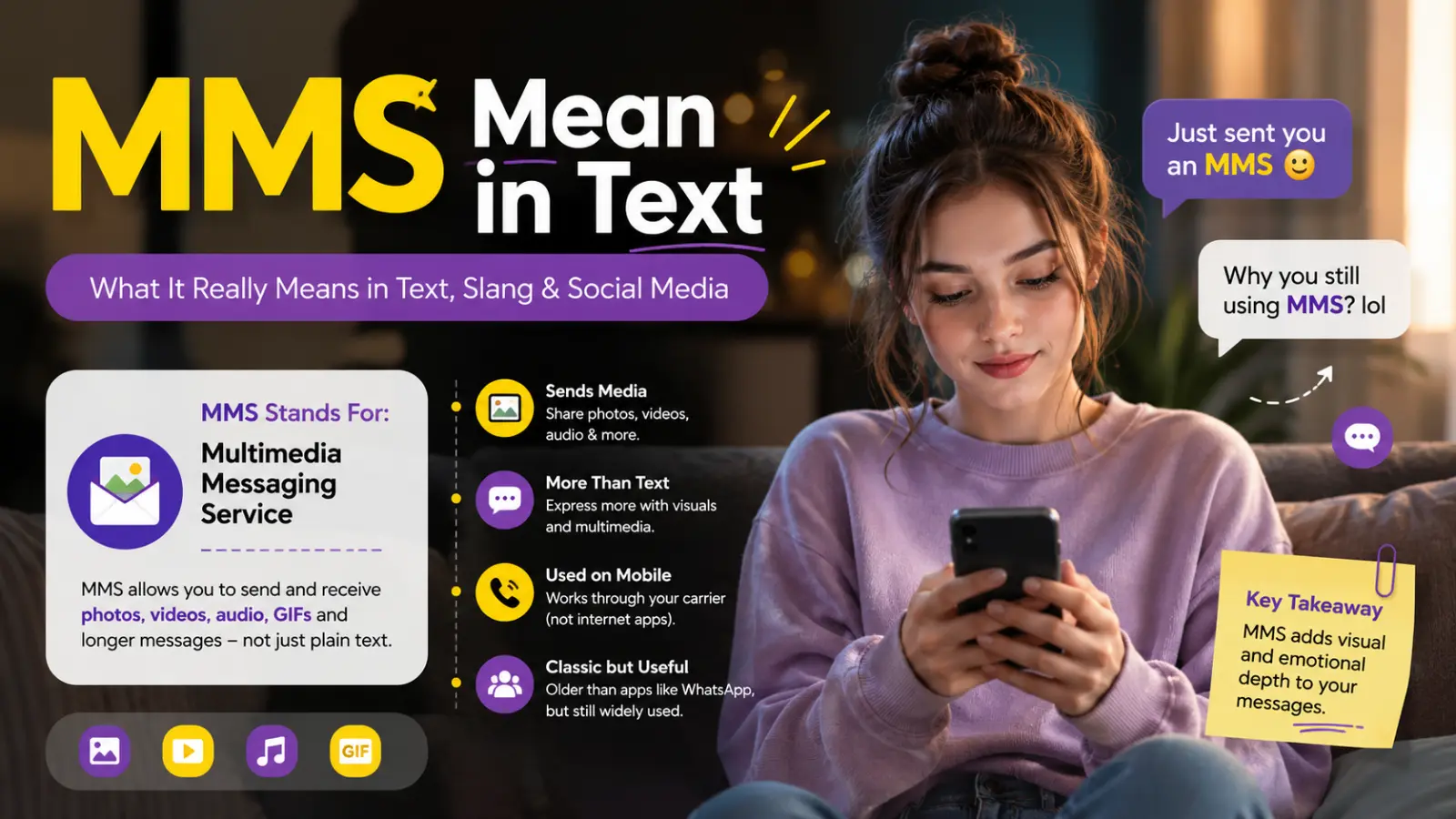
“Just sent you an MMS 👀”
Or maybe:
“Why you still using MMS lol”
And you pause.
Wait… MMS? Isn’t that… old? Or is it slang now?
That exact moment of confusion is why people search MMS Mean in Text, trying to figure out whether it’s technical, sarcastic, or secretly something deeper.
At its core, MMS means “Multimedia Messaging Service” — but online, the way people use it can carry more emotional and social meaning than you’d expect.
Let’s break it down in a way that actually makes sense.
Quick Answer
MMS (Multimedia Messaging Service) is a type of message that allows you to send:
• Photos
• Videos
• Audio clips
• GIFs
• Longer text messages
Unlike SMS (which is just plain text), MMS adds visual and emotional layers to communication.
But here’s where it gets interesting…
In texting culture, MMS isn’t just technical. It can also imply:
• “I sent something important”
• “Check what I sent (it’s visual)”
• “This message has more emotional weight”
• “I’m trying to show, not just tell”
Example:
“I couldn’t explain it, so I sent an MMS.”
That’s not just a message — that’s intention.
👉 The core emotional meaning: MMS signals effort, expression, and visual communication.
What Does MMS Mean in Text
In simple terms:
MMS in text = sending media instead of just words.
But emotionally?
It often means:
• “This matters more than plain text”
• “I want you to see what I feel”
• “Words aren’t enough here”
Think about it.
A “good morning” text is nice.
But a “good morning” with a photo, voice note, or meme?
That hits differently.
Origin & Background
MMS isn’t new at all.
It actually comes from early mobile technology — before apps like WhatsApp, Snapchat, or Instagram even existed.
Back then:
• SMS = text only
• MMS = media messaging
It was revolutionary at the time.
But then social media happened.
Apps made MMS feel outdated… almost forgotten.
Until recently.
Now, MMS is making a quiet comeback in conversations — sometimes seriously, sometimes ironically.
Especially on platforms like:
• TikTok (people joking about “old phone behavior”)
• Twitter/X (tech nostalgia jokes)
• Instagram DMs (mocking or referencing message types)
👉 Internet language evolves fast — even old tech terms can become modern slang again.
Real-Life Conversations
WhatsApp Chat
“Why didn’t you reply?”
“I sent you an MMS bro, check your gallery 😭”
Instagram DM
“Wait… you still sending MMS?? It’s 2026 😭”
Text Message
“I couldn’t explain it properly so I sent an MMS.”
Group Chat
“Bro dropped an MMS like it’s 2010 💀”
TikTok Comment
“MMS in this economy?? 😭”
After looking at these, a pattern shows up:
👉 MMS is often used with a mix of seriousness and humor.
Sometimes it’s literal.
Sometimes it’s nostalgic.
Emotional & Psychological Meaning
Here’s where it gets deeper.
Using MMS isn’t just about sending media — it’s about how people express themselves emotionally.
When someone says “I sent an MMS,” it can signal:
• Effort — “I didn’t just type, I showed you”
• Vulnerability — “This is more personal”
• Intent — “Pay attention to this”
• Creativity — “I chose a better way to express it”
There’s also a subtle psychological layer:
In a world full of fast, low-effort texting,
sending media feels… intentional.
It slows things down.
It says:
👉 “This moment matters enough to show, not just say.”
Mini Story:
A guy texts his friend:
“I’m fine.”
Then sends an MMS — a photo of him sitting alone at night.
Now the message changes completely.
That’s the deeper psychology behind it.
Usage in Different Contexts
Social Media
MMS is often used humorously or ironically.
“Man said MMS like we in 2009 😭”
Tone: playful, sarcastic.
Friends & Relationships
More emotional and expressive.
“I sent you an MMS, just look.”
Tone: meaningful, sometimes vulnerable.
Work or Professional Settings
Rarely used.
Instead, people say:
“I’ve attached a file.”
Using MMS here can feel unprofessional or outdated.
Casual vs Serious Tone
• Casual → joking about old tech
• Serious → sending something meaningful
👉 Context completely changes how MMS feels.
When NOT to Use It
Avoid using MMS when:
• You’re in formal conversations
• You’re talking to someone unfamiliar with tech terms
• You’re in emotional arguments (can be misinterpreted)
• You’re communicating professionally
• You’re speaking across generations
👉 Context protects meaning.
Common Misunderstandings
1. “MMS is slang only”
No — it’s originally a technical term.
2. “It’s always outdated”
Not always. Sometimes it’s used intentionally.
3. “It’s always a joke”
Depends on tone. It can be serious.
4. “It means something hidden”
Usually not. It’s mostly literal or lightly sarcastic.
Comparison Table
| Expression | Meaning | Tone | Usage Context |
|---|---|---|---|
| MMS | Multimedia message | Neutral / expressive | Texting, media sharing |
| SMS | Text-only message | Basic | Formal or simple texting |
| DM | Direct message | Casual | Social media |
| Snap | Snapchat message | Playful | Younger audiences |
| Voice Note | Audio message | Personal | Close conversations |
👉 The difference is emotional depth — MMS often carries more visual storytelling energy.
Variations & Types
People play with MMS in creative ways:
• “Sent you an MMS” → standard
• “Bro really sent an MMS 💀” → sarcastic
• “MMS energy” → meme-style expression
• “That’s MMS behavior” → teasing someone
Each variation shifts tone slightly:
• Playful
• Mocking
• Nostalgic
• Expressive
How to Respond When Someone Uses It
Casual Replies
“Got it, checking now.”
“Ohh okay, let me see.”
Funny Replies
“MMS?? What year is this 😂”
“Bro unlocked vintage messaging 😭”
Mature Replies
“Thanks for sending that, I understand better now.”
Respectful Replies
“I saw it. That helped explain things clearly.”
👉 Matching energy matters more than the words.
Regional & Cultural Usage
Western Culture
Used more ironically or humorously.
Asian Culture
More practical — still used in some mobile contexts.
Middle Eastern Culture
Mix of practical use and modern messaging apps.
Global Internet Usage
Mostly understood but often replaced by app-based messaging.
👉 Social media makes language global, but meaning still shifts culturally.
Generational Differences
Gen Z
Uses MMS jokingly or ironically.
Millennials
Understand both technical and cultural meanings.
Older Generations
Use MMS more literally.
👉 Language reflects identity — and your generation shapes how you use it.
Is It Safe for Kids
Yes, generally.
MMS itself is harmless.
But:
• Content shared matters
• Tone can affect emotions
• Misunderstanding can happen
Parents should focus on communication habits, not just the term.
FAQs
1. What does MMS mean in text?
It means Multimedia Messaging Service — sending photos, videos, or media.
2. Is MMS still used today?
Yes, but often replaced by apps like WhatsApp.
3. Is MMS slang or technical?
Originally technical, now sometimes used as slang or humor.
4. Can MMS be rude?
No — tone depends on context.
5. Why do people joke about MMS?
Because it feels old-school compared to modern apps.
6. Should I use MMS in professional messages?
No, it’s better to say “attachment” or “file.”
Conclusion
Understanding MMS Mean in Text isn’t just about knowing it stands for Multimedia Messaging Service , it’s about recognizing how people communicate emotionally in the digital world.
Sometimes, it’s literal.
Sometimes, it’s nostalgic.
It’s a quiet way of saying:
👉 “This matters more than words.”
In a world full of fast texts and quick replies, MMS reminds us of something simple:
Not everything can be explained — some things need to be shown.

I’m Grace Punston, a playful writer with a passion for clever puns and joyful wordplay. I love crafting witty lines that make readers grin and giggle. My goal is to spread laughter through smart, lighthearted writing. Every pun I share is a little spark of fun meant to brighten your day.