You’re scrolling through comments, minding your own business, and suddenly you see:
“OP really said that?? 💀”
“Nah bro that move was OP”
“Ask OP what happened”
And you pause.
Wait… what does “OP” even mean here? Is it a person? A compliment? An insult? Something gaming-related? Or just another internet mystery?
If you’ve ever searched “OP Mean in Text”, you’re not alone. This tiny two-letter slang somehow carries multiple meanings depending on tone, platform, and vibe. And honestly? That’s what makes it so confusing—and interesting.
Let’s break it down in a way that actually makes sense.
Quick Answer:
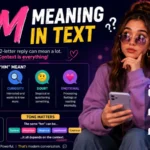
OP is a versatile internet slang term with multiple meanings, depending on context:
- Original Poster → the person who made a post
- Overpowered → extremely strong or impressive (often in games or hype talk)
- Opposition → rival, enemy, or “the other side”
It can be used to:
- call someone out
- give compliments
- joke around
- react to drama
- subtly judge or admire someone
Example:
- “OP is wild for posting this” → calling out the poster
- “That character is OP” → super strong
- “He’s acting like the OP” → referring to an opponent
👉 At its core, OP is about attention—who did something, who stands out, or who’s against you.
OP Mean in Text as “Original Poster”
This is the most classic and widely used meaning.
“OP” = Original Poster
It refers to the person who started a thread, post, or conversation.
Where you’ll see it:
- Facebook groups
- Forums
- Comment sections
Examples:
- “OP, can you explain what happened next?”
- “I agree with OP on this one.”
- “OP didn’t think this through 💀”
👉 Emotionally, this use is about focus and accountability. It puts attention directly on the person who started the conversation.
OP Mean in Text as “Overpowered”
Now we enter gaming and hype culture.
“OP” = Overpowered
It means something (or someone) is too strong, too good, or unbeatable.
Examples:
- “That weapon is OP bro 😭”
- “Her skills are OP”
- “This trick is actually OP”
👉 But here’s the twist—it’s not always literal.
Sometimes it means:
- impressively good
- unfairly strong
- ridiculously effective
- even attractive or confident
Example in real life:
- “Bro walked in with that outfit… OP 🔥”
👉 Emotionally, this usage expresses admiration mixed with disbelief.
OP Mean in Text as “Opposition”
This meaning is more subtle but growing fast, especially in street slang and online culture.
“OP” = Opposition
It refers to someone you’re against—an enemy, rival, or outsider.
Examples:
- “Don’t trust him, he’s OP”
- “We don’t talk to the OP”
- “That team is the OP”
👉 This meaning carries a defensive, territorial vibe.
Emotionally, it signals:
- loyalty
- distrust
- group identity
What Does OP Mean in Text?
In texting, OP meaning depends entirely on context:
- In discussions → Original Poster
- In gaming or hype → Overpowered
- In conflict or group talk → Opposition
Same word. Different energy.
That’s why people get confused—it’s not about the word itself.
It’s about the situation, tone, and intention behind it.
Origin & Background
“OP” didn’t start as slang—it started as pure internet function.
- Early forums and platforms like Reddit used “OP” to label the Original Poster
- Gamers later adopted “OP” to describe overpowered characters or mechanics
- Over time, street and online culture reshaped it into “opposition”
Then came:
- TikTok edits using “OP” for hype
- Meme culture exaggerating “OP moments”
- Group slang redefining it socially
👉 Internet language evolves fast.
A simple abbreviation can become a multi-layered cultural signal in just a few years.
Real-Life Conversations
WhatsApp Chat
Friend 1: “Who posted that embarrassing video?”
Friend 2: “OP is gonna regret this 😭”
👉 Calling out the original poster
Instagram Comments
User: “That outfit???”
Reply: “OP went crazy 🔥”
👉 Complimenting
TikTok Comments
“Why is no one talking about OP’s confidence??”
👉 Admiring
Group Chat
“Don’t invite him, he’s OP”
👉 Referring to opposition
👉 Across all these examples, one thing stays consistent:
OP always points attention toward someone with emotional weight attached.
Emotional & Psychological Meaning
Using “OP” is rarely neutral.
It subtly signals:
- awareness → you noticed something important
- judgment → you’re evaluating behavior
- admiration → someone impressed you
- distance → someone is “not one of us”
- confidence → you understand the social vibe
Mini-story:
You’re in a group chat. Someone shares a bold opinion.
Silence. Then someone types:
“OP really thought we’d agree 😭”
That’s not just a comment.
That’s social pressure, humor, and mild judgment—all in one line.
👉 That’s the deeper psychology behind it.
Usage in Different Contexts
Social Media
Fast, reactive, and expressive.
- “OP is wild for this”
- “That move was OP”
👉 Tone: playful or judgmental
Friends & Relationships
More emotional and personal.
- “OP didn’t deserve that”
- “You acting OP right now”
👉 Tone: supportive or teasing
Work or Professional Settings
Usually avoided or misunderstood.
👉 Using “OP” here can confuse people.
Casual vs Serious Tone
- Casual: “That was OP 😂”
- Serious: “OP needs to clarify this”
👉 Tone completely changes meaning.
When NOT to Use It
Avoid using “OP” in:
- formal emails
- professional meetings
- serious emotional conflicts
- conversations with older audiences
- cross-cultural discussions
👉 Because not everyone understands internet slang the same way.
👉 Context protects meaning.
Common Misunderstandings
- Thinking OP always means Original Poster
- Assuming it’s always positive
- Missing sarcastic tone
- Confusing “overpowered” with literal strength
👉 The mistake? Ignoring context.
Comparison Table
| Expression | Meaning | Tone | Usage Context |
|---|---|---|---|
| OP | Original Poster / Overpowered / Opposition | Flexible | Social media, gaming, chats |
| POV | Point of View | Reflective | TikTok, storytelling |
| NPC | Background person | Insulting | Meme culture |
| GOAT | Greatest of all time | Admiring | Sports, hype |
👉 “OP” stands out because it’s context-driven, not fixed.
Variations & Types
- OP af → exaggerated admiration
- so OP → emphasis
- OP moment → standout action
- acting OP → behavior-focused
- OP energy → vibe-based
👉 Small changes, big emotional shifts.
How to Respond When Someone Uses It
Casual Replies
- “😂 relax bro”
- “It’s not that serious”
Funny Replies
- “Yeah I’m OP what about it 😎”
- “Built different fr”
Mature Replies
- “What do you mean exactly?”
- “Explain your point”
Respectful Replies
- “I understand your perspective”
👉 Matching energy matters more than words.
Regional & Cultural Usage
Western Culture
Strong use in gaming and Reddit.
Asian Culture
Popular in gaming and anime communities.
Middle Eastern Culture
Used in group identity contexts (opposition meaning).
Global Internet Usage
Blended meanings due to TikTok and memes.
👉 Social media removes borders—but not misunderstandings.
Generational Differences
- Gen Z: uses all meanings fluidly
- Millennials: mostly Original Poster
- Older generations: often confused
👉 Language reflects identity.
Is It Safe for Kids?
Mostly yes—but context matters.
- harmless in gaming
- risky in teasing or exclusion
- tone can shift quickly
👉 It’s not the word—it’s how it’s used.
FAQs
1. What does OP mean in texting?
It can mean Original Poster, Overpowered, or Opposition depending on context.
2. Is OP rude?
Not always. It can be playful, admiring, or slightly judgmental.
3. What does OP mean on TikTok?
Usually Overpowered or referring to the person in the video.
4. Can OP be a compliment?
Yes—especially when it means “overpowered.”
5. Is OP used in gaming?
Yes, very commonly to describe strong characters or strategies.
6. Should I use OP at work?
Better not, it can confuse people.
Conclusion
OP Mean in Text isn’t just a definition—it’s a reflection of how we communicate online.
Whether it means:
- Original Poster
- Overpowered
- Opposition
…it always carries emotion, attention, and social meaning.
In a world where conversations are fast and subtle, words like “OP” do more than speak, they signal, judge, connect, and express identity.
And maybe that’s the real power of internet slang.
👉 Sometimes, two simple letters say more than a full sentence ever could.

I’m Jake Punman, a humor writer who lives for clever wordplay and laugh-out-loud puns. I love crafting witty lines that turn simple moments into bursts of laughter. My passion is making people smile through creative twists of language. With every pun I write, I aim to add a little more fun to your day.