You’re scrolling through your chats… and suddenly you see:
“IMSG you already bro”
“Wait, IMSG her yesterday…”
“Why you acting like I didn’t IMSG you?”
And you pause for a second.
IMSG? Did they mean message? Instant message? Something else?
That tiny four-letter word carries more meaning than it looks like—and honestly, it’s one of those subtle internet phrases that quietly reveals how people communicate, chase attention, or even protect their emotions.
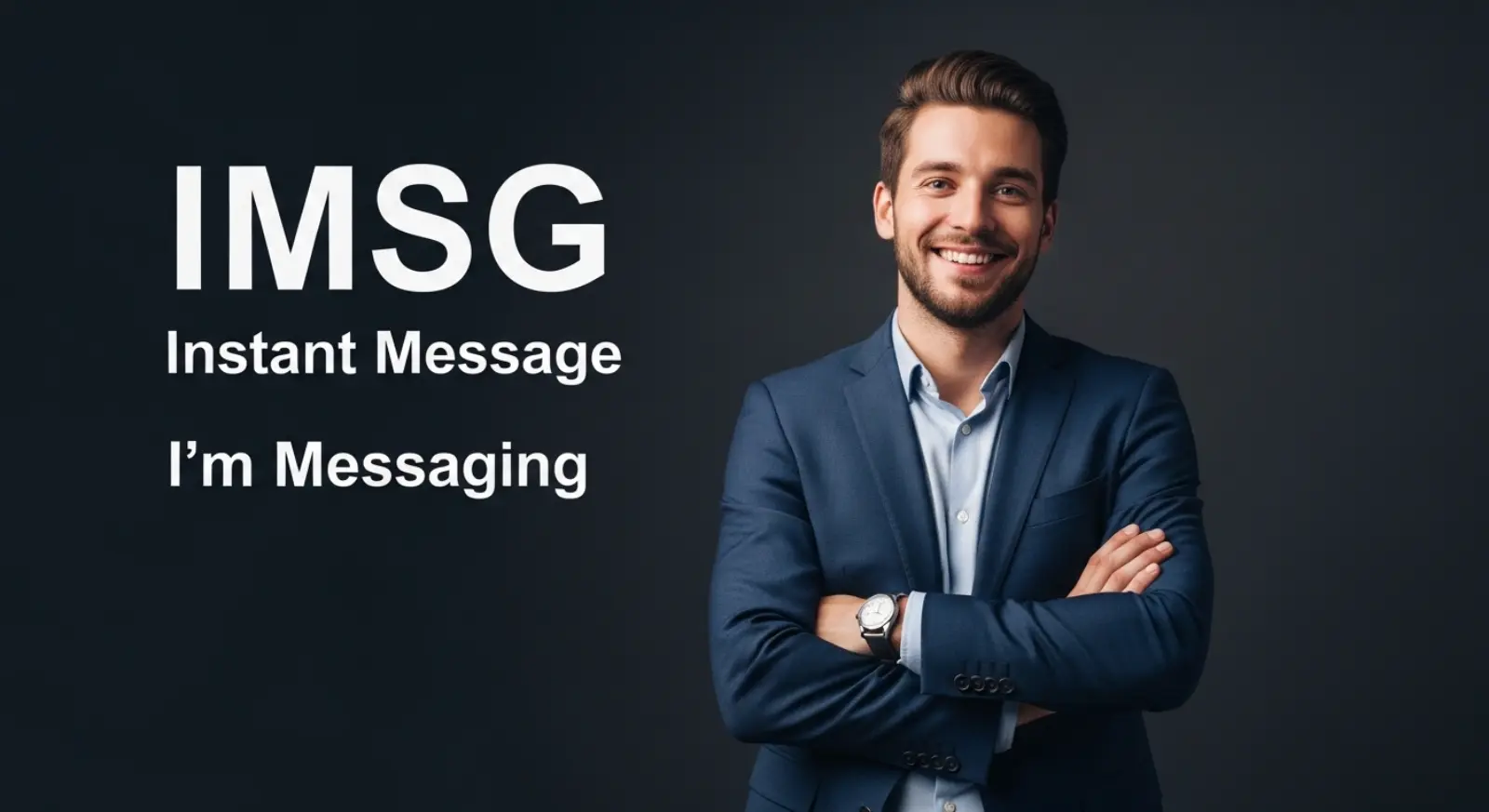
That’s why so many people search for IMSG Mean in Text — “I Messaged” or “Instant Message”. It looks simple, but context changes everything.
Let’s break it down in a way that actually makes sense.
Quick Answer
IMSG usually stands for:
- “I Messaged” (past tense action)
- “Instant Message” (type of communication)
But here’s the thing—people don’t just use it to describe an action.
They use it to signal effort, expectation, or even emotional intent.
Simple Examples:
- “I IMSG you last night” → I already reached out
- “Just send me an IMSG” → Message me quickly
- “He said he IMSG her first” → He made the move
Emotional Meaning (Core Insight)
At its core, IMSG is about connection effort.
It subtly answers the question:
👉 “Who reached out first—and who didn’t?”
What Does IMSG Mean in Text
In texting, IMSG most commonly means “I Messaged.”
It’s used to:
- Confirm communication
- Remind someone you already reached out
- Show effort in relationships
- Sometimes… guilt-trip (just a little)
Example:
- “I IMSG you, you didn’t reply 😭”
Here, it’s not just information—it’s emotional pressure wrapped in casual language.
Origin & Background
IMSG comes from the natural evolution of fast typing culture.
People shortened:
- “I messaged you” → “I msg you” → “IMSG you”
At the same time, older internet culture used “IM” (Instant Message) from platforms like:
- MSN Messenger
- Yahoo Chat
- Early Facebook chats
Over time, Gen Z and social media users blended both meanings into one flexible slang.
TikTok, Instagram, and WhatsApp accelerated its use—especially in relationship conversations and casual arguments.
And here’s the truth:
👉 Internet language doesn’t just evolve—it adapts to emotion faster than dictionaries ever can.
Real-Life Conversations
WhatsApp Chat
- A: “Why didn’t you reply?”
- B: “I IMSG you first 😑”
👉 Translation: I tried. You didn’t.
Instagram DM
- “He said he IMSG her first… that’s bold”
👉 Translation: He made the first move.
Group Chat
- “Did anyone tell him?”
- “Yeah IMSG him already”
👉 Translation: Task done. Responsibility handled.
TikTok Comment
- “IMSG my crush and now I’m scared 😭”
👉 Translation: Emotional risk taken.
Emotional Pattern Behind Usage
IMSG often appears when:
- Someone wants recognition for effort
- Someone feels ignored
- Someone is testing social response
It’s not just a word—it’s a social signal.
Emotional & Psychological Meaning
IMSG might look neutral… but emotionally, it’s layered.
When someone says “I IMSG you,” they might be:
- Seeking acknowledgment
- Protecting their ego
- Showing vulnerability
- Establishing effort in a relationship
Real-Life Mini Story
You message a friend. No reply. Hours pass.
Later, they say:
“Why didn’t you tell me?”
And you respond:
👉 “I IMSG you already.”
That line carries emotion:
- frustration
- subtle defense
- a need to be seen
Because messaging someone is no longer just communication—it’s emotional currency.
👉 That’s the deeper psychology behind it.
Usage in Different Contexts
Social Media
Used casually to show action:
- “I IMSG him, let’s see what happens”
Tone: curious, slightly emotional
Friends & Relationships
More emotionally charged:
- “I IMSG you and you ignored me?”
Tone: hurt, defensive, sometimes playful
Work or Professional Settings
Rarely used.
Instead, people say:
- “I’ve sent you a message”
IMSG feels too casual for formal communication.
Casual vs Serious Tone
- Casual: “I IMSG him lol”
- Serious: “I IMSG you. You didn’t respond.”
Same phrase. Completely different emotional weight.
When NOT to Use It
Avoid using IMSG in:
- Professional emails
- Serious conflicts
- Formal communication
- Conversations with older audiences
- Cross-cultural contexts where slang isn’t clear
Because not everyone reads emotional tone the same way.
👉 Context protects meaning.
Common Misunderstandings
❌ “It only means instant message”
✔️ It often means “I messaged”
❌ “It’s always neutral”
✔️ It can carry emotional pressure
“It’s rude”
Not necessarily—it depends on tone
“It’s always serious”
Sometimes it’s playful or joking
Comparison Table
| Expression | Meaning | Tone | Usage Context |
|---|---|---|---|
| IMSG | I messaged / instant message | Neutral to emotional | Chats, DMs |
| MSG | Message | Neutral | General texting |
| DM | Direct message | Casual | Social media |
| Texted | Sent a text | Neutral | Everyday use |
| Pinged | Contacted quickly | Slightly professional | Work/chat |
Insight
IMSG stands out because it feels more personal and slightly emotional compared to neutral terms like “texted.”
Variations & Types
You’ll see different forms depending on mood:
- “I msg’d you” → cleaner version
- “IMSG u already 😭” → emotional tone
- “Bro IMSG you 3 times” → frustration
- “Just IMSG me” → casual instruction
- “IIMSGGG you!!” → exaggerated, playful
Each variation adds tone, not meaning.
How to Respond When Someone Uses It
Casual Replies
- “Oh I didn’t see it 😅”
- “My bad, checking now”
Funny Replies
- “IMSG received but brain was offline”
- “System error, replying now 😂”
Mature Replies
- “Sorry, I missed it earlier”
- “I’ll respond properly now”
Respectful Replies
- “Thanks for messaging me, I appreciate it”
👉 Matching energy matters more than the words themselves.
Regional & Cultural Usage
Western Culture
Very common in casual texting and dating culture.
Asian Culture
Less common—people prefer full phrases or platform-specific terms.
Middle Eastern Culture
Used among younger audiences, especially on Instagram and WhatsApp.
Global Internet Usage
Thanks to TikTok and memes, IMSG is spreading globally—but meaning depends on context and tone.
Generational Differences
Gen Z
- Uses IMSG naturally
- Adds emotional tone (😭, 😑)
Millennials
- Understand it
- Use it less frequently
Older Generations
- May find it confusing
- Prefer full sentences
👉 Language today reflects identity as much as communication.
Is It Safe for Kids
IMSG is generally harmless.
But:
- It can create pressure in friendships
- Kids may feel ignored or anxious about replies
- Emotional tone can be misunderstood
So it’s safe—but context matters.
FAQs
What does IMSG mean in texting?
It usually means “I Messaged” or sometimes “Instant Message.”
Is IMSG rude?
No—but it can feel passive-aggressive depending on tone.
How is IMSG used on TikTok?
Mostly in storytelling:
- “IMSG my crush…”
- “I IMSG him first…”
Is IMSG formal?
Not at all. It’s strictly casual slang.
Can I use IMSG at work?
It’s better to avoid it in professional communication.
Does IMSG show emotion?
Yes. It often signals effort, expectation, or frustration.
Conclusion
IMSG Mean in Text , “I Messaged” or “Instant Message” may look like just another abbreviation, but it quietly reflects something deeper.
It’s about:
- who reached out
- who cared enough to try
- and who’s still waiting for a reply
In today’s digital world, even a simple phrase like IMSG carries emotional weight.
Because behind every “I messaged you”…
there’s a human moment of waiting, hoping, and wanting to be noticed.

I’m Grace Punston, a playful writer with a passion for clever puns and joyful wordplay. I love crafting witty lines that make readers grin and giggle. My goal is to spread laughter through smart, lighthearted writing. Every pun I share is a little spark of fun meant to brighten your day.