ttyl meaning in text “Talk To You Later.” — you’ve probably seen it pop up in a chat and felt something subtle shift in the conversation.
“ok I gotta go ttyl”
“ttyl :)”
“yeah… ttyl”
Same four letters. Totally different vibes.
Is it friendly? Is it dismissive? Are they busy… or just done talking to you?
That’s exactly why people search this phrase. Because “ttyl” isn’t just about ending a conversation — it’s about how someone ends it.
Sometimes it feels warm. Sometimes it feels cold. And sometimes… it leaves you overthinking.
👉 Let’s break it down in a way that actually makes sense.
Quick Definition
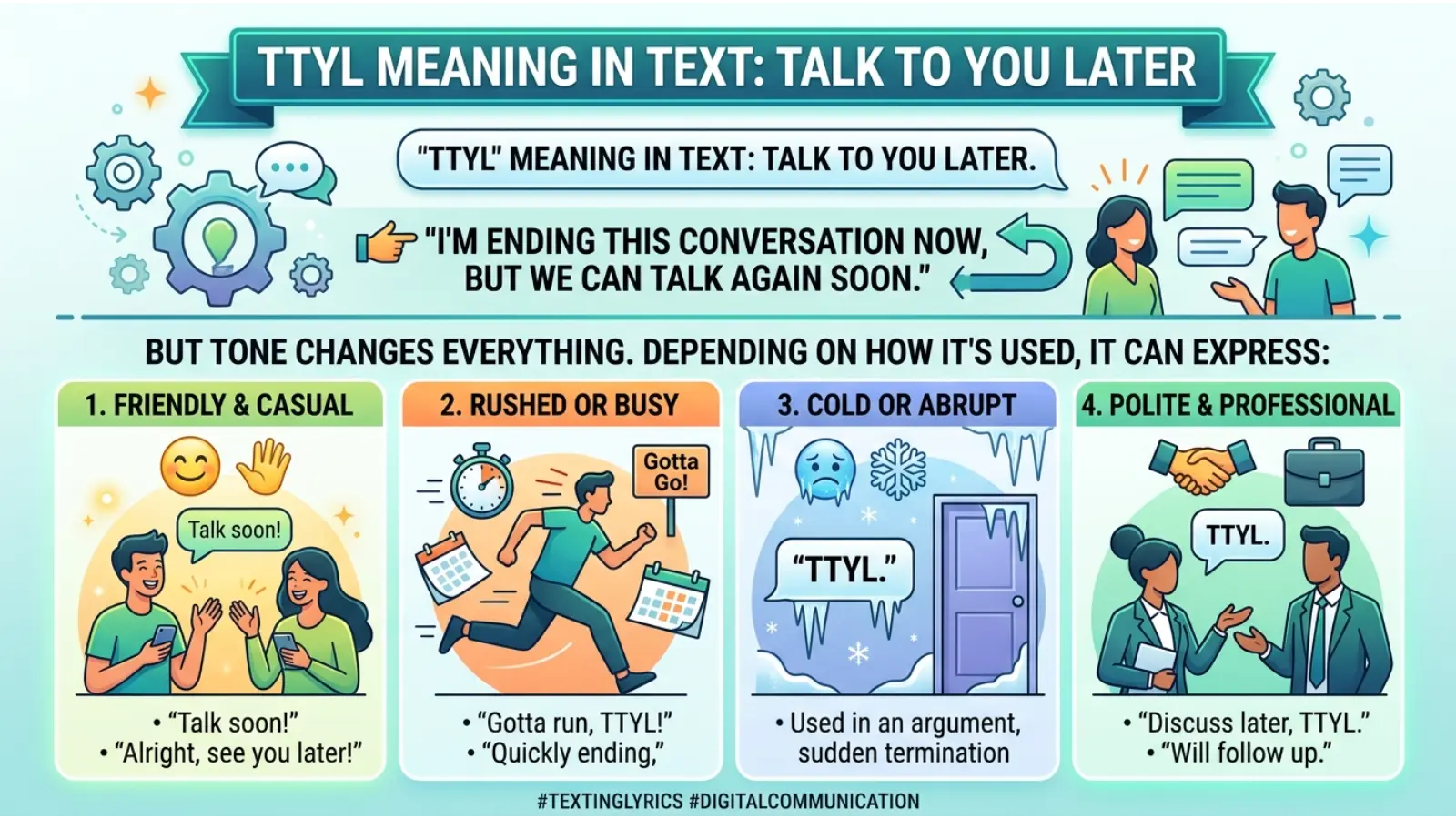
ttyl stands for “Talk To You Later.”
At its core, it simply means:
👉 “I’m ending this conversation now, but we can talk again soon.”
But tone changes everything. Depending on how it’s used, it can express:
1. Friendly Goodbye
“gtg ttyl ❤️”
→ Warm, casual, positive ending
2. Neutral Exit
“ok ttyl”
→ No strong emotion, just ending chat
3. Slight Dismissal
“yeah sure… ttyl”
→ Feels like they’re done or uninterested
4. Polite Escape
“ttyl, I’m busy rn”
→ Avoiding conversation without conflict
5. Flirty Soft Exit
“ttyl ;)”
→ Keeps connection alive, playful tone
6. Emotional Distance
“ttyl.”
→ That period? Yeah… it changes everything
👉 The core emotional meaning:
“I’m leaving this conversation — but how I feel about you depends on how I say it.”
What Does ttyl Mean in Text?
In texting, ttyl is a soft conversation closer.
It’s less final than “bye” and less formal than “goodbye.”
It leaves the door open.
Think of it like saying:
👉 “This isn’t the end… just a pause.”
But here’s where it gets interesting:
- “bye” = ending
- “ttyl” = pausing
- “see you later” = expecting reconnection
So when someone uses ttyl, they’re managing both time and emotional connection.
Origin & Background
“ttyl” comes from early internet culture — back when messaging meant AOL chat rooms, MSN Messenger, and SMS texting limits.
People needed:
- Shorter phrases
- Faster typing
- Emotional shorthand
So “Talk To You Later” → “ttyl”
Over time, it spread through:
- SMS texting culture
- Early social media
- Messenger apps
- Now TikTok and meme culture
Today, Gen Z still uses it — but with more emotional nuance.
TikTok especially shaped how tone is interpreted. Now people analyze:
- punctuation
- emojis
- timing
👉 Online language evolves fast — but meaning evolves even faster.
Real-Life Conversations
WhatsApp Chat
A: “I’m heading out, ttyl”
B: “ok take care”
→ Normal, friendly
Instagram DM
A: “you’re actually funny lol ttyl”
→ Flirty exit
TikTok Comments
“this video is chaotic 😭 ttyl”
→ Casual, expressive
Text Message
A: “yeah idk about that… ttyl”
→ Slight disagreement + exit
Group Chat
“guys I’m tired ttyl”
→ Social energy drop
Emotional Pattern
People use ttyl when they want to:
- leave without drama
- avoid awkward endings
- keep connection open
- protect their energy
It’s not just about leaving — it’s about how gracefully you leave.
Emotional & Psychological Meaning
Here’s the deeper truth:
ttyl is emotional boundary-setting in disguise.
When someone says it, they might be:
- mentally tired
- socially drained
- slightly uninterested
- trying to stay polite
- avoiding conflict
It’s a soft shield.
Mini Story
You’re texting someone you like. The convo is going great. Then suddenly:
“haha yeah ttyl”
You pause.
Wait… what changed?
You reread everything.
That’s the psychology.
Because ttyl creates ambiguity:
- Not rejection
- Not connection
- Just… uncertainty
And humans hate uncertainty.
👉 That’s the deeper psychology behind it.
Usage in Different Contexts
Social Media
Used casually, often with emojis:
“ttyl 😭”
→ expressive, not serious
Friends & Relationships
- Warm: “ttyl bestie ❤️”
- Cold: “ttyl.”
Tone defines meaning.
Work or Professional Settings
Rarely used. Can feel:
- too casual
- slightly dismissive
Better to say:
“I’ll follow up later.”
Casual vs Serious Tone
- “ttyl lol” → light
- “ttyl.” → heavy
- “ttyl :)” → friendly
Context = everything.
When NOT to Use It
Avoid using ttyl when:
- You’re in a serious conversation
- Someone is emotional or upset
- In professional emails
- Talking to older audiences unfamiliar with slang
- Cross-cultural conversations where tone may be misunderstood
👉 Context protects meaning.
Common Misunderstandings
1. “It always means goodbye”
No — it means temporary exit
2. “It’s rude”
Not always — tone decides that
3. “It guarantees you’ll talk later”
Not really… sometimes it’s just polite closure
4. “It’s emotionally neutral”
Actually, it often carries subtle emotional signals
Comparison Table
| Expression | Meaning | Tone | Usage Context |
|---|---|---|---|
| ttyl | Talk later | Neutral / soft | Casual chats |
| brb | Be right back | Temporary | Ongoing convo |
| gtg | Got to go | Urgent | Quick exit |
| bye | Goodbye | Final | Ending convo |
| cya | See you | Friendly | Informal |
👉 Insight:
ttyl sits between connection and distance — it’s emotionally flexible.
Variations & Types
- ttyl 🙂 → warm
- ttyl lol → playful
- ttyl… → hesitation
- TTYL → emphasis
- ttyl ig → uncertain reconnection
- ok ttyl bye → layered exit
Each variation slightly shifts emotional meaning.
How to Respond When Someone Uses It
Casual Replies
- “ok ttyl!”
- “see ya”
Funny Replies
- “don’t disappear forever 😭”
- “I’ll remember this moment”
Mature Replies
- “sure, talk later”
- “take care”
Respectful Replies
- “no problem, message me anytime”
👉 Matching energy is key. If they’re casual, stay casual.
Regional & Cultural Usage
Western Culture
Common in texting, casual tone
Asian Culture
Less used; replaced with polite phrases
Middle Eastern Culture
May feel too informal depending on context
Global Internet Usage
Widely understood due to social media
Slang travels fast — but interpretation varies.
Generational Differences
Gen Z
Uses it with tone awareness
Reads deeply into punctuation
Millennials
Use it casually, less overthinking
Older Generations
May not use it or misunderstand it
👉 Language reflects identity — and each generation speaks differently online.
Is It Safe for Kids?
Yes — generally harmless.
But:
- Can be used to avoid conversations
- May create confusion in emotional situations
- Kids may overthink tone
It’s safe, but context still matters.
FAQs
What does ttyl mean in text?
It means “Talk To You Later”, signaling a temporary end to a conversation.
Is ttyl rude?
Not by itself. Tone and context decide that.
Does ttyl mean someone is ignoring you?
Not necessarily — but it can feel that way depending on timing.
Is ttyl still used in 2026?
Yes, especially in casual texting and social media.
Can I use ttyl at work?
Better avoid it — it’s too informal.
Why does ttyl feel confusing sometimes?
Because it leaves emotional intention unclear.
Conclusion
ttyl meaning in text “Talk To You Later.” isn’t just a phrase — it’s a social signal.
It tells you:
- when someone is leaving
- how they feel
- and whether they plan to come back
In modern communication, even simple words carry emotional weight.
And “ttyl”?
It lives in that space between connection and distance.
Because sometimes…
👉 “Talk to you later” doesn’t just mean later — it means how much you matter in that moment.

I’m Grace Punston, a playful writer with a passion for clever puns and joyful wordplay. I love crafting witty lines that make readers grin and giggle. My goal is to spread laughter through smart, lighthearted writing. Every pun I share is a little spark of fun meant to brighten your day.