bougie slang meaning is one of those internet phrases that pops up everywhere, yet its meaning changes depending on who’s saying it and how they’re saying it.
Imagine opening a group chat and seeing messages like:
Friend 1: “You bought a $9 coffee again? That’s so bougie.”
Friend 2: “Her apartment looks insanely bougie.”
Or maybe you’re scrolling through TikTok and someone comments:
“This skincare routine is giving bougie vibes.”
At first glance, it sounds like a compliment. But then another person uses it as an insult. So which one is it?
Is “bougie” about being rich? It about pretending to be wealthy? Is it admiration, jealousy, humor, or playful teasing?
That’s exactly why thousands of people search for the bougie slang meaning every month. The word has become a cultural shortcut for describing luxury, status, style, and sometimes a little bit of showing off.
Let’s break it down in a way that actually makes sense.
Quick Definition
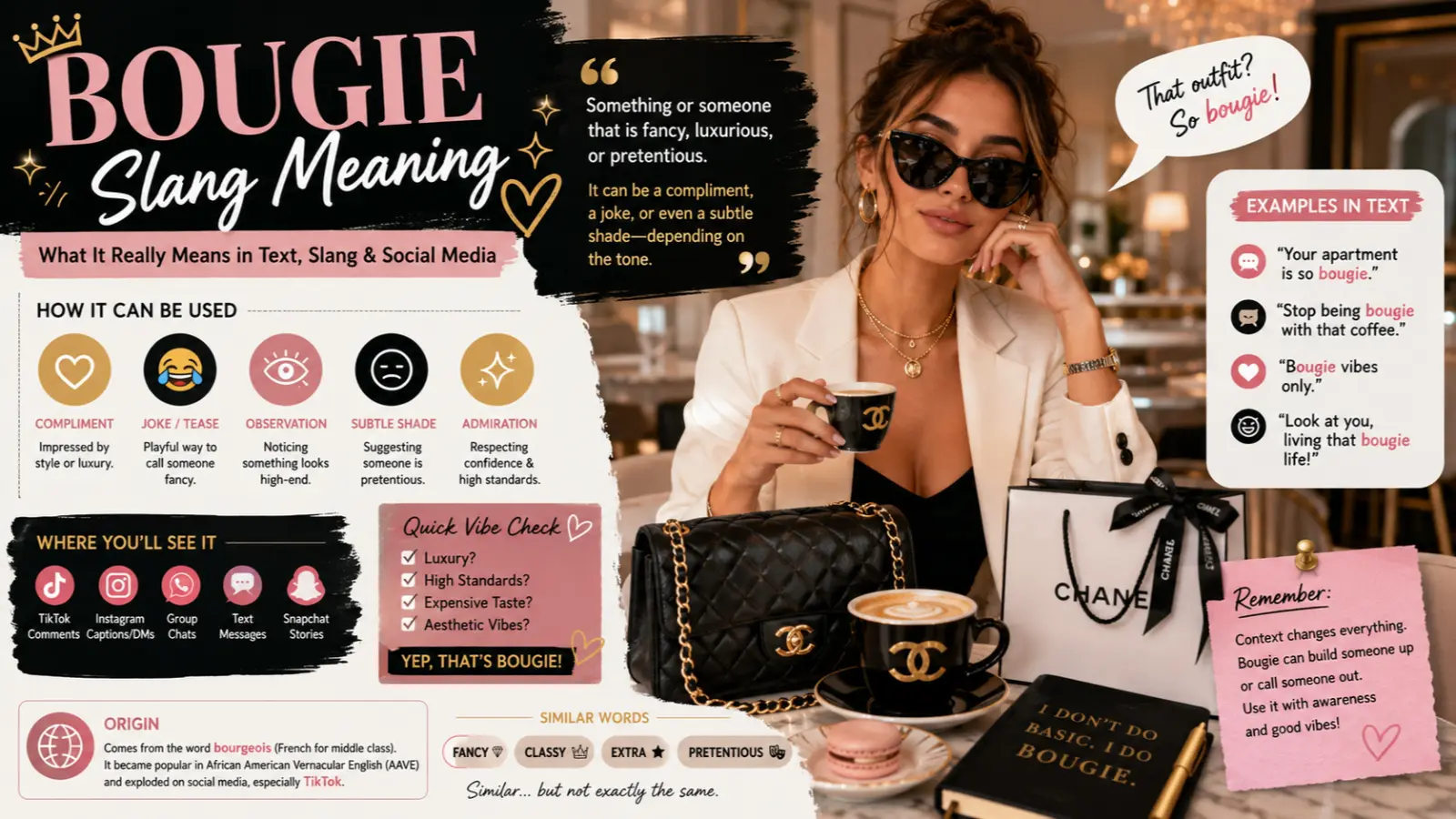
The bougie slang meaning refers to something or someone that appears fancy, luxurious, stylish, expensive, or sometimes pretentious.
Depending on the conversation, it can express admiration, humor, criticism, sarcasm, or playful teasing.
In simple words, “bougie” usually means someone enjoys—or wants to appear to enjoy—a more luxurious lifestyle.
Examples:
- “That hotel is so bougie.”
- “You’re getting gold-plated headphones? Bougie!”
- “She always orders sparkling water. She’s bougie.”
The emotional meaning depends almost entirely on tone.
Bougie as a Compliment
Sometimes calling someone bougie is genuine praise.
Example:
“Your house looks so bougie!”
Meaning:
Your home looks elegant, modern, and luxurious.
Bougie as a Joke
Friends often tease each other.
Example:
“Look who’s drinking imported mineral water.”
Meaning:
You’re acting a little fancy—but in a funny way.
Bougie as an Insult
Sometimes it suggests someone is trying too hard to appear wealthy.
Example:
“He’s acting bougie since getting a promotion.”
Meaning:
He may be pretending to be more important than before.
Bougie as Social Observation
Sometimes it’s simply describing an aesthetic.
Example:
“This café is incredibly bougie.”
Meaning:
The place has an upscale, premium atmosphere.
Bougie as Flirting
Occasionally the word becomes playful.
Example:
“You’re looking bougie tonight.”
Meaning:
You look stylish and attractive.
Bougie as Emotional Expression
People also use bougie to express surprise or admiration.
Example:
“That’s a bougie birthday party.”
Meaning:
The celebration feels luxurious and memorable.
Overall, the emotional core of bougie slang meaning is describing a lifestyle that feels elevated, polished, expensive, or intentionally sophisticated.
What Does bougie Slang Meaning Mean in Text?
In texting, “bougie” is usually a quick reaction to something that seems luxurious or extra.
Examples:
- “Your brunch is bougie.”
- “That’s a bougie vacation.”
- “Stop being bougie 😂”
In texts, it often carries playful energy rather than serious criticism.
Emoji combinations include:
- 💅
- ✨
- 😂
- 💸
- 👑
These emojis reinforce the idea of luxury, confidence, or playful extravagance.
Origin & Background
The word “bougie” comes from the word bourgeois, a French term referring to the middle class. Over time, English speakers shortened it to “bougie,” especially within African American Vernacular English (AAVE), where it developed richer cultural meanings.
Originally, it described someone acting above their social status or embracing upper-class tastes.
As social media exploded, especially Instagram and TikTok, the word evolved.
Today, creators use it for everything from luxury apartments and expensive skincare to aesthetic coffee shops and designer fashion.
Memes accelerated its popularity because “bougie” perfectly captures internet culture’s fascination with aesthetics, lifestyle, and status.
Online language changes incredibly fast, and “bougie” is a perfect example of how a historical word can become modern internet slang.
Real-Life Conversations
A: “I bought organic strawberries.”
B: “You’re getting bougie.”
Instagram DM
A: “Just checked into a five-star resort.”
B: “Living the bougie life!”
TikTok Comment
“This morning routine is so bougie and I’m honestly obsessed.”
Text Message
A: “I ordered truffle fries.”
B: “Bougie behavior 😂”
Group Chat
Friend: “He refuses to fly economy.”
Everyone: “He’s officially bougie.”
Across these conversations, the emotional pattern stays similar. People use the word to notice someone’s expensive taste, tease them affectionately, or admire their lifestyle.
Emotional & Psychological Meaning
The popularity of “bougie” says a lot about modern social behavior.
People constantly compare lifestyles online. We see luxury vacations, designer clothes, expensive meals, and beautifully decorated homes every day.
Calling something “bougie” helps people express those observations quickly.
Sometimes it’s admiration.
Sometimes it’s envy.
It’s humor.
Sometimes it’s a subtle reminder that someone seems disconnected from everyday life.
Imagine a group of coworkers going out for lunch.
Everyone orders burgers.
One coworker orders imported cheese, sparkling water, and dessert.
Someone laughs,
“You’re feeling bougie today.”
Nobody is actually upset.
Instead, they’re acknowledging a social difference in a lighthearted way.
That’s the deeper psychology behind it.
Usage in Different Contexts
Social Media
On TikTok, Instagram, and Snapchat, bougie usually celebrates aesthetics.
Example:
“Bougie apartment goals.”
Friends & Relationships
Friends often tease each other affectionately.
Example:
“You’ve become bougie since your new job.”
Partners also use it flirtatiously.
“Looking bougie tonight.”
Work or Professional Settings
The word should be used carefully.
Calling a colleague bougie might sound unprofessional or judgmental.
Casual vs Serious Tone
Casually, it’s playful.
Seriously, it may imply someone is pretentious or disconnected from reality.
Context changes everything.
When NOT to Use It
Avoid using “bougie” in:
- Formal business emails
- Job interviews
- Academic writing
- Sensitive family disagreements
- Conversations with people unfamiliar with internet slang
- Cross-cultural discussions where the slang may not translate well
Older audiences may misunderstand it completely.
Likewise, during emotional conflicts, calling someone bougie can feel dismissive or insulting.
Context protects meaning.
Common Misunderstandings
Many people assume bougie only means “rich.”
That’s incorrect.
Someone doesn’t need to be wealthy to appear bougie.
Another misunderstanding is believing it’s always rude.
Often it’s playful admiration.
Some people also confuse it with simply being fashionable.
Fashion can be bougie, but the slang usually points toward luxury or perceived social status.
Finally, sarcasm changes everything.
The same word can either compliment or criticize depending on tone.
Comparison Table
| Expression | Meaning | Tone | Usage Context |
|---|---|---|---|
| Bougie | Fancy, luxurious, or pretentious | Playful or critical | Lifestyle, fashion, food |
| Fancy | Elegant or expensive | Positive | Everyday conversation |
| Classy | Sophisticated | Positive | Fashion, manners |
| Extra | Over-the-top | Humorous | Social media, texting |
| High-maintenance | Demanding luxury | Mixed | Relationships |
| Pretentious | Trying too hard to impress | Negative | Criticism |
The emotional difference is subtle. “Bougie” often blends admiration with teasing, making it much softer than openly calling someone pretentious.
Variations & Types
Common internet variations include:
- Bougie vibes
- Bougie life
- Bougie aesthetic
- Bougie girl
- Bougie guy
- Bougie queen
- Bougie lifestyle
- Bougie AF
- Boujee (alternative spelling popular in music and social media)
Each version slightly changes the emotional tone.
“Bougie vibes” sounds complimentary.
“Bougie AF” exaggerates the luxury for humor.
“Boujee” often feels trendier in online culture.
How to Respond When Someone Uses It
Casual Replies
- “Maybe just a little.”
- “I can’t help it.”
- “I’ll take that as a compliment.”
Funny Replies
- “Luxury chose me.”
- “I’m practicing for millionaire life.”
- “It’s called having standards.”
Mature Replies
- “I just enjoy quality things.”
- “Everyone has different preferences.”
Respectful Replies
- “Thanks, I appreciate that.”
- “I’m glad you noticed.”
Matching the other person’s energy usually creates the best social interaction.
Regional & Cultural Usage
Western Culture
“Bougie” is extremely common when discussing fashion, food, travel, or luxury lifestyles.
Asian Culture
Younger social media users increasingly adopt the word, especially alongside TikTok trends and influencer culture.
Middle Eastern Culture
English-speaking online communities use “bougie” mainly when discussing premium brands, luxury cafés, or modern aesthetics.
Global Internet Usage
Social media has turned “bougie” into a worldwide slang expression.
People from different cultures now understand it through memes, influencers, and viral videos, even if their native language doesn’t include the word.
Generational Differences
Gen Z
Uses “bougie” constantly.
Often playful and meme-driven.
Millennials
Usually understand both its humorous and cultural meanings.
Older Generations
Some recognize the luxury aspect but may miss the internet humor behind the word.
Language has always reflected identity, and modern slang spreads faster than ever because of online culture.
Is It Safe for Kids?
Generally, yes.
The word itself is harmless.
However, children should understand that repeatedly calling classmates bougie could become teasing if used negatively.
Parents can use the word as an opportunity to discuss kindness, social comparison, and respectful communication online.
Like most slang, the intention matters more than the vocabulary.
FAQs
What is the bougie slang meaning?
It means something or someone that appears fancy, luxurious, stylish, or sometimes pretentious.
Is bougie a compliment or an insult?
It can be either. Tone and context decide whether it’s admiration, humor, or criticism.
What does bougie mean in texting?
It usually reacts to expensive tastes, luxury items, stylish aesthetics, or someone acting fancy.
Why do people say bougie on TikTok?
Creators use it to describe luxury lifestyles, trendy aesthetics, upscale products, and visually appealing content.
Do Gen Z and Millennials use bougie differently?
Gen Z often uses it more casually and humorously, while Millennials may connect it to both internet culture and its older cultural meaning.
Can you use bougie at work?
It’s best avoided in professional communication because some people may interpret it as judgmental or unprofessional.
Conclusion
Understanding the bougie slang meaning is about more than learning another internet word. It reveals how people talk about status, style, confidence, identity, and social perception in today’s digital world.
Whether someone says a restaurant is bougie, jokes that a friend has bougie taste, or compliments a beautifully designed home, the phrase usually points to something or someone that is fancy, luxurious, or pretentious.
Modern slang continues to evolve because people want faster, more expressive ways to describe emotions and social experiences. The bougie slang meaning reminds us that even one simple word can carry admiration, humor, sarcasm, and personality—all depending on who says it and how it’s received.
In the language of the internet, a single word can say far more than a whole sentence, and “bougie” is one of the best examples of that.

I’m Jake Punman, a humor writer who lives for clever wordplay and laugh-out-loud puns. I love crafting witty lines that turn simple moments into bursts of laughter. My passion is making people smile through creative twists of language. With every pun I write, I aim to add a little more fun to your day.