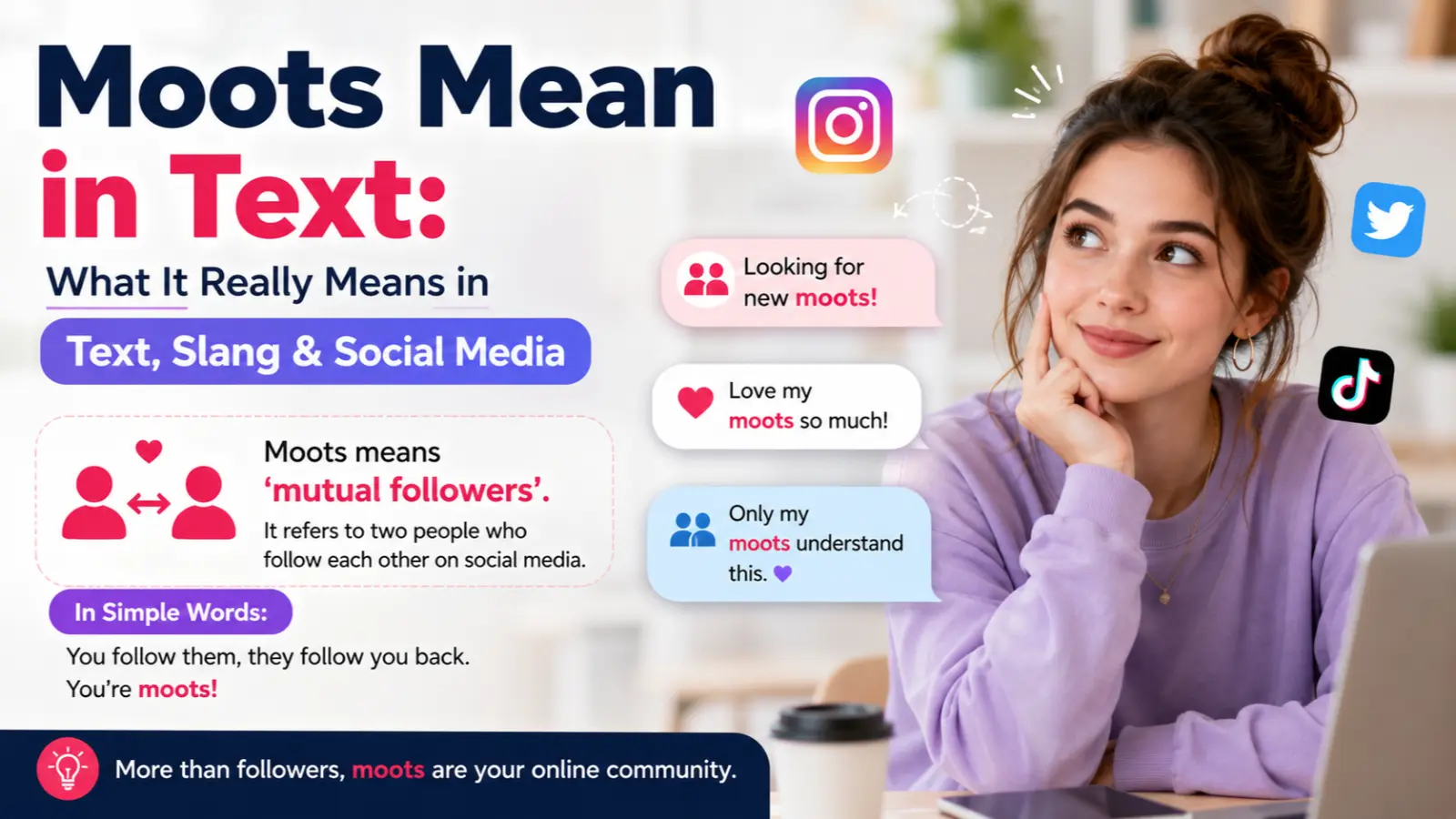
moots mean in text is one of those internet phrases that suddenly seems to appear everywhere. You’re scrolling through X (formerly Twitter), checking TikTok comments, or reading Instagram posts when someone writes:
“Looking for new moots!”
“Love my moots so much ❤️”
“Only my moots understand this.”
If you’re wondering what “moots” actually means, you’re definitely not alone. At first glance, it sounds like a random internet word or maybe even a typo. But in reality, it’s a popular piece of online slang that says a lot about friendship, community, and digital relationships.
People search for this term because they don’t just want the dictionary definition. They want to understand why people use it, what emotion it carries, and how it fits into today’s social media culture.
After all, internet language isn’t just about words anymore. It’s about belonging.
Let’s break it down in a way that actually makes sense.
Quick Definition
The phrase moots mean in text refers to “mutual followers.” These are two people who follow each other on social media instead of having a one-sided follow.
Unlike a random follower, a moot usually represents someone with whom you’ve built a small online connection.
Moots Meaning: Mutual Followers
The most common meaning is simple.
A moot is someone who follows you, and you follow them back.
Example:
“My moots always recommend the best music.”
Here, the speaker is talking about their mutual followers rather than strangers.
Emotionally, it suggests familiarity and online friendship.
Moots as an Online Community
Sometimes “moots” goes beyond following each other.
People use it to describe a trusted online circle.
Example:
“Morning, moots! Hope everyone has an amazing day.”
This feels warm, welcoming, and community-driven.
Moots as Friendship
Many internet users eventually become genuine friends with their moots.
Example:
“One of my closest friends started as a moot.”
The word signals emotional closeness built through shared interests.
Moots as Support
Creators often thank their moots for encouraging them.
Example:
“My moots always hype me up.”
The emotional meaning becomes appreciation and encouragement.
Moots in Jokes
Internet humor often includes moots.
Example:
“My moots enabling my shopping addiction again.”
It’s playful and relatable.
Moots in Flirting
Occasionally, someone hopes a crush becomes a moot first.
Example:
“Manifesting that they follow back so we become moots.”
The follow-back becomes a subtle step toward interaction.
Moots During Drama
People also reference moots during disagreements.
Example:
“Real moots don’t spread rumors.”
Here the word implies loyalty.
Overall, the core emotional meaning behind moots is mutual connection, trust, belonging, and shared online identity.
What Does moots mean in text?
In texting and social media conversations, moots simply means mutual followers—people who follow each other on platforms like X, Instagram, TikTok, or Threads.
Unlike a regular follower, a moot usually feels more personal. The relationship is reciprocal, making conversations easier and interactions more natural.
For many users, becoming moots is almost like exchanging a digital handshake. It signals openness, shared interests, and the possibility of building an online friendship.
Origin & Background
“Moots” comes from shortening the phrase “mutuals” or “mutual followers.”
The term became especially popular on Twitter, where following someone back often created small interest-based communities around gaming, anime, music, books, fashion, sports, and memes.
As TikTok exploded, users carried the slang onto short-form videos.
Soon people were saying:
- “Need more moots.”
- “My moots are hilarious.”
- “Follow for follow? Let’s be moots.”
Meme culture helped normalize the word because internet communities love shortening everyday language.
Today’s online slang spreads faster than ever. A word can go from a niche fandom to global recognition in just a few weeks.
That’s the fascinating reality of internet language—it constantly evolves as people create new ways to express belonging.
Real-Life Conversations
A: Did you see Mia’s new profile?
B: Yeah, she’s one of my moots now.
Instagram DM
A: Thanks for following back!
B: Happy to be moots!
TikTok Comments
User 1: My moots always find the funniest videos.
User 2: Same 😂
Text Message
A: Wait…you’re moots with Alex?
B: Yep! We’ve talked online for months.
Group Chat
A: Invite your moots too.
B: They’ll love this conversation.
These conversations reveal an interesting emotional pattern.
People rarely use “moots” for strangers.
Instead, they reserve it for people who feel like familiar faces in their online world.
Emotional & Psychological Meaning
At first glance, “moots” seems like simple internet slang.
Psychologically, it’s much deeper.
Humans naturally seek belonging.
Years ago, that happened in schools, neighborhoods, and workplaces.
Today, it also happens online.
Calling someone your moot quietly says:
- “You’re part of my digital circle.”
- “I recognize you.”
- “You’re not just another follower.”
Imagine someone who loves photography.
They meet another photographer online.
They comment on each other’s posts every week.
Months later they call each other moots.
Nothing dramatic happened.
Yet a meaningful relationship formed through small daily interactions.
That’s why the word feels emotionally warm.
It represents recognition, consistency, and shared identity.
That’s the deeper psychology behind it.
Usage in Different Contexts
Social Media
This is where moots is used most.
Example:
“Morning, moots!”
The tone feels friendly and inclusive.
Friends & Relationships
Some online friendships become real-life friendships.
Example:
“We’re moots, but now we meet every weekend.”
Work or Professional Settings
Professionals rarely say “moots.”
Instead, they prefer:
- connections
- colleagues
- network
Using “moots” at work may sound overly casual.
Casual vs Serious Tone
Casually:
“Love my moots.”
Seriously:
“I’m grateful for the supportive people I’ve met online.”
The context changes how mature or playful the word sounds.
When NOT to Use It
Avoid using “moots” when communicating with:
- clients
- professors
- employers
- formal business contacts
- people unfamiliar with internet slang
- emotionally sensitive conversations
- cross-cultural audiences who may not recognize the term
Instead, say “mutual followers” or “online friends.”
Context protects meaning.
Common Misunderstandings
Many people assume “moots” means every follower.
It doesn’t.
A moot is usually someone who follows you back.
Others believe it automatically means close friendship.
Not necessarily.
Some moots barely interact.
Another misunderstanding is thinking it’s rude or sarcastic.
In reality, it’s usually warm and positive.
Finally, people sometimes confuse moots with real-life best friends.
They’re different.
A moot simply describes an online mutual connection.
Comparison Table
| Expression | Meaning | Tone | Usage Context |
|---|---|---|---|
| Moots | Mutual followers | Friendly | Social media |
| Followers | People following you | Neutral | Any platform |
| Mutuals | People who follow each other | Casual | Social media |
| Online Friends | Friends met online | Personal | Conversations |
| Besties | Close friends | Playful | Texting |
| Internet Mutuals | Reciprocal online connections | Informal | Online communities |
The emotional difference is simple.
“Moots” emphasizes digital belonging, while “friends” suggests a stronger personal relationship.
Variations & Types
Common internet variations include:
- moot
- moots
- mutual
- mutuals
- new moots
- favorite moots
- best moots
- longtime moots
- internet moots
- moots forever
Playful examples include:
“Elite moots.”
“Certified best moots.”
Some meme pages exaggerate it:
“Legendary moots unlocked.”
Each version slightly changes the emotional tone while keeping the same idea of mutual connection.
How to Respond When Someone Uses It
Casual Replies
- “Happy to be moots!”
- “Same here!”
- “Glad we connected.”
Funny Replies
- “Elite moot status achieved 😂”
- “Best moots on the internet.”
Mature Replies
- “I appreciate our conversations.”
- “Always enjoy your content.”
Respectful Replies
- “Thanks for following back.”
- “It’s nice being connected.”
Matching someone’s energy helps conversations feel natural and authentic.
Regional & Cultural Usage
Western Culture
The word is widely used among Gen Z creators, fandoms, artists, and meme communities.
Asian Culture
Anime, K-pop, gaming, and fan communities frequently use “moots” to describe trusted mutual followers.
Middle Eastern Culture
The slang is becoming more common among younger English-speaking social media users, especially on X and TikTok.
Global Internet Usage
Internet culture has no borders.
People from different countries now understand “moots” because platforms spread slang faster than traditional language ever could.
Generational Differences
Gen Z
Uses “moots” naturally in daily conversations online.
Millennials
Generally understand it but may still say “mutuals.”
Older Generations
Many have never encountered the word and may need an explanation.
Every generation creates its own vocabulary.
Internet slang simply reflects today’s digital identity.
Is It Safe for Kids?
Generally, yes.
“Moots” is harmless internet slang.
However, parents should remember that becoming mutual followers also opens opportunities for conversations with strangers.
Teaching children about online privacy remains important.
The word itself isn’t dangerous.
The online behavior surrounding it deserves thoughtful guidance.
FAQs
What does moots mean in text?
It means mutual followers—two people who follow each other on social media.
Is moots a rude word?
No. It’s usually friendly and positive.
Why do people say moots on TikTok?
TikTok creators use it to refer to their mutual followers and online community.
Is moots the same as friends?
Not always. Some moots become friends, while others remain online acquaintances.
Can I use moots at work?
It’s better to avoid it in professional communication because many people won’t recognize the slang.
Which generation uses moots the most?
Gen Z uses it most frequently because they’re deeply involved in modern social media culture.
Conclusion
Understanding moots mean in text helps you understand much more than a trendy internet word. It simply means “mutual followers,” but emotionally it represents connection, recognition, shared interests, and a sense of belonging in today’s digital world.
If you’re chatting on TikTok, commenting on Instagram, or building friendships on X, becoming moots often marks the beginning of a meaningful online relationship. As internet culture continues to shape the way we communicate, words like moots remind us that even simple slang can carry genuine human connection.
In the end, every new moot is more than just another follow—it’s a small reminder that meaningful connections can begin with something as simple as a follow back.

I’m Lila Wordsmith, a writer who finds magic in clever wordplay and heartfelt expressions. I love crafting puns, wishes, and quotes that make people feel connected and inspired. Every line I write is designed to bring a smile or spark a thought. Through my words, I hope to turn simple moments into something truly memorable.