You’re scrolling through your messages, half paying attention, when someone drops:
“I gotta tell you smth…”
“Wait, smth feels off here.”
“You acting like smth changed.”⏮️Previously on punnszone: WS Mean in Text Messages and Online Slang
And suddenly, you pause.
What is “smth”? Is it serious? Casual? Dramatic?
Is someone about to confess something… or just being lazy while typing?
This tiny shortcut shows up everywhere—texts, TikTok comments, late-night chats—and yet, it carries more emotional weight than it looks.
That’s why people search for it. Not just for the meaning… but for the feeling behind it.
👉 Let’s break it down in a way that actually makes sense.
Quick answer:
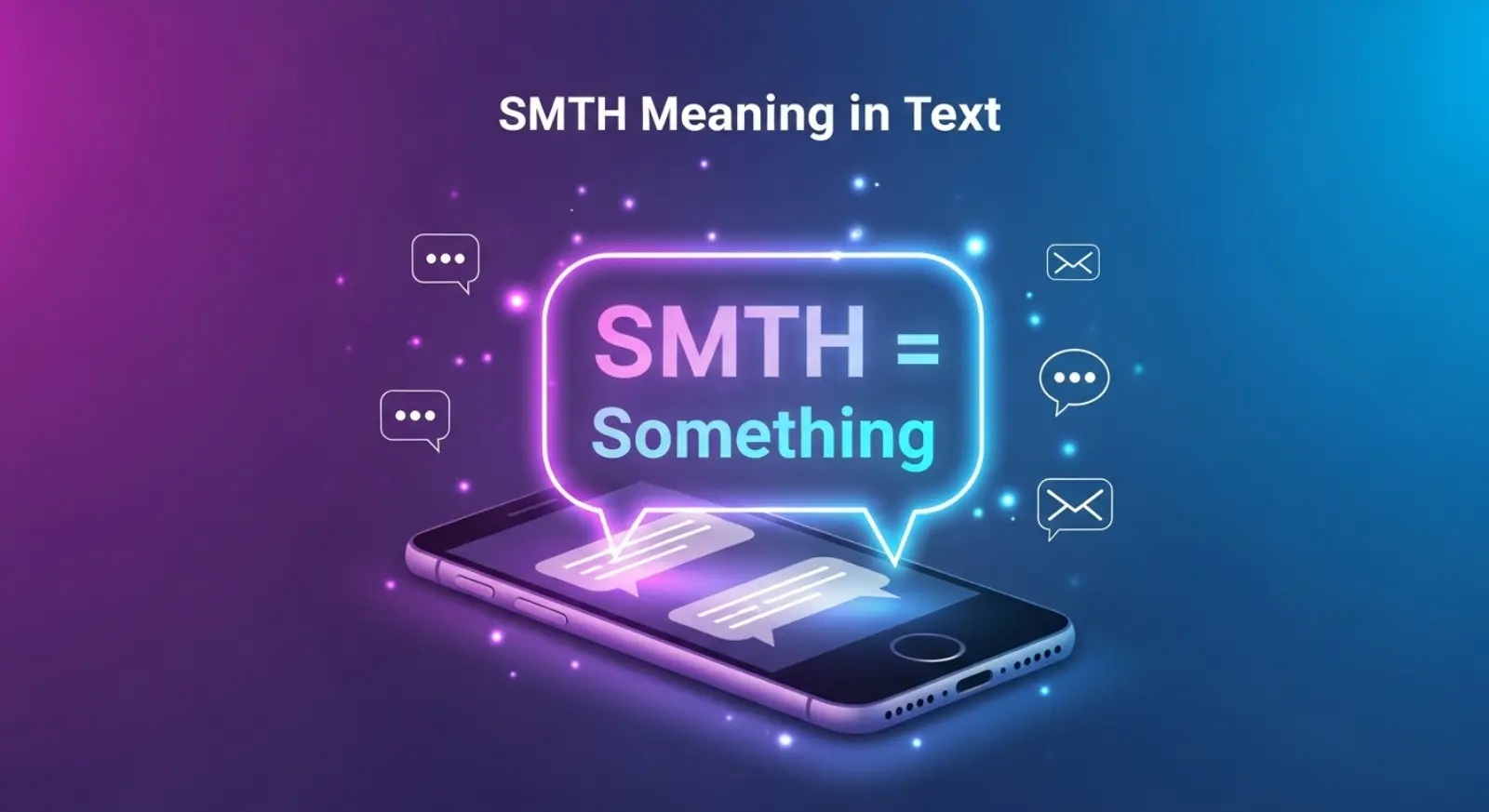
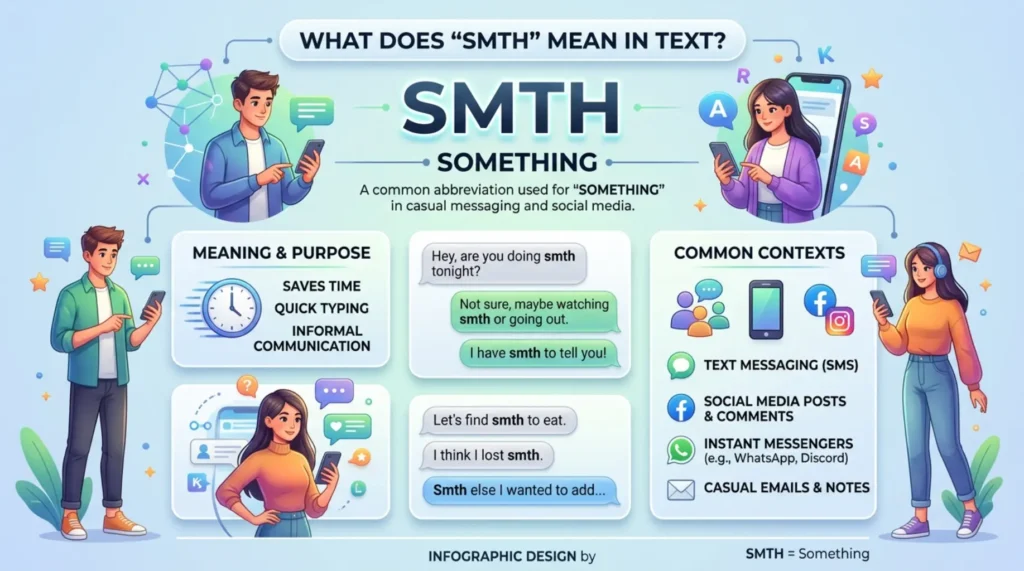
“smth” simply means “something.”
It’s a shorthand used in texting and online communication to save time and keep conversations flowing naturally.
But here’s where it gets interesting…
“smth” doesn’t just replace a word—it softens, hides, or builds curiosity around what’s being said.
Possible meanings depending on context:
- Noticing: “There’s smth different about you.”
- Reacting: “That video hit smth deep.”
- Complimenting: “You did smth amazing today.”
- Insulting (softly): “You always doing smth weird.”
- Joking: “Bro said smth crazy 💀”
- Exposing: “I know smth you don’t.”
- Flirting: “You make me feel smth.”
- Emotional expression: “I can’t explain it… just smth.”
Simple examples:
- “I need to tell you smth important.”
- “Why does this feel like smth more?”
- “You hiding smth?”
👉 At its core, “smth” carries curiosity, emotion, and sometimes intentional vagueness.
What does smth mean in text
In texting, “smth” is used as a faster, more casual version of “something.”
But socially, it does more than that.
It creates:
- suspense
- emotional distance
- or subtle intensity
For example:
- “I feel smth for you” → softer, less direct than “I feel something for you”
- “There’s smth wrong” → signals concern without fully explaining
It’s efficient… but also emotionally strategic.
Origin & Background
“smth” didn’t just appear randomly—it evolved naturally from early internet culture.
Back when texting had character limits and typing on keypads was slow, people started shortening common words:
- “something” → “smth”
- “because” → “bc”
- “people” → “ppl”
Over time, this shorthand became part of digital identity.
Where it grew:
- SMS texting culture
- early chatrooms
- Twitter’s character limits
- meme culture
- TikTok captions and comments
On platforms like TikTok, “smth” gained a new vibe—it became emotionally expressive but intentionally incomplete.
People started using it to:
- create mystery
- avoid oversharing
- sound more natural
👉 Internet language evolves fast—and “smth” is proof that even small shortcuts can carry big emotional meaning.
👉 Real-Life Conversations
Let’s look at how “smth” actually shows up in real conversations:
WhatsApp Chat
- “Hey… I need to tell you smth.”
- “Why you acting like smth happened?”
Instagram DMs
- “You posted that for smth deeper huh 👀”
- “This outfit doing smth to me fr”
TikTok Comments
- “This video unlocked smth in me”
- “Why does this feel like smth personal???”
Text Messages
- “I think I lost smth important”
- “There’s smth I can’t explain”
Group Chats
- “Bro said smth wild yesterday 😂”
- “Wait y’all hiding smth from me??”
Emotional Pattern Behind Usage
Notice the pattern?
People use “smth” when:
- they don’t want to fully explain
- they’re processing feelings
- they want to create curiosity
- they’re being casual but expressive
It’s not just lazy typing—it’s intentional vagueness.
Emotional & Psychological Meaning
“smth” is small… but psychologically powerful.
It signals:
- Awareness: noticing subtle changes
- Attraction: “you make me feel smth”
- Uncertainty: “there’s smth off”
- Emotional protection: not saying too much
- Social intelligence: reading between the lines
Why people use it emotionally
Sometimes, people don’t fully understand their feelings.
Other times, they understand too well—but don’t want to say it directly.
So they say “smth.”
Mini Story
Imagine this:
You’re texting someone you like.
They say:
“I feel smth when I talk to you.”
Not “I like you.”
Not “I love you.”
Just… smth.
That word does two things:
- protects them from rejection
- invites you to feel curious
It’s vulnerable… but safe.
👉 That’s the deeper psychology behind it.
Usage in Different Contexts
Social Media
“smth” is used to:
- create intrigue
- keep captions short
- sound relatable
Example:
“this song unlocked smth in me”
Friends & Relationships
Among friends, it’s casual and expressive:
- “You always doing smth funny”
- “I think she hiding smth”
Work or Professional Settings
Rarely used.
Instead of:
- “We need to discuss smth”
People prefer:
- “We need to discuss something”
Casual vs Serious Tone
- Casual: “lol you said smth dumb”
- Serious: “there’s smth I need to tell you”
Tone depends entirely on context.
When NOT to Use It
Avoid using “smth” in:
- formal emails
- job applications
- professional chats
- serious emotional conflicts
- conversations with older audiences
Why?
Because it can:
- feel unclear
- seem unprofessional
- reduce emotional clarity
👉 Context protects meaning.
Common Misunderstandings
1. It always means something serious
Not true. It can be playful or casual.
2. It’s rude
No—it depends on tone.
3. It’s lazy typing only
It’s actually emotionally strategic.
4. It always hides something
Sometimes it just keeps things simple.
Comparison Table
| Expression | Meaning | Tone | Usage Context |
|---|---|---|---|
| smth | something | casual, flexible | texting, social media |
| sth | something (less common) | neutral | older internet usage |
| something | full word | clear, formal | professional & serious |
| sumthin | slang version | playful | informal speech |
| anything | unspecified option | open-ended | questions |
Insight
“smth” sits right in the middle—
casual, expressive, and emotionally flexible.
Variations & Types
You’ll see “smth” evolve into:
- smthg – extended version
- sumthin – playful tone
- somethinggg – exaggerated emotion
- smth serious – dramatic tone
- smth crazy – meme-style emphasis
Each variation shifts tone slightly—more emotion, more drama, or more humor.
How to Respond When Someone Uses It
Casual Replies
- “What smth?? 👀”
- “Say it properly 😂”
Funny Replies
- “Not you saying smth like it’s a secret movie plot 💀”
- “Drop the smth already”
Mature Replies
- “You can tell me. What’s going on?”
- “If it’s important, I’m listening.”
Respectful Replies
- “Take your time. I’m here.”
- “Whenever you’re ready to share.”
👉 Matching energy matters more than the words.
Regional & Cultural Usage
Western Culture
Very common in texting and social media.
Asian Culture
Used in English-based online communication, especially among younger users.
Middle Eastern Culture
Growing in popularity through TikTok and global internet trends.
Global Internet Usage
“smth” is now universal in digital communication.
Social media erased language boundaries.
Generational Differences
Gen Z
Uses “smth” naturally and emotionally.
Millennials
Understands it, uses it casually.
Older Generations
May find it confusing or informal.
👉 Language is identity—and slang reflects how people connect online.
Is It Safe for Kids?
Yes, mostly.
But:
- It can be used in teasing
- It can hide emotions
- It can create confusion
Parents should understand context rather than just the word.
FAQS:
What does “smth” mean in texting?
It means “something,” used casually in digital conversations.
Is “smth” rude?
No. Tone determines whether it feels rude or friendly.
Why do people use “smth” instead of “something”?
To type faster and sound more natural.
Is “smth” used on TikTok?
Yes—very commonly in captions and comments.
Can I use “smth” in professional chats?
It’s better to avoid it in formal settings.
Does “smth” always mean something important?
Not always, it can be casual, emotional, or even playful.
Conclusion
“smth” might look like just a shortcut…
but it’s actually a reflection of how we communicate today.
It’s quick.
It’s flexible.
And sometimes, it says more by saying less.
In a world where people don’t always want to fully explain their feelings,
words like “smth” create space, for curiosity, emotion, and connection.
Because sometimes…
👉 You don’t need to say everything to feel something.

I’m Maya Giggles, a writer who lives to make people laugh through clever wordplay and cheerful wit. I find joy in creating puns that bring smiles and brighten dull days. Every line I write is crafted to tickle your funny bone and lift your spirits. Through humor and heart, I love spreading laughter one giggle at a time.