Sus meaning slang is one of those internet expressions that can completely change the mood of a conversation with just three letters. Imagine you’re scrolling through TikTok comments and someone writes, “That sounds sus.” Or your friend texts, “Why are you acting so sus today?” Suddenly, you’re wondering if they’re joking, accusing you, teasing you, or simply being playful.
Example chats:
Friend: “You disappeared for three hours and came back with no explanation.”
You: “My phone died.”
Friend: “Hmm… kinda sus.”
Or maybe you’ve seen comments like:
- “That excuse is sus.”
- “Bro is acting sus.”
- “That’s super sus 😂”
So, what does it actually mean? Is it always an insult? Does it simply mean suspicious, or can it also mean someone seems like a suspect? Why has this tiny word become one of the internet’s favorite slang expressions?
People search for this term because they want to understand not just the dictionary definition, but the social and emotional message hidden behind it. The way someone says “sus” often matters more than the word itself.
Let’s break it down in a way that actually makes sense.
Quick Definition
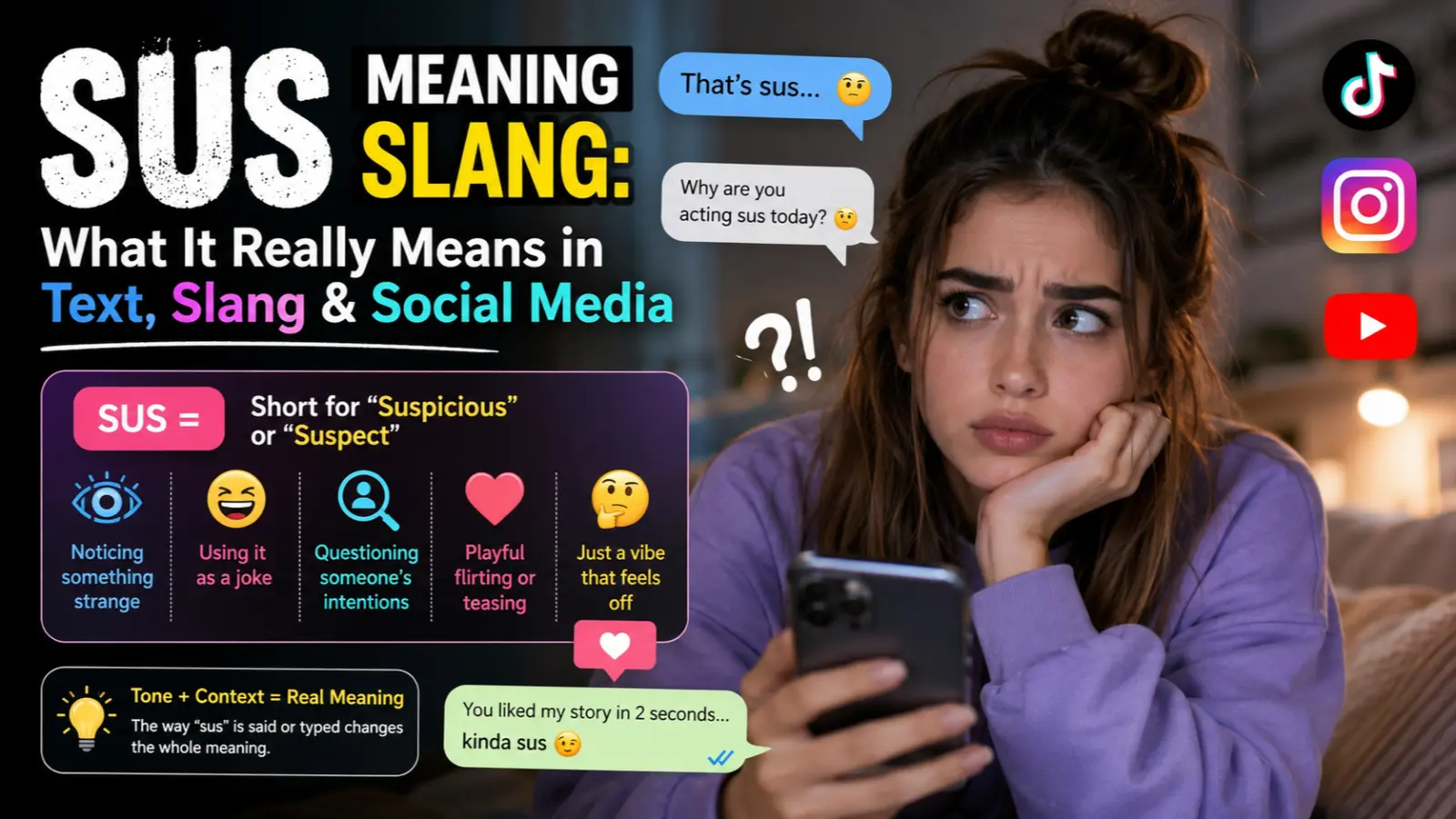
Sus is internet slang that usually means “suspicious” or someone who seems like a suspect. It describes behavior, actions, excuses, or situations that make people question whether something is honest, normal, or believable.
Depending on the tone, “sus” can communicate very different emotions.
Sus Meaning Slang for Noticing Something Strange
Sometimes people use “sus” simply because something doesn’t seem right.
Example:
“He’s suddenly being extra nice. That’s sus.”
Sus Meaning Slang as a Joke
Friends often call each other “sus” for harmless fun.
Example:
“You ate the last slice of pizza? Sus.”
Sus Meaning Slang as an Accusation
The word can also suggest someone may be hiding the truth.
Example:
“Your story doesn’t add up. Sounds sus.”
Sus Meaning Slang While Flirting
Online flirting sometimes includes playful teasing.
Example:
“You liked my story within two seconds… that’s kinda sus 😉”
Sus Meaning Slang as an Emotional Reaction
Sometimes people don’t know exactly what’s wrong—they just feel something is off.
Example:
“I can’t explain it, but this whole situation feels sus.”
At its core, sus communicates uncertainty, doubt, curiosity, or playful suspicion rather than proving someone is guilty.
What Does Sus Mean in Text?
In texting, sus almost always means suspicious.
People use it when someone’s behavior, excuse, timing, or actions seem unusual.
Examples:
- “Why are you suddenly offline? Sus.”
- “You deleted your messages? That’s sus.”
- “He’s acting sus today.”
- “That explanation sounds sus.”
Instead of writing a long sentence like “Your behavior seems suspicious,” people simply type “sus.”
The word saves time while making conversations feel more casual and expressive.
Origin & Background
The word sus existed long before social media. It’s simply a shortened version of suspicious, commonly used in spoken English.
However, its popularity exploded online thanks to gaming communities.
The biggest turning point came when the multiplayer game Among Us became a global phenomenon. Players constantly accused each other by saying things like:
- “Red is sus.”
- “Blue seems sus.”
- “Vote him out.”
Millions of players started using the word outside the game.
Soon it spread across:
- TikTok
- Discord
- Snapchat
- YouTube
- X (formerly Twitter)
Memes made it even more popular. Today, people use “sus” for everything from strange behavior to awkward flirting and ridiculous excuses.
Internet language evolves incredibly fast, and “sus” is a perfect example of how gaming culture can transform everyday communication.
Real-Life Conversations
WhatsApp Chat
Alex: “Where were you last night?”
Ryan: “Just sleeping.”
Alex: “You were online until 4 AM.”
Ryan: “…”
Alex: “Sus.”
Instagram DM
Person A:
“You liked my photo after exactly five seconds.”
Person B:
“I wasn’t stalking.”
Person A:
“That’s pretty sus 😂”
TikTok Comments
Comment:
“Bro says he doesn’t care.”
Reply:
“But comments on every video.”
Another reply:
“Very sus.”
Text Message
Mom:
“Who broke the vase?”
Son:
“Not me.”
Mom:
“You answered way too fast.”
Son:
“😅”
Mom:
“Sus.”
Group Chat
Friend 1:
“Who leaked the surprise party?”
Friend 2:
“Not me.”
Friend 3:
“Everyone says ‘not me.’ That’s sus.”
In almost every example, “sus” isn’t just about facts. It’s about expressing doubt, teasing, curiosity, or playful suspicion without starting a serious argument.
Emotional & Psychological Meaning
Why do people love saying “sus”?
Because it lets them express uncertainty without making a direct accusation.
Instead of saying:
“I think you’re lying.”
People say:
“You’re kinda sus.”
That feels softer, funnier, and less confrontational.
Emotionally, using “sus” can signal:
- Awareness
- Curiosity
- Social intelligence
- Humor
- Playful teasing
- Skepticism
- Emotional caution
Imagine two coworkers.
One suddenly becomes unusually friendly before asking for a favor.
Another coworker quietly smiles and whispers,
“That’s a little sus.”
Everyone laughs because they understand the hidden social message.
Or imagine someone you’re dating suddenly replies after disappearing for three days.
Instead of starting a fight, you text,
“That timing feels sus.”
It communicates your feelings while keeping the conversation light.
That’s the deeper psychology behind it.
Usage in Different Contexts
Social Media
On TikTok, Instagram, and X, “sus” often appears in comments, memes, reaction videos, and jokes.
Example:
“That edit is sus.”
Friends & Relationships
Friends constantly use “sus” while teasing each other.
Example:
“You suddenly started going to the gym? Sus.”
In dating, it can become playful flirting.
Work or Professional Settings
Professional communication usually isn’t the right place.
Instead of saying,
“Your report is sus.”
Say,
“This information needs clarification.”
Casual vs Serious Tone
Tone completely changes the meaning.
Casual:
“You’re acting sus 😂”
Serious:
“This financial activity looks suspicious.”
Understanding the situation helps avoid unnecessary misunderstandings.
When NOT to Use It
Avoid using “sus” in situations like:
- Business emails
- Job interviews
- Academic writing
- Legal discussions
- Serious emotional conversations
- Conversations with people unfamiliar with internet slang
- Cross-cultural communication where the slang may not be understood
In emotional conflicts, calling someone “sus” can sound dismissive or sarcastic instead of helpful.
Context protects meaning.
Common Misunderstandings
Many people misunderstand the word “sus.”
Misunderstanding 1: It always means someone is guilty.
Reality: It usually means someone appears suspicious—not that they’ve done anything wrong.
Misunderstanding 2: It’s always rude.
Reality: Friends often use it jokingly.
Misunderstanding 3: It only comes from Among Us.
Reality: The word existed before the game, although the game made it famous.
Misunderstanding 4: It always refers to crime.
Reality: People use it for everyday situations, jokes, flirting, and memes.
Comparison Table
| Expression | Meaning | Tone | Usage Context |
|---|---|---|---|
| Sus | Suspicious or questionable | Playful or doubtful | Texting, gaming, social media |
| Sketchy | Seems unsafe or unreliable | More serious | Real-life situations |
| Shady | Secretive or dishonest | Critical | Friends, news, conversations |
| Fishy | Doesn’t seem believable | Curious | Everyday English |
| Cap | A lie | Casual | Gen Z slang |
| Red Flag | Warning sign | Serious | Dating, relationships |
Although these expressions overlap, sus usually feels lighter and more humorous than “shady” or “sketchy.”
Variations & Types
The internet loves modifying slang.
Common versions include:
Sus
Basic version.
Very Sus
Adds stronger suspicion.
Super Sus
Emphasizes disbelief.
Kinda Sus
Softens the accusation.
Mega Sus
Mostly meme humor.
Sus AF
A stronger, more dramatic internet expression.
Acting Sus
Focuses on someone’s behavior.
Looking Sus
Describes appearance or body language.
Each variation changes the emotional intensity while keeping the same core meaning.
How to Respond When Someone Uses It
Casual Replies
- “Maybe 😄”
- “You’ll never know.”
- “Fair enough.”
Funny Replies
- “Don’t expose me.”
- “Delete the evidence.”
- “Caught in 4K.”
Mature Replies
- “Let me explain.”
- “I understand why it looks that way.”
- “Here’s what actually happened.”
Respectful Replies
- “Thanks for asking instead of assuming.”
- “Happy to clarify.”
- “Good question.”
Matching the other person’s energy often keeps the conversation comfortable and natural.
Regional & Cultural Usage
Western Culture
In North America, the UK, and Australia, “sus” is common in gaming, texting, memes, and everyday conversations among younger people.
Asian Culture
Many young social media users understand “sus” through global gaming communities, TikTok, and YouTube, even when English isn’t their first language.
Middle Eastern Culture
English-speaking online communities often mix “sus” with local languages in chats and memes, especially among younger internet users.
Global Internet Usage
Because platforms like TikTok, Instagram, Discord, and online games connect millions of people worldwide, “sus” has become part of a shared internet vocabulary that crosses cultural boundaries.
Generational Differences
Gen Z
Uses “sus” naturally in daily conversations, memes, gaming, and social media.
Millennials
Generally understand the slang but may use it less often unless they’re active online.
Older Generations
Some recognize it as “suspicious,” while others may be unfamiliar with its internet meaning.
The words people choose often reflect the online communities they spend time in.
Is It Safe for Kids?
Generally, yes.
“Sus” is considered harmless internet slang and usually means someone seems suspicious or questionable.
However, parents should understand that repeated teasing with words like “sus” can sometimes make children feel embarrassed or excluded if used excessively.
Teaching kids to understand tone and context is more important than banning the word itself.
Like many slang expressions, the intention behind it matters far more than the word alone.
FAQs
What does sus mean in slang?
It usually means suspicious or that someone seems like a suspect because their behavior feels unusual.
Is calling someone sus rude?
Not always. Among friends, it’s often playful. In serious situations, it can sound like an accusation.
What does sus mean on TikTok?
It usually describes strange behavior, funny moments, unbelievable stories, or meme-worthy situations.
Why do gamers say sus?
Gaming communities popularized the word, especially during the rise of Among Us, where players identified possible impostors.
Do adults use the word sus?
Yes, although it’s most common among younger internet users and people active on social media.
Should I use sus at work?
Generally, no. Professional settings usually call for clearer and more formal language.
Conclusion
Sus meaning slang has become much more than a shortened form of “suspicious“ or “suspect.” Today, it represents humor, curiosity, social awareness, playful doubt, and the fast-moving culture of online communication.
Whether you’re texting a friend, laughing at TikTok comments, playing games, or chatting in a group conversation, understanding sus meaning slang helps you recognize the emotional intent behind the message instead of focusing only on the words themselves.
Modern internet language isn’t just about vocabulary—it’s about connection, personality, and shared digital experiences. Sometimes, three simple letters can say far more than an entire sentence.

I’m Jake Punman, a humor writer who lives for clever wordplay and laugh-out-loud puns. I love crafting witty lines that turn simple moments into bursts of laughter. My passion is making people smile through creative twists of language. With every pun I write, I aim to add a little more fun to your day.