STFU mean in text is one of those phrases you’ve probably seen in chats like:
- “bro STFU that didn’t happen 😭”
- “STFU you’re so annoying”
- “OMG STFU that’s actually so cute”
And depending on the tone… it can feel funny, aggressive, playful, or straight-up rude.
So what’s really going on here?
Is it always offensive?
Is it just joking between friends?
Or is it one of those phrases where tone matters more than the words themselves?
That confusion is exactly why people search for it.
Because online, words don’t just mean what they say — they carry emotion, attitude, and social signals.
👉 Let’s break it down in a way that actually makes sense.
Quick Definition
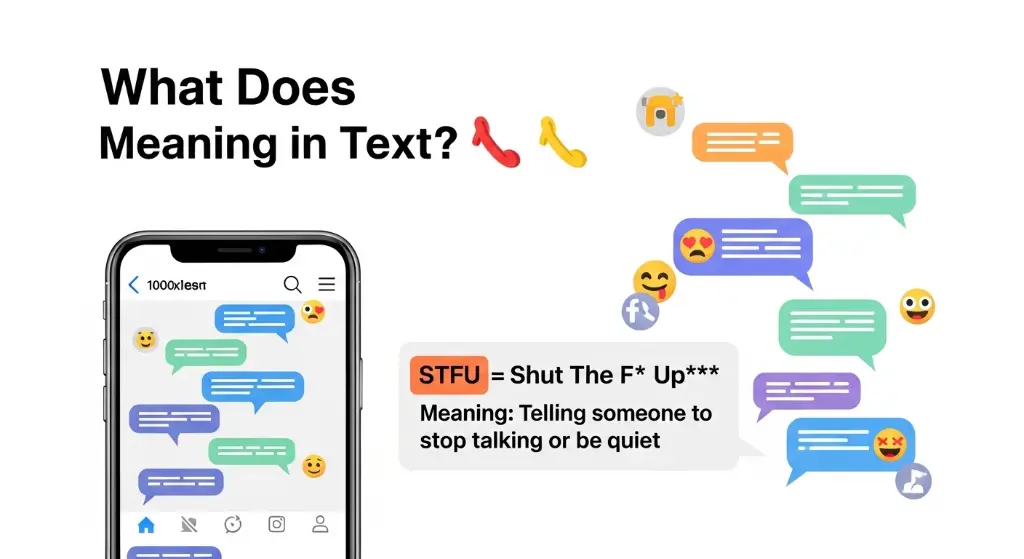
STFU stands for “shut the fuck up.”
At its core, it literally means telling someone to stop talking. But in texting and social media, it’s way more flexible than that.
STFU as an Insult
Used aggressively to shut someone down.
- “STFU nobody asked you”
👉 Tone: Harsh, dismissive, confrontational
STFU as a Joke
Used playfully between friends.
- “STFU you’re so dumb 😂”
👉 Tone: Friendly teasing, not serious
STFU as a Reaction
Used when something is shocking or unbelievable.
- “You met her?? STFU 😳”
👉 Tone: Surprise, disbelief
STFU as a Compliment Reaction
Used when something is too cute or impressive.
- “You bought me that? STFU 😭❤️”
👉 Tone: Excitement, overwhelmed
STFU as Flirting
Yes, it even shows up here.
- “STFU you’re making me blush”
👉 Tone: Playful, soft, emotionally open
STFU as Emotional Expression
Sometimes it’s just about intensity.
- “STFU I can’t deal with this right now”
👉 Tone: Overwhelmed, dramatic
👉 Core meaning: It’s not just “be quiet” — it’s an emotional shortcut for intensity, reaction, or attitude.
What Does STFU Mean in Text
In texting, STFU doesn’t always mean “shut up” literally.
It often means:
- “I can’t believe this”
- “You’re too much right now”
- “That’s insane (in a good or bad way)”
- “Stop (but not really)”
It’s less about silence… and more about emotional overload.
Origin & Background
STFU started as a blunt, explicit phrase in real-life speech — clearly rude and confrontational.
But the internet changed everything.
Early chat rooms, gaming culture, and forums normalized short forms like:
- LOL
- WTF
- BRB
And STFU slipped in as a faster, punchier version of something already common.
Then came:
- meme culture
- Twitter sarcasm
- TikTok reactions
Now, STFU isn’t just an insult — it’s a reaction tool.
On TikTok, you’ll see comments like:
- “STFU this is so wholesome 😭”
- “STFU I love them”
👉 Online language evolves fast. Words lose their original sharpness and gain emotional layers.
Real-Life Conversations
WhatsApp Chat
- A: “I just saw your crush today”
- B: “STFU what happened???”
👉 Emotion: excitement + curiosity
Instagram DM
- “STFU you look so good in this pic 😭🔥”
👉 Emotion: admiration + hype
TikTok Comments
- “STFU this made me cry”
👉 Emotion: emotional overload
Group Chat
- “STFU bro that story is fake 💀”
👉 Emotion: teasing + disbelief
👉 Pattern: STFU is rarely about silence — it’s about reaction intensity.
Emotional & Psychological Meaning
When someone says STFU, they’re not just speaking , they’re signaling emotion.
It can mean:
- “I’m overwhelmed”
- “I don’t know how to react”
- “This is too much (in a good or bad way)”
- “I’m emotionally engaged”
It’s fast, raw, and unfiltered.
Social Meaning
Using STFU often shows:
- comfort with the person
- casual relationship
- shared humor style
Emotional Protection
Sometimes it hides vulnerability:
Instead of saying:
“I’m really touched by that”
People say:
“STFU 😭”
Mini Story
A friend once texted:
“Guess who got the job?”
Reply came instantly:
“STFU NO WAY 😭”
Was it rude? Not at all.
It meant:
👉 “I’m genuinely so happy I don’t even know how to express it.”
👉 That’s the deeper psychology behind it.
Usage in Different Contexts
Social Media
Highly common and flexible.
- Reactions
- Comments
- Memes
Tone depends on emojis and context.
Friends & Relationships
Very common.
- playful insults
- emotional reactions
- bonding language
Work or Professional Settings
Avoid completely.
- sounds disrespectful
- easily misunderstood
Casual vs Serious Tone
- “STFU 😂” → joking
- “STFU.” → aggressive
👉 Small details change everything.
When NOT to Use It
Avoid STFU when:
- talking to elders
- in professional messages
- during serious arguments
- with people you don’t know well
- in cross-cultural conversations
Because not everyone reads tone the same way.
👉 Context protects meaning.
Common Misunderstandings
“It always means something rude”
Not true. Often playful or emotional.
“It literally means shut up”
In texting, it rarely does.
“Everyone understands it the same way”
No. Tone varies by culture and relationship.
“It’s safe everywhere”
Definitely not — context matters.
Comparison Table
| Expression | Meaning | Tone | Usage Context |
|---|---|---|---|
| STFU | Intense reaction / shut up | Aggressive or playful | Friends, social media |
| OMG | Surprise | Positive | Universal |
| WTF | Shock/confusion | Strong | Casual only |
| Chill | Calm down | Neutral | Friendly |
| Stop | Light reaction | Soft | Safe everywhere |
👉 STFU stands out because it carries emotional intensity + attitude, unlike softer phrases.
Variations & Types
You’ll see different versions online:
- stfu 😭 → emotional overload
- STFU LMAO → joking
- stfuuu → exaggerated reaction
- STFU RN → urgent reaction
- STFU THIS IS SO CUTE → hype + excitement
Each variation shifts tone slightly.
How to Respond When Someone Uses It
Casual Replies
- “😂 relax”
- “you love it though”
Funny Replies
- “make me 😌”
- “no u”
Mature Replies
- “okay chill, I was joking”
Respectful Replies
- “didn’t mean to upset you”
👉 Matching energy matters more than words.
Regional & Cultural Usage
Western Culture
Very common, often playful.
Asian Culture
Used online, but can feel stronger or more offensive.
Middle Eastern Culture
More sensitive — tone can be misunderstood.
Global Internet Usage
TikTok and memes have made STFU globally recognizable.
Generational Differences
Gen Z
Uses it casually, emotionally, creatively.
Millennials
Understand it, but may use it less playfully.
Older Generations
Often see it as rude or offensive.
👉 Language reflects identity and digital culture.
Is It Safe for Kids
It depends.
- harmless among friends
- risky if misunderstood
- can sound aggressive
Parents should understand context, not just the word.
FAQs
What does STFU mean in texting?
It means “shut the fuck up,” but often expresses shock, excitement, or joking tone.
Is STFU always rude?
No. It depends on tone, emojis, and relationship.
What does STFU mean on TikTok?
Usually a reaction like “this is too good” or “I can’t believe this.”
Can STFU be friendly?
Yes, especially between close friends.
Should I use STFU at work?
No. It’s unprofessional and risky.
Why do people say STFU when happy?
Be cause it expresses emotional overload better than formal words.
Conclusion
STFU mean in text isn’t just about telling someone to be quiet.
It’s about emotion — fast, raw, and unfiltered.
And yes, it literally comes from “shut the fuck up”, but online, it has evolved into something much deeper:
- excitement
- shock
- humor
- connection
It shows how modern language isn’t just about words , it’s about feeling.
In a world of quick messages and short attention spans, phrases like STFU carry entire emotional reactions in just four letters.
👉 And that’s what makes internet slang so powerful , it says everything… without saying everything.

I’m Lila Wordsmith, a writer who finds magic in clever wordplay and heartfelt expressions. I love crafting puns, wishes, and quotes that make people feel connected and inspired. Every line I write is designed to bring a smile or spark a thought. Through my words, I hope to turn simple moments into something truly memorable.