You’re scrolling through your messages, and suddenly someone drops:
“GTFO 😂”
Or maybe:
“Bro… GTFO right now.”
Wait—are they mad? joking? hyped? offended?
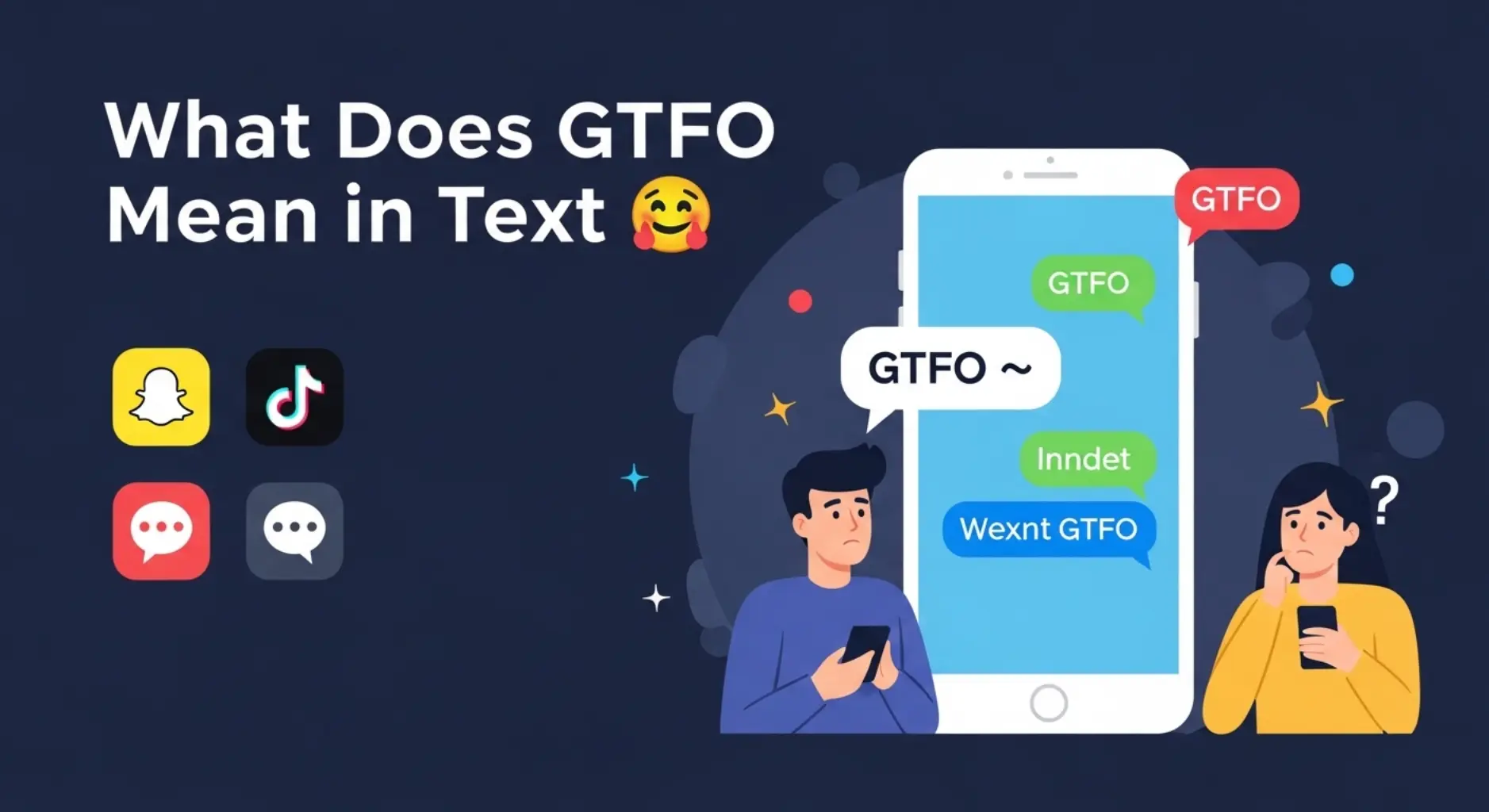
That’s exactly why so many people search “GTFO Mean in Text”—because even though it literally means “Get the f* out,”** the real meaning depends entirely on tone, context, and emotion.
Sometimes it’s playful.
Sometimes it’s shocked disbelief.
And yes—sometimes it’s straight-up aggressive.
Modern slang isn’t just about words. It’s about vibes.
Let’s break it down in a way that actually makes sense.
Quick Definition
GTFO stands for:
👉 “Get the f* out”**
But here’s the twist—it rarely means that literally.
Depending on tone, it can express:
- Shock → “No way, GTFO!”
- Excitement → “You met her? GTFO 😭”
- Humor → “GTFO with that story bro 😂”
- Annoyance → “Just GTFO already”
- Playful disbelief → “GTFO, you’re lying”
Simple Examples:
- “You won the lottery?? GTFO 😳”
- “GTFO 😂 that’s the funniest thing I’ve heard”
- “If you keep doing that, GTFO.”
👉 At its core, GTFO is an emotional reaction amplifier—it turns a normal response into something more intense, more dramatic, more human.
What Does GTFO Mean in Text
In texting, GTFO means reacting strongly—not necessarily telling someone to leave.
It’s less about the words… and more about:
- How surprised you are
- How unbelievable something sounds
- How playful or dramatic you want to be
Think of it like saying:
- “No way!”
- “You’re kidding!”
- “Stop playing!”
- “Get outta here!”
But with internet attitude.
GTFO as Shock & Disbelief
This is one of the most common meanings.
When something feels unreal, your brain reacts fast—and GTFO becomes the shortcut.
Example:
- “I just got a job offer from Google.”
- “GTFO 😳 that’s insane!”
Here, GTFO = “I can’t believe this.”
It’s not rude. It’s raw reaction.
GTFO as Humor & Playful Energy
Sometimes GTFO is just funny energy.
It’s what people say when something is so ridiculous, it becomes hilarious.
Example:
- “I tripped in front of everyone and waved like it was planned.”
- “GTFO 😂😂”
Here, it means:
👉 “That’s hilarious, I’m dead.”
GTFO as Aggression or Dismissal
Let’s be real—this is the original meaning.
And yes, it still exists.
Example:
- “Stop texting me.”
- “GTFO.”
This version carries:
- Anger
- Frustration
- Emotional distance
Tone matters a lot here. No emojis = more serious.
GTFO as Compliment (Yes, Really)
Internet culture flipped everything—including this.
Sometimes GTFO is used when someone is impressed.
Example:
- “I just made 6 figures this year.”
- “GTFO 😭🔥 proud of you!”
It translates to:
👉 “That’s amazing, I’m shocked.”
Origin & Background
GTFO didn’t start as cute or funny.
It comes from early internet spaces—gaming lobbies, forums, and chat rooms—where blunt, aggressive language was normal.
Back then, it meant exactly what it says:
👉 “Leave. Now.”
But then something interesting happened.
Social media platforms like:
- Twitter (X)
- TikTok
…started reshaping how people use language.
Memes softened it. Humor reshaped it. Gen Z redefined it.
Now GTFO is:
- Less about command
- More about reaction
That’s the thing about internet language—it evolves faster than people realize.
Real-Life Conversations
Let’s look at how GTFO actually shows up today:
WhatsApp Chat:
- A: “Guess who texted me after 2 years?”
- B: “GTFO 😳 WHO??”
Instagram DM:
- “You met him?? GTFO 😭”
TikTok Comment:
- “GTFO this is too accurate 😂”
Group Chat:
- “He said he doesn’t like biryani.”
- “GTFO immediately.”
Text Message:
- “I passed without studying.”
- “GTFO bro 💀”
👉 Notice the pattern?
GTFO = emotional spike.
It’s never neutral.
Emotional & Psychological Meaning
Using GTFO says more about your emotional state than the situation itself.
It signals:
- High emotional reaction
- Comfort with the person
- Informal communication style
- Expressive personality
Sometimes it’s also:
- A defense mechanism (masking surprise)
- A way to seem funny or dramatic
- A way to connect socially
Mini Story:
You’re with friends. Someone shares unbelievable news.
Instead of calmly saying “That’s surprising,” you say:
👉 “GTFO, no way.”
Why?
Because you want:
- Reaction
- Connection
- Energy
That’s the deeper psychology behind it.
Usage in Different Contexts
Social Media
GTFO thrives here.
- Used in comments, captions, reactions
- Often paired with emojis 😂😳🔥
Friends & Relationships
More playful, less literal.
- “GTFO you didn’t!”
- Signals comfort and closeness
Work or Professional Settings
Avoid it.
- Too aggressive
- Easily misunderstood
Casual vs Serious Tone
- With emojis → playful
- Without emojis → serious or rude
Same word. Different emotional weight.
When NOT to Use It
Avoid GTFO in:
- Formal conversations
- Work emails or meetings
- Talking to elders
- Serious emotional situations
- Cross-cultural communication
Because:
Not everyone reads tone the same way.
👉 Context protects meaning.
Common Misunderstandings
1. “It always means something rude.”
No—it’s often playful.
2. “It literally means leave.”
Not in most modern usage.
3. “It’s always offensive.”
Tone + relationship decides that.
4. “It’s safe everywhere.”
Definitely not.
Comparison Table
| Expression | Meaning | Tone | Usage Context |
|---|---|---|---|
| GTFO | Shock / disbelief / joke / anger | Intense | Friends, social media |
| OMG | Surprise | Light | Universal |
| WTF | Confusion / shock | Strong | Casual |
| No way | Disbelief | Neutral | Safe everywhere |
| Get outta here | Playful disbelief | Friendly | Conversations |
👉 GTFO is more emotionally charged than most alternatives.
Variations & Types
- GTFOH → “Get the f*** outta here” (extra attitude)
- GTFO 😂 → playful
- GTFO 😡 → aggressive
- GTFO bro → casual disbelief
- GTFOOOO → exaggerated reaction
- GTFO?? → confused shock
Each version tweaks the emotional tone slightly.
How to Respond When Someone Uses It
Casual Replies
- “I swear it’s true 😂”
- “I’m not even joking”
Funny Replies
- “I already left 💀”
- “Too late, I’m gone”
Mature Replies
- “Yeah, sounds crazy but it happened”
- “I get why you’d think that”
Respectful Replies
- “Hey, I’m serious”
- “Let’s keep it calm”
👉 Matching energy matters more than words.
Regional & Cultural Usage
Western Culture
Common, casual, expressive.
Asian Culture
Used online, but less in real-life speech.
Middle Eastern Culture
Growing through social media influence.
Global Internet Usage
GTFO is now universal—thanks to memes and TikTok.
But interpretation still varies.
Generational Differences
Gen Z
- Uses it casually, humorously
- Emotion-driven communication
Millennials
- Understand both serious + playful meanings
Older Generations
- More likely to see it as rude
Language reflects identity—and internet culture is shaping that fast.
Is It Safe for Kids
GTFO includes profanity.
So:
- Kids may use it jokingly
- But it can sound harsh
- Context matters heavily
Better alternatives:
- “No way!”
- “You’re joking!”
FAQs
What does GTFO mean in texting?
It means “Get the f*** out,” but usually expresses shock, humor, or disbelief.
Is GTFO always rude?
No. With friends, it’s often playful.
Can GTFO be used jokingly?
Yes—very commonly.
What does GTFO mean on TikTok?
Mostly reaction-based—used for funny or shocking content.
Should I use GTFO at work?
No. It’s too informal and potentially offensive.
Why do people say GTFO instead of normal words?
Because it adds emotional intensity and personality.
Conclusion
Understanding GTFO Mean in Text isn’t just about translating “Get the f* out.”**
It’s about reading emotion, tone, and context.
In today’s internet culture, GTFO has evolved into:
- A reaction
- A personality marker
- A social connector
It shows how language isn’t just spoken, it’s felt.
And sometimes, three letters say more than a full sentence ever could.

I’m Grace Punston, a playful writer with a passion for clever puns and joyful wordplay. I love crafting witty lines that make readers grin and giggle. My goal is to spread laughter through smart, lighthearted writing. Every pun I share is a little spark of fun meant to brighten your day.