You’re scrolling through your messages and suddenly you see:
“igh bet”
“igh I’m coming”
“igh whatever”
And you pause for a second.
Wait… what does “igh” even mean here?
Is it “okay”? Is it attitude? Or is the person lowkey annoyed?
That confusion right there is exactly why so many people are searching for “igh meaning in text.” Because this tiny slang word can carry very different emotions depending on how it’s used.
Sometimes it feels chill.
Sometimes it feels dismissive.
And sometimes… it feels like someone is done with the conversation.
👉 Let’s break it down in a way that actually makes sense.
Quick Definition
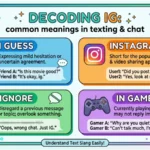
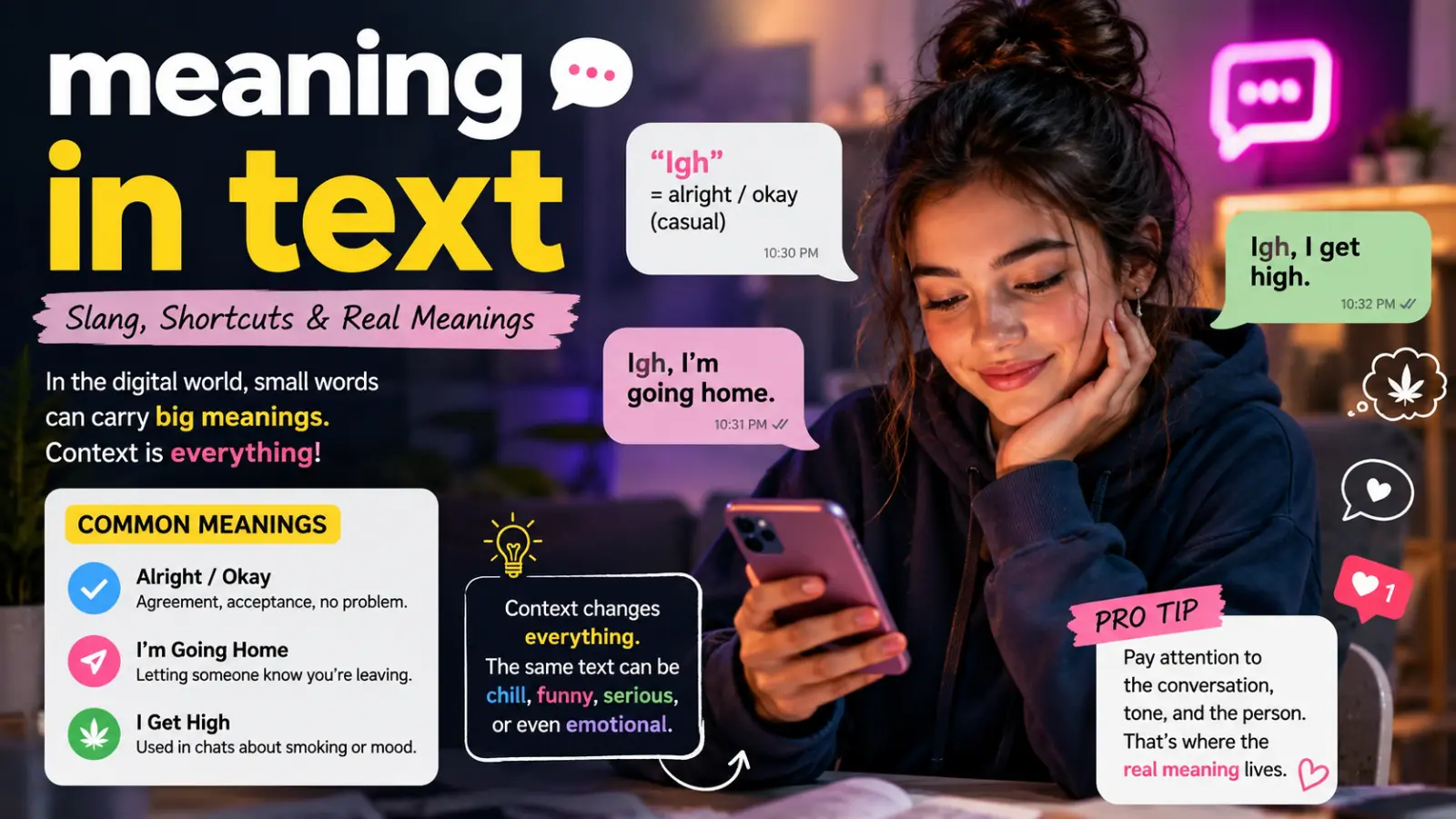
“igh” is a casual internet slang term used in texting and social media conversations. It can mean:
• “alright”
• “okay”
• “I’m going home”
• “I get high” (in specific contexts)
But here’s the important part:
👉 The tone changes everything.
“igh” can show:
• agreement
• acceptance
• boredom
• emotional distance
• chill energy
• or even passive annoyance
Simple Examples
“igh I got you” → calm agreement
“igh whatever” → slight attitude
“igh imma leave” → action or decision
“igh I’m high rn” → literal meaning
👉 At its core, “igh” is about acknowledging something without putting in much emotional effort.
What Does igh Mean in Text?
In texting, “igh” is basically a low-energy response.
It replaces words like:
• okay
• alright
• fine
But here’s the twist:
It often removes emotion from the message.
For example:
“Okay 😊” → friendly
“Alright 👍” → neutral
“igh” → detached, chill, or slightly uninterested
That’s why people sometimes overthink it.
Because “igh” doesn’t tell you how someone feels — it just tells you they heard you.
IGH = “Alright”
This is the most common meaning.
When someone says “igh,” they often just mean “alright” in a relaxed, informal way.
Example
Friend: “Meet me at 7”
You: “igh”
👉 Emotion: calm acceptance, no drama
It’s like saying:
“I’m good with that… no need to say more.”
IGH = “Okay”
Very similar to “alright,” but even shorter emotionally.
Example
Mom: “Don’t forget to study”
You: “igh”
👉 Emotion: acknowledgment, maybe slight laziness
Sometimes it feels like:
“I heard you… but I’m not trying to talk about it.”
IGH = “I’m Going Home”
This meaning appears more in casual conversations.
Example
“I’m tired bro, igh I’m going home.”
👉 Emotion: decision, slight exhaustion
Here, “igh” works like a transition word — signaling a shift in action.
IGH = “I Get High”
This is a context-specific meaning.
You’ll usually see it in certain social or music-related conversations.
Example
“Sometimes igh when I’m stressed.”
👉 Emotion: coping, honesty, or lifestyle expression
Important: This meaning is not common in everyday texting, so context matters a lot.
Origin & Background of “IGH”
“igh” comes from the natural evolution of texting language.
People started shortening:
• “alright” → “aight”
• “aight” → “ight”
• “ight” → “igh”
This progression shows something deeper:
👉 The internet constantly compresses language to match speed and mood.
Platforms like TikTok, Instagram, and Snapchat accelerated this trend.
Shorter words = faster replies = less emotional investment.
And memes? They made it even more casual.
Today, “igh” is part of a bigger pattern where language becomes:
• quicker
• looser
• more emotionally ambiguous
Real-Life Conversations
WhatsApp Chat
Friend: “You coming tonight?”
You: “igh yeah”
👉 relaxed agreement
Instagram DM
Them: “You changed fr”
You: “igh maybe”
👉 slightly defensive, low effort
TikTok Comments
Comment: “This video crazy 😂”
Reply: “igh fr”
👉 agreement with chill vibe
Group Chat
Friend 1: “Let’s go out”
Friend 2: “igh I’m down”
👉 casual participation
Emotional Pattern
Across all these:
👉 “igh” avoids strong emotion.
👉 It keeps things cool, controlled, and slightly distant.
Emotional & Psychological Meaning
Using “igh” says more than you think.
It can signal:
• emotional control
• not wanting to overreact
• staying low-key
• avoiding deeper conversation
• casual confidence
Sometimes, it’s even a defense mechanism.
Instead of saying:
“I’m upset”
“I care”
“I’m excited”
People say:
👉 “igh”
Mini Story
Imagine you text your friend:
“Did you like the gift?”
They reply:
“igh yeah”
Now you’re thinking:
“Just ‘yeah’? That’s it?”
That’s the power of “igh.”
It creates emotional distance — intentionally or not.
👉 That’s the deeper psychology behind it.
Usage in Different Contexts
Social Media
Used for:
• reactions
• quick replies
• memes
“igh bet” = agreement
“igh whatever” = attitude
Friends & Relationships
More expressive here.
“igh I miss you” → soft emotion
“igh do what you want” → hidden frustration
Work or Professional Settings
Not recommended.
“igh” can feel:
• unprofessional
• careless
• unclear
Casual vs Serious Tone
Casual: “igh cool” → friendly
Serious: “igh.” → cold or dismissive
When NOT to Use It
Avoid “igh” when:
• talking to elders
• in professional emails
• during emotional arguments
• explaining something serious
• cross-cultural communication
Because it can feel:
• disrespectful
• confusing
• emotionally detached
👉 Context protects meaning.
Common Misunderstandings
“It always means okay”
Not true — tone changes everything.
“It’s rude”
Not always — sometimes it’s just lazy typing.
“It shows attitude”
Only in certain contexts.
“It’s meaningless”
Actually, it carries subtle emotional signals.
Comparison Table
| Expression | Meaning | Tone | Usage Context |
|---|---|---|---|
| igh | okay/alright | neutral/cool | casual chats |
| okay | agreement | clear | universal |
| alright | acceptance | friendly | everyday use |
| bet | agreement | confident | Gen Z slang |
| k | okay | cold/short | sometimes rude |
👉 “igh” sits in the middle — not warm, not cold, just minimal effort communication.
Variations & Types
• “igh bet” → agreement with energy
• “igh whatever” → attitude
• “ighhh” → emotional or dramatic
• “igh bro” → casual vibe
• “igh fine” → reluctant acceptance
Each variation adds a different emotional layer.
How to Respond When Someone Uses It
Casual Replies
“cool”
“same”
“bet”
Funny Replies
“igh what? say it properly 😂”
“bro typed half a word 😭”
Mature Replies
“Got it 👍”
“Alright, sounds good”
Respectful Replies
“No worries”
“Okay, thank you”
👉 Matching energy matters more than the word itself.
Regional & Cultural Usage
Western Culture
Common in Gen Z texting and TikTok.
Asian Culture
Less common but spreading through social media.
Middle Eastern Culture
Used among younger, English-speaking users.
Global Internet Usage
Slang like “igh” spreads fast across platforms.
Generational Differences
Gen Z
Uses it naturally, emotionally aware of tone.
Millennials
Understand it but may not use it often.
Older Generations
May find it confusing or unclear.
👉 Language shows identity — and “igh” is very Gen Z.
Is It Safe for Kids?
Mostly yes.
But:
• tone can be misunderstood
• may encourage lazy communication
• can hide emotions
Parents should understand context, not just the word.
FAQs
What does “igh” mean in text?
It usually means “okay” or “alright,” but tone changes the feeling.
Is “igh” rude?
Not always — it depends on context and delivery.
What does “igh” mean on TikTok?
Mostly agreement or reaction in a chill tone.
Can “igh” mean “I’m going home”?
Yes, in casual conversation contexts.
Do people still use “igh”?
Yes, especially Gen Z in texting and social media.
Can I use “igh” at work?
It’s better not to — it may seem unprofessional.
Conclusion
Understanding “igh meaning in text” isn’t just about translating a word , it’s about reading emotion in modern communication.
“igh” can mean:
• okay
• alright
• I’m going home
• I get high
But more importantly, it reflects something deeper:
👉 how people choose to express less while still saying something.
In a world of fast replies and short attention spans, “igh” is a perfect example of how language adapts to emotion, speed, and social dynamics.
And maybe that’s why it feels so real.
Because sometimes…
we don’t want to say everything.
We just say:
👉 “igh.”

I’m Zara Winkwell, a playful writer who loves blending wit, charm, and creativity into every pun I craft. I find inspiration in everyday moments that can turn into clever wordplay. Making people grin through humor and smart twists of language is my passion. With every line, I aim to turn simple words into a reason to smile.