You’re scrolling through your messages late at night. Someone replies to your story:
“bro… YNS 💀”
Or maybe in a group chat:
“you said you’d come… YNS”
And suddenly you pause.
Wait… what does YNS slang meaning actually mean here? Is it an insult? A joke? A low-key emotional callout?
If you’ve ever felt that tiny moment of confusion, like you missed an inside joke, you’re not alone. YNS is one of those modern internet slang terms that shifts meaning depending on tone, context, and even mood.
it’s caring.
Sometimes it’s sarcastic.
Sometimes… it hits deeper than expected.
👉 Let’s break it down in a way that actually makes sense.
Quick Answer:
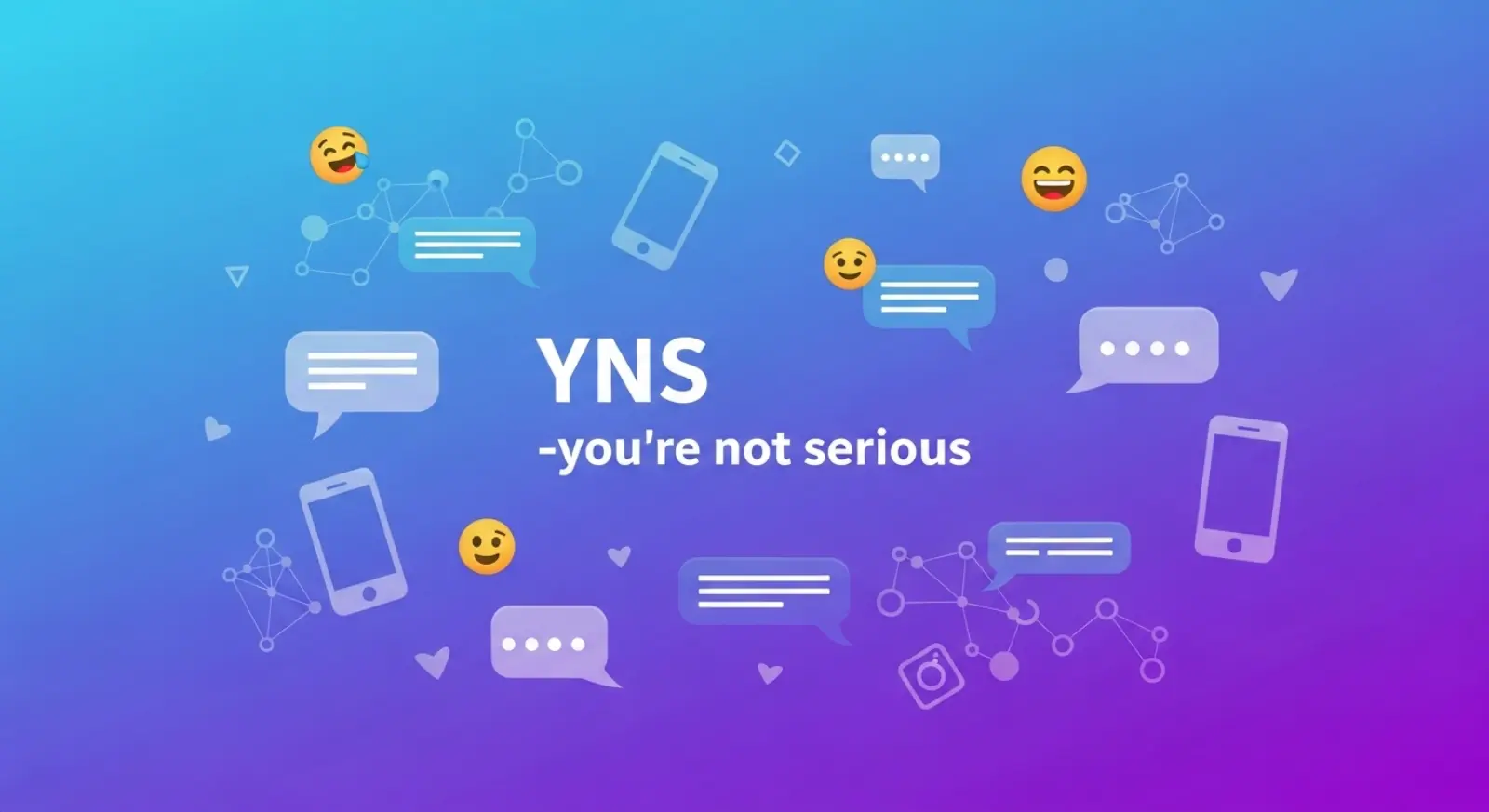
YNS is a flexible internet slang acronym that can mean:
• You Need Sleep – used jokingly or with concern
• You Never Said – used to call someone out
• You’re Not Serious – used in disbelief or sarcasm
But here’s the real thing people miss…
YNS isn’t just about the words.
It’s about tone, timing, and emotional intent.
Simple Examples:
• “You’re still awake at 4am?? YNS 😭”
👉 Caring + teasing
• “Wait you’re mad? YNS…”
👉 Doubt + disbelief
• “You said you told me? YNS.”
👉 Calling someone out
At its core, YNS is about reaction. It signals that something feels off, surprising, or worth pointing out.
What Does YNS Mean in Text
In texting, YNS meaning depends heavily on context.
It can function as:
• A reaction (“that doesn’t make sense”)
• A soft accusation (“you didn’t say that”)
• A playful insult (“you’re being ridiculous”)
• A caring reminder (“go sleep, seriously”)
Think of it like a tone shortcut. Instead of typing a full emotional response, people drop “YNS” and let context do the rest.
That’s why it can feel confusing.
Because the meaning isn’t fixed—it’s felt.
Origin & Background
YNS didn’t come from a single viral moment. It grew quietly out of text culture evolution.
A few key influences:
• Short-form texting habits
• TikTok comment culture
• Meme-style abbreviations
• Gen Z’s love for layered meanings
On platforms like TikTok and Instagram, people started compressing reactions into acronyms. YNS fit perfectly—it’s short, adaptable, and slightly mysterious.
Over time:
• “You Need Sleep” became popular in late-night chats
• “You Never Said” emerged in arguments or debates
• “You’re Not Serious” spread in reaction memes
And now? It’s all of them at once.
👉 That’s how internet language works. It evolves faster than definitions can keep up.
Real-Life Conversations
WhatsApp Chat
A: “I haven’t slept in 36 hours”
B: “YNS 💀”
👉 Concern disguised as humor
Instagram DM
A: “I told you already”
B: “YNS… you literally didn’t”
👉 Subtle confrontation
TikTok Comments
“Bro said pineapple belongs on biryani 😭 YNS”
👉 Disbelief + sarcasm
Group Chat
A: “I might text my ex”
Everyone: “YNS”
👉 Intervention energy
Text Message
A: “I’m totally fine”
B: “YNS…”
👉 Emotional awareness
After looking at these, one thing becomes clear:
👉 YNS is rarely neutral. It always carries a feeling underneath.
Emotional & Psychological Meaning
This is where YNS gets interesting.
When someone uses YNS, they’re not just reacting—they’re reading the situation emotionally.
It can signal:
• Awareness (“something’s off here”)
• Concern (“you’re not okay”)
• Doubt (“I don’t believe you”)
• Social intelligence (“I see what’s really happening”)
In a way, YNS is like saying:
👉 “I understand more than you’re saying out loud.”
Mini Story
You tell your friend:
“I’m over it. I don’t care anymore.”
They reply:
“YNS…”
That one message hits differently, right?
Because it means:
👉 “I know you better than that.”
That’s the deeper psychology behind it.
Usage in Different Contexts
Social Media
Used for reactions, memes, and quick commentary.
Example:
“he said he’s ‘just a friend’ 😭 YNS”
Tone: playful, sarcastic, dramatic
Friends & Relationships
More emotional and layered.
Example:
“You’re fine? YNS…”
Tone: caring, intuitive, slightly confrontational
Work or Professional Settings
Almost never appropriate.
Example:
Avoid saying “YNS” in emails or formal chats
Tone: can feel confusing or unprofessional
Casual vs Serious Tone
• Casual: funny, teasing
• Serious: emotionally loaded, sometimes confrontational
Same acronym. Completely different impact.
When NOT to Use It
There are moments where YNS just doesn’t land right:
• Professional emails
• Serious arguments
• Talking to older audiences
• Cross-cultural conversations
• Sensitive emotional situations
Why?
Because it relies on shared understanding.
Without that, it can feel:
• Dismissive
• Confusing
• Passive-aggressive
👉 Context protects meaning.
Common Misunderstandings
1. “It only means one thing”
Nope. It has multiple meanings depending on tone.
2. “It’s always rude”
Not true. It can be caring or funny.
3. “It’s always a joke”
Sometimes it’s actually serious.
4. “It’s obvious what it means”
Honestly? It’s not. Context matters a lot.
Comparison Table
| Expression | Meaning | Tone | Usage Context |
|---|---|---|---|
| YNS | Depends on context | Flexible | Reactions, texting |
| FR (For Real) | Emphasis or agreement | Direct | Casual chat |
| IDC | I don’t care | Cold, dismissive | Arguments |
| LMAO | Laughing reaction | Light, humorous | Social media |
| SMH | Disapproval | Judgmental | Commentary |
👉 YNS stands out because it blends emotion + interpretation, not just reaction.
Variations & Types
Like most slang, YNS evolves.
• YNS fr – stronger emphasis
• YNS 😭 – emotional or dramatic
• YNS bro – casual, friendly
• YNS… – serious, slightly heavy tone
• YNS??? – disbelief or shock
Each variation slightly shifts the emotional vibe.
How to Respond When Someone Uses It
Casual Replies
• “nah I’m good 😂”
• “you’re overthinking”
Funny Replies
• “sleep is a social construct”
• “never said?? I said it in my dreams”
Mature Replies
• “okay fair, maybe I didn’t explain properly”
• “yeah… you might be right”
Respectful Replies
• “I get what you mean”
• “thanks for checking on me”
👉 Matching energy matters. That’s how social communication flows online.
Regional & Cultural Usage
Western Culture
Very common among Gen Z. Used casually and emotionally.
Asian Culture
Used mostly in online communities influenced by global trends.
Middle Eastern Culture
Growing usage in social media spaces, especially among youth.
Global Internet Usage
YNS shows how slang spreads fast across borders through memes and TikTok.
Generational Differences
Gen Z
Uses YNS naturally with layered meaning.
Millennials
May understand it but use it less frequently.
Older Generations
Often confused by it or interpret it literally.
👉 Language online is becoming more about emotion than grammar.
Is It Safe for Kids
Mostly, yes.
But there are small risks:
• Can be used sarcastically or mockingly
• Might confuse younger users
• Emotional tone can be misunderstood
Best used in friendly, familiar environments.
FAQs
What does YNS mean in texting?
It usually means “You Need Sleep,” “You Never Said,” or “You’re Not Serious,” depending on context.
Is YNS rude?
Not always. It can be caring, funny, or sarcastic.
What does YNS mean on TikTok?
Mostly used for reactions—either disbelief or humor.
Can YNS be used in serious conversations?
Yes, but it may come off as indirect or passive.
Do adults use YNS?
Mostly younger users. Older people may not recognize it.
Should I use YNS at work?
No. It’s too informal and context-dependent.
Conclusion
YNS slang meaning isn’t just about definitions like “You Need Sleep,” “You Never Said,” or “You’re Not Serious.”
It’s about something deeper.
It’s about how people react without over-explaining.
How they read emotions between the lines.
How modern communication turns short phrases into emotional signals.
In a world where attention is short and conversations are fast, YNS becomes a shortcut for:
👉 “I see what’s really going on here.”
And maybe that’s why it sticks.
Because sometimes, one small acronym says more than a whole paragraph ever could.

I’m Jake Punman, a humor writer who lives for clever wordplay and laugh-out-loud puns. I love crafting witty lines that turn simple moments into bursts of laughter. My passion is making people smile through creative twists of language. With every pun I write, I aim to add a little more fun to your day.