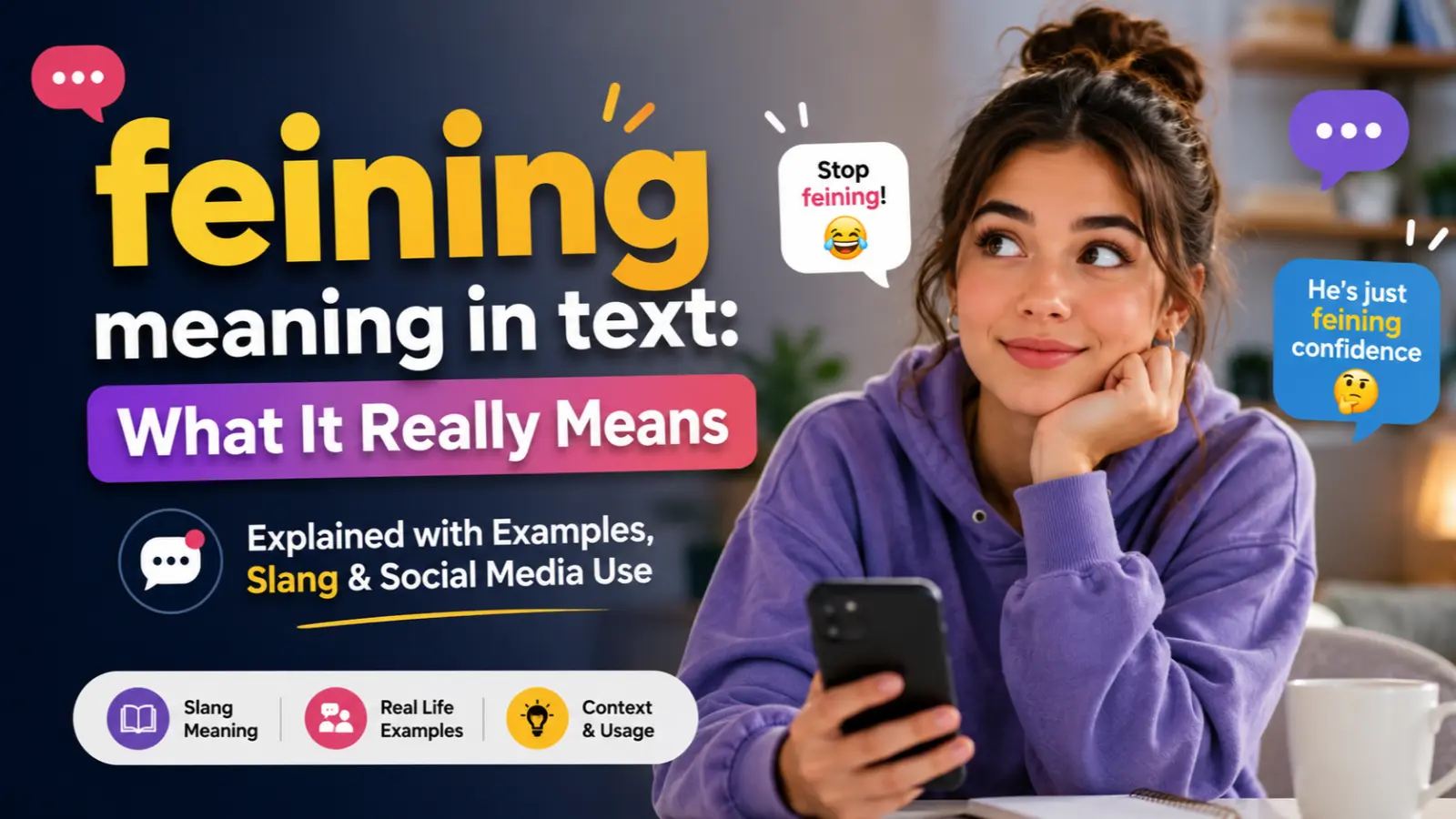
Feining meaning in text has become one of those internet expressions that can completely change the tone of a conversation. Imagine opening a chat and seeing messages like:
“Bro stop feining, you don’t even like that game.”
“She’s feining being sick just to skip class.”
Or maybe someone comments on TikTok:
“He’s feining confidence so hard.”
If you’ve seen this word online, you’re probably wondering what it actually means. Is it an insult? A joke? A compliment? Or does it simply mean someone is acting differently?
The confusion is understandable because internet slang evolves incredibly fast. A single word can carry different emotional meanings depending on who’s saying it, where it’s posted, and even the emoji that follows.
Most people search for feining meaning in text because they want to understand conversations without feeling left out. Whether the word appears on TikTok, Instagram, Snapchat, Discord, or in everyday text messages, knowing its meaning helps you read between the lines.
In most online conversations, feining is used to describe someone pretending, faking, or simulating an emotion, illness, reaction, confidence, interest, or behavior. Sometimes it’s playful. Sometimes it’s an accusation. It’s just internet humor.
Let’s break it down in a way that actually makes sense.
Quick Definition
Feining (often intended as feigning) means pretending, faking, or simulating something that isn’t genuine.
Depending on the conversation, it can describe many different situations.
Feining Meaning in Text as Pretending
Someone acts like they feel something they really don’t.
Example:
“He’s feining being happy after losing.”
Feining Meaning in Text as Faking an Illness
Someone pretends to be sick to avoid something.
Example:
“She’s feining a headache to stay home.”
Feining Meaning in Text as Simulating an Emotion
A person acts sad, excited, angry, surprised, or confident without actually feeling it.
Example:
“He’s feining confidence before the presentation.”
Feining Meaning in Text as Joking
Friends sometimes exaggerate someone’s dramatic behavior.
Example:
“Quit feining, we know you’re fine 😂.”
Feining Meaning in Text as Calling Someone Out
Sometimes the word challenges someone’s authenticity.
Example:
“You’re feining interest just for attention.”
Feining Meaning in Text While Flirting
People may jokingly accuse someone of pretending not to like another person.
Example:
“Stop feining. We all know you like him.”
Feining Meaning in Text as Emotional Expression
Sometimes people fake reactions to protect themselves emotionally.
Example:
“She kept feining she didn’t care after the breakup.”
At its core, feining means pretending, faking, or simulating something instead of expressing what is genuinely true.
What Does feining meaning in text Mean in Text?
In texting, feining usually means someone is putting on an act.
That act might involve:
- emotions
- confidence
- illness
- excitement
- bravery
- indifference
- affection
- sadness
People often use it to point out behavior that feels exaggerated or dishonest.
It doesn’t always imply malicious lying. Sometimes it’s simply recognizing that people wear emotional masks.
Origin & Background
The word comes from “feign,” an English verb meaning to pretend or fake something intentionally. The spelling “feining” is commonly seen online as an informal or mistaken version of “feigning,” but many internet users type it this way in casual conversations.
As social media exploded, people began using shorter, less formal spellings without worrying about dictionary accuracy.
TikTok creators started using it in storytelling videos.
Instagram users added it to dramatic captions.
Gaming communities used it while joking with teammates.
Meme culture pushed the word even further by exaggerating fake reactions for comedy.
Eventually, the slang became less about grammar and more about instantly recognizing fake behavior.
That’s how internet language works. Online communities constantly reshape words faster than dictionaries can document them.
Real-Life Conversations
WhatsApp Chat
Alex: Why isn’t Jake coming?
Ryan: He’s feining being sick again.
Instagram DM
Emma: She acts like she doesn’t care.
Lily: Girl… she’s definitely feining.
TikTok Comments
“Bro is feining confidence 😭.”
“Everyone knows you’re feining.”
Text Messages
Sarah: Are you really okay?
Mia: Honestly… I was feining earlier.
Group Chat
Friend 1: He totally ignored her.
Friend 2: Nah, he’s just feining not to like her.
These conversations reveal a common emotional pattern. People use the word when they sense a gap between someone’s actions and their true feelings.
Emotional & Psychological Meaning
Humans rarely show every emotion honestly.
Sometimes we pretend to be stronger.
Happier.
Less interested.
Completely unaffected.
That’s exactly why feining resonates so strongly online.
When someone says another person is feining, they’re often pointing to emotional self-protection.
Imagine a college student who gets rejected after asking someone out. Instead of admitting disappointment, they laugh, post memes, and act completely unbothered.
Their friends quietly whisper,
“He’s feining.”
The word isn’t only about dishonesty.
It’s about emotional survival.
Online culture constantly rewards confidence, humor, and emotional control. As a result, many people perform emotions instead of expressing them honestly.
That’s the deeper psychology behind it.
Usage in Different Contexts
Social Media
Creators use the word when reacting to dramatic videos, fake reactions, or exaggerated emotions.
Example:
“He’s feining for views.”
Friends & Relationships
Friends often tease each other playfully.
Example:
“Stop feining—you obviously missed her.”
Work or Professional Settings
Avoid using the slang in professional communication.
Instead, say:
- pretending
- exaggerating
- acting
Casual vs Serious Tone
Among friends, it’s humorous.
During emotional arguments, it can sound accusatory.
Context completely changes how people interpret it.
When NOT to Use It
Avoid using feining when talking to:
- coworkers
- clients
- teachers
- older relatives unfamiliar with internet slang
- people during emotionally sensitive conversations
- cross-cultural audiences who may misunderstand the term
Calling someone “feining” during a serious discussion may make them feel invalidated.
Context protects meaning.
Common Misunderstandings
Many people believe feining always means lying.
It doesn’t.
Someone may simply be hiding emotions.
Others think it’s always rude.
Not necessarily.
Friends often use it jokingly.
Another misunderstanding is confusing it with confidence.
Someone acting confident isn’t automatically pretending.
Tone always matters.
Comparison Table
| Expression | Meaning | Tone | Usage Context |
|---|---|---|---|
| Feining | Pretending or faking | Casual to accusatory | Texts, TikTok, chats |
| Acting | Performing behavior | Neutral | Everyday conversation |
| Fronting | Pretending to look impressive | Urban slang | Friends, social media |
| Capping | Lying or exaggerating | Playful | Gen Z slang |
| Faking | Being dishonest | Direct | General English |
Although these expressions overlap, feining often focuses more on emotional performance than outright deception.
Variations & Types
People creatively modify the word online.
- feining
- feigned
- feigning
- stop feining
- quit feining
- always feining
- feining so hard
- professionally feining
- emotionally feining
- literally feining
Meme culture often exaggerates the phrase for dramatic effect.
How to Respond When Someone Uses It
Casual Replies
- “Maybe a little.”
- “You caught me.”
- “Fair enough.”
Funny Replies
- “Oscar-worthy performance 😂”
- “Don’t expose me.”
Mature Replies
- “I was trying to hide how I felt.”
- “Honestly, you’re right.”
Respectful Replies
- “Let’s talk about what’s really going on.”
- “I appreciate your honesty.”
Matching the other person’s energy usually leads to better conversations.
Regional & Cultural Usage
Western Culture
The word often appears in memes, dating discussions, and humorous call-outs.
Asian Culture
Many English-speaking online communities understand it through TikTok and gaming culture, though usage varies by country.
Middle Eastern Culture
Young internet users increasingly recognize the term through global social media trends, while older generations may be unfamiliar with it.
Global Internet Usage
Social media spreads slang across borders at incredible speed. Words like feining can become globally recognizable even when spellings differ.
Generational Differences
Gen Z
Uses the word naturally in memes, TikTok comments, and texting.
Millennials
Usually understand it through social media but may prefer more standard language in daily conversation.
Older Generations
Many are unfamiliar with the slang or recognize only the traditional word feign.
Language often reflects the communities people spend time in online.
Is It Safe for Kids?
Generally, yes.
The word itself is harmless.
However, repeatedly accusing someone of “feining” emotions can become teasing or emotional pressure.
Parents should encourage children to understand the difference between joking with friends and dismissing someone’s genuine feelings.
Like many internet expressions, the intent matters more than the word itself.
FAQs
What does feining meaning in text mean?
It means pretending, faking, or simulating an emotion, illness, reaction, or behavior.
Is feining rude?
Not always. It depends on tone, relationship, and context.
Why do people use feining on TikTok?
Creators use it to point out fake reactions, exaggerated emotions, or humorous performances.
Is feining the same as lying?
No. Someone may be hiding emotions rather than telling a direct lie.
Do Gen Z use feining often?
Yes. It’s most common among younger internet users active on social media platforms.
Should I use feining at work?
Generally no. Professional settings usually require clearer and more formal language.
Conclusion
Understanding feining meaning in text helps you recognize more than just another piece of internet slang. It reveals how people communicate emotions, hide vulnerabilities, and perform different versions of themselves online. In most conversations, feining means pretending, faking, or simulating an emotion, illness, or reaction rather than expressing genuine feelings.
Modern internet language continues to evolve because people are constantly finding new ways to describe complex emotions with simple words. Whether you see feining in a TikTok comment, a WhatsApp message, or an Instagram DM, remembering its emotional meaning gives you a better understanding of the conversation beneath the surface.
Sometimes the strongest messages aren’t the ones people openly express—they’re the emotions they’re quietly feining.

I’m Jake Punman, a humor writer who lives for clever wordplay and laugh-out-loud puns. I love crafting witty lines that turn simple moments into bursts of laughter. My passion is making people smile through creative twists of language. With every pun I write, I aim to add a little more fun to your day.