Vibe meaning slang is one of those internet expressions you see everywhere, yet its meaning can change depending on the situation. Imagine opening a group chat and seeing messages like:
- “His vibe is so chill.”
- “I’m not feeling the vibe.”
- “That place has good vibes.”
- “She gives mysterious vibes.”
If you’ve ever wondered what people actually mean, you’re not alone.
The word vibe isn’t just about mood anymore. On social media, in text messages, and during everyday conversations, it has become a quick way to describe someone’s personality, energy, atmosphere, or emotional impression without needing a long explanation.
People search for vibe meaning slang because they hear it constantly on TikTok, Instagram, Snapchat, YouTube, and even in real-life conversations. They want to understand not only the dictionary definition but also the emotional message hiding behind the word.
Let’s break it down in a way that actually makes sense.
Quick Definition
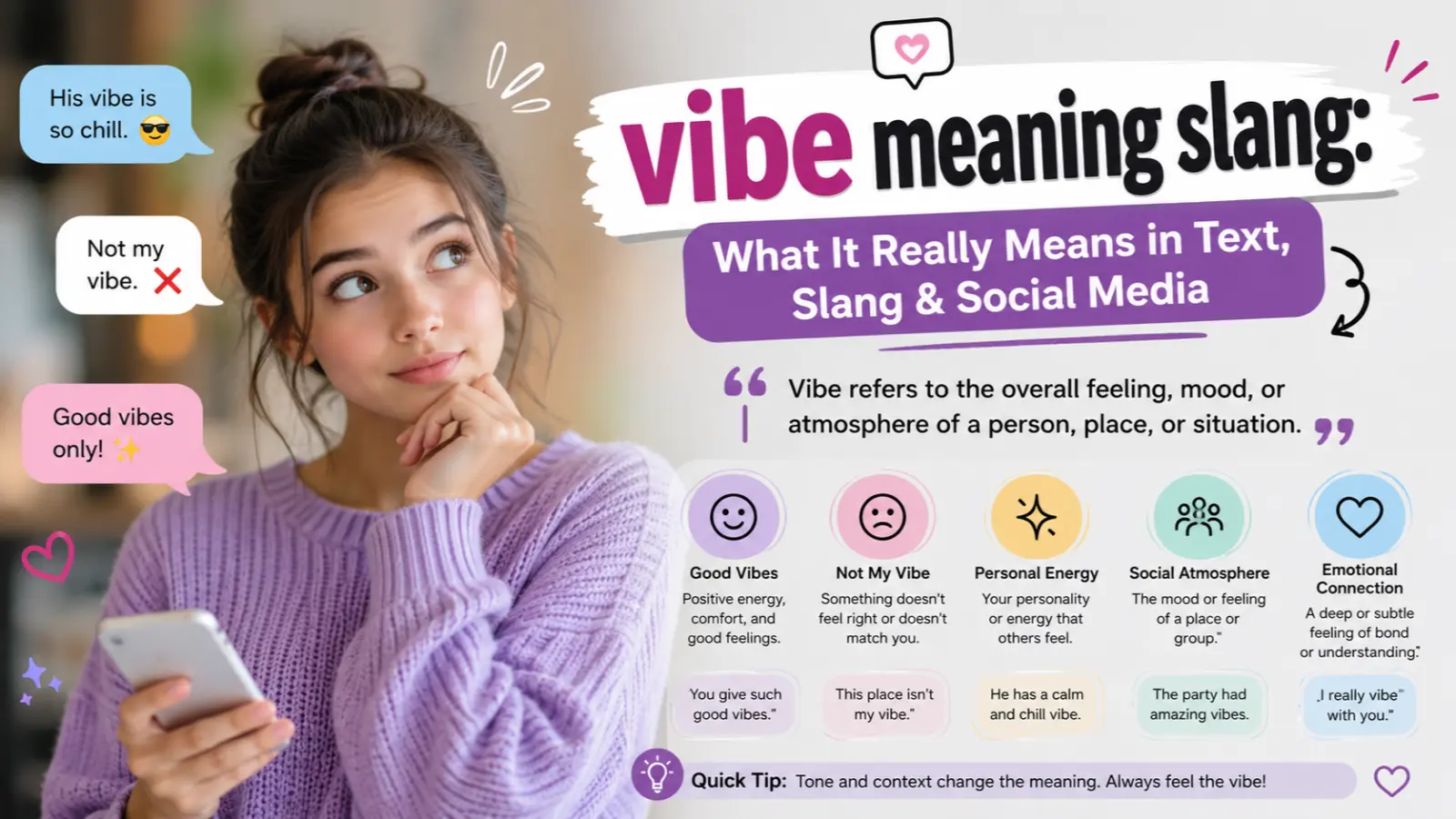
In modern internet slang, vibe refers to the overall feeling, mood, or atmosphere of a person, place, or situation.
Rather than describing facts, people use “vibe” to describe how something feels emotionally.
Vibe Meaning Slang for Noticing
Sometimes “vibe” simply means noticing someone’s energy.
Example:
“I’m getting good vibes from him.”
Meaning: He seems kind, trustworthy, or friendly.
Vibe Meaning Slang for Reacting
People often react to situations using “vibe.”
Example:
“That party wasn’t my vibe.”
Meaning: It didn’t match my personality or interests.
Vibe Meaning Slang as a Compliment
Calling someone a “good vibe” is usually a compliment.
Example:
“You’re such a good vibe.”
Meaning: You’re enjoyable to be around.
Vibe Meaning Slang as an Insult
Sometimes it carries criticism.
Example:
“He’s giving weird vibes.”
Meaning: Something feels uncomfortable or suspicious.
Vibe Meaning Slang While Joking
Friends often exaggerate vibes for humor.
Example:
“Bro has villain vibes.”
Meaning: A playful joke about someone’s appearance or behavior.
Vibe Meaning Slang for Exposing Feelings
People use vibe to reveal emotions indirectly.
Example:
“I’m getting breakup vibes.”
Meaning: Something feels emotionally wrong.
Vibe Meaning Slang While Flirting
Flirting online often includes vibe-related compliments.
Example:
“You have such cute vibes.”
Meaning: You’re attractive emotionally and personally.
Vibe Meaning Slang for Emotional Expression
Sometimes people can’t explain emotions clearly.
Instead, they simply say:
“The whole vibe feels different.”
That one sentence communicates an emotional shift without explaining every detail.
Core Meaning: In slang, vibe represents the emotional atmosphere someone senses from a person, place, event, or situation.
What Does Vibe Mean in Text?
In texting, vibe usually describes someone’s emotional energy, personality, or the atmosphere of a conversation.
Examples include:
- “You’re my vibe.”
- “Not the vibe.”
- “This chat is such a vibe.”
- “I’m loving today’s vibe.”
Text messages are short, so people rely on words like “vibe” to express feelings quickly. Instead of saying, “I enjoy spending time with you because your personality makes me feel comfortable,” someone simply writes:
“You’re a vibe.”
That short phrase says a lot.
Origin & Background
The word vibe comes from vibration, originally referring to physical vibrations.
Over time, especially in music culture, people started using “good vibrations” to describe positive feelings.
Eventually, “vibes” became shorthand for emotional energy.
Social media completely transformed the word.
TikTok creators began describing outfits, aesthetics, songs, relationships, cafés, and even pets as “a vibe.”
Instagram captions helped popularize phrases like:
- Main character vibe
- Cozy vibes
- Summer vibes
- Sad vibes
- Rich girl vibes
Memes made the slang even more flexible. Today, almost anything can have a vibe.
Online language evolves incredibly fast, and “vibe” is one of the best examples of how a simple word can develop dozens of emotional meanings.
Real-Life Conversations
A: Want to meet him?
B: Yeah…he gives good vibes.
Meaning: He seems trustworthy.
Instagram DM
A: Love your pictures.
B: Thanks! Just trying to keep the cozy vibe.
TikTok Comments
“Her apartment is literally my dream vibe.”
Text Messages
Friend: Movie tonight?
You: Sure, I’m in that vibe today.
Group Chat
Friend 1: New café opened.
Friend 2: Looks expensive.
3: True, but the vibe looks amazing.
Across these examples, “vibe” acts as emotional shorthand. People use it because it communicates feelings instantly without overexplaining.
Emotional & Psychological Meaning
One reason “vibe” became so popular is because emotions are difficult to describe.
Sometimes people don’t know exactly why they trust someone.
They simply say:
“I like their vibe.”
Other times they feel uncomfortable.
Instead of accusing someone, they say:
“I’m getting weird vibes.”
Psychologically, using “vibe” allows people to communicate intuition.
It reflects:
- Emotional awareness
- First impressions
- Social intelligence
- Attraction
- Comfort
- Caution
- Confidence
- Personal identity
Imagine meeting a new coworker.
Nothing bad happens.
Yet something feels slightly off.
Instead of making accusations, you tell your friend:
“I don’t know…the vibe felt strange.”
That protects relationships while still expressing your instincts.
The same happens while dating.
Many people decide whether they want a second date simply because “the vibe was good.”
That’s the deeper psychology behind it.
Usage in Different Contexts
Social Media
People constantly describe:
- Aesthetic vibes
- Vacation vibes
- Couple vibes
- Fashion vibes
- Music vibes
Example:
“This playlist has late-night vibes.”
Friends & Relationships
Friends often use “vibe” as emotional approval.
Example:
“She’s honestly such a vibe.”
Dating conversations also rely heavily on it.
Example:
“We really matched each other’s vibe.”
Work or Professional Settings
Professional workplaces usually avoid slang.
Instead of saying:
“The meeting had weird vibes.”
Say:
“The atmosphere felt uncomfortable.”
Casual vs Serious Tone
Casually:
“Good vibes only.”
Seriously:
“I’m getting concerning vibes from this situation.”
Context completely changes emotional intensity.
When NOT to Use It
Avoid using “vibe” in:
- Business emails
- Academic writing
- Job interviews
- Serious legal discussions
- Emotional family conflicts
- Conversations with people unfamiliar with internet slang
Older audiences may misunderstand the word.
Cross-cultural conversations can also create confusion because “vibe” depends heavily on shared internet culture.
Context protects meaning.
Common Misunderstandings
Many people misunderstand the slang.
Misunderstanding: Vibe always means mood.
Reality: It can describe personality, atmosphere, appearance, or emotional intuition.
Misunderstanding: Saying someone has weird vibes is always an insult.
Reality: Sometimes it’s playful, sometimes serious.
Misunderstanding: Good vibes means happiness.
Reality: It often means emotional comfort rather than excitement.
Misunderstanding: Vibe has only one meaning.
Reality: Its meaning changes with tone and context.
Comparison Table
| Expression | Meaning | Tone | Usage Context |
|---|---|---|---|
| Vibe | Emotional feeling or atmosphere | Flexible | Everyday conversation |
| Energy | Personal emotional presence | Deep | Relationships |
| Mood | Temporary feeling | Emotional | Personal emotions |
| Aura | Invisible personal presence | Dramatic | Social media |
| Aesthetic | Visual style | Creative | Fashion and design |
| Feeling | Personal emotion | Direct | General conversations |
Although these expressions overlap, vibe feels more intuitive and socially driven. It often combines personality, atmosphere, appearance, and emotion into one simple word.
Variations & Types
Popular variations include:
- Good vibes
- Bad vibes
- Chill vibes
- Cozy vibes
- Summer vibes
- Relationship vibes
- Villain vibes
- Main character vibes
- Chaos vibes
- Rich vibes
Internet users also exaggerate:
“Absolutely immaculate vibes.”
Or jokingly say:
“The vibes are fighting.”
Each variation slightly changes the emotional tone while keeping the same core meaning.
How to Respond When Someone Uses It
Casual Replies
- Totally agree.
- Same here.
- I get that.
- That’s the vibe.
Funny Replies
- Certified vibe inspector.
- Vibes don’t lie.
- The vibe check passed.
Mature Replies
- I understand what you mean.
- First impressions matter.
- That’s a fair observation.
Respectful Replies
- Thanks for sharing how you felt.
- I appreciate your honesty.
- I see where you’re coming from.
Matching someone’s emotional energy usually creates smoother conversations than arguing over the exact wording.
Regional & Cultural Usage
Western Culture
In North America and Europe, “vibe” is part of everyday speech. It describes people, fashion, music, cafés, relationships, and lifestyles.
Asian Culture
Many younger internet users mix “vibe” into English conversations, especially through TikTok, K-pop fandoms, anime communities, and gaming culture.
Middle Eastern Culture
Among younger social media users, “vibe” often appears in English posts and bilingual conversations to describe mood, style, or personality.
Global Internet Usage
Thanks to TikTok, Instagram Reels, YouTube Shorts, and memes, “vibe” has become a global slang word. Even people who don’t speak English fluently often understand expressions like “good vibes” or “not my vibe.”
Social media has turned “vibe” into a shared internet language that crosses cultures and borders.
Generational Differences
Gen Z
Gen Z uses “vibe” constantly. It can describe aesthetics, dating, friendships, fashion, music, memes, and emotions.
Millennials
Millennials commonly use phrases like:
- Good vibes
- Vacation vibes
- Weekend vibes
Their usage is slightly less exaggerated than Gen Z.
Older Generations
Older adults may recognize “good vibes” but might not understand newer phrases like:
- NPC vibes
- Main character vibes
- Delulu vibes
Language continues evolving because each generation uses slang to express identity.
Is It Safe for Kids?
Generally, yes.
“Vibe” is considered harmless slang.
However, children should understand that phrases like:
- Weird vibes
- Bad vibes
can unintentionally hurt someone’s feelings if used carelessly.
Parents can encourage respectful communication while explaining that first impressions aren’t always accurate.
Used thoughtfully, the word is a healthy way to express emotions.
Frequently Asked Questions
What does vibe mean in slang?
It means the emotional feeling, mood, atmosphere, or energy someone senses from a person, place, or situation.
What does vibe mean in texting?
In texts, it usually describes personality, emotional energy, or the feeling of a conversation.
Is saying “good vibes” a compliment?
Yes. It usually means someone feels positive, comfortable, and enjoyable to be around.
Why is vibe so popular on TikTok?
TikTok encourages short emotional expressions. “Vibe” quickly describes aesthetics, moods, personalities, and trends in just one word.
Do different generations use vibe differently?
Yes. Gen Z uses it more creatively, while Millennials often stick to classic expressions like “good vibes.”
Can I use vibe in professional settings?
It’s better to avoid slang in formal communication. Words like “atmosphere,” “environment,” or “overall impression” sound more professional.
Conclusion
The popularity of vibe meaning slang shows how modern communication has become more emotional, intuitive, and experience-driven. Instead of giving long explanations, people use vibe to describe the overall feeling, mood, or atmosphere of a person, place, or situation in just one simple word.
Whether someone says “good vibes,” “not my vibe,” or “you’re a vibe,” they’re usually expressing an emotional impression rather than a factual judgment. That’s why this slang continues to grow across texting, social media, and everyday conversations.
As internet culture keeps evolving, words like vibe remind us that language isn’t just about definitions—it’s about feelings, connection, and the invisible emotions we share every day.

I’m Grace Punston, a playful writer with a passion for clever puns and joyful wordplay. I love crafting witty lines that make readers grin and giggle. My goal is to spread laughter through smart, lighthearted writing. Every pun I share is a little spark of fun meant to brighten your day.