opp meaning in text shows up in your messages, and suddenly the vibe changes.
“Bro stay low, the opps are watching 👀”
“She talking to my opp now?? wild.”
“Don’t trust him… he’s an opp.”
You pause for a second. Wait… are we talking about enemies? Or just drama? Or is this some TikTok slang I missed again?
That confusion? Totally normal.
Because “opp” isn’t just a word—it’s a feeling, a signal, a whole social dynamic packed into three letters.
👉 Let’s break it down in a way that actually makes sense.
Quick Definition
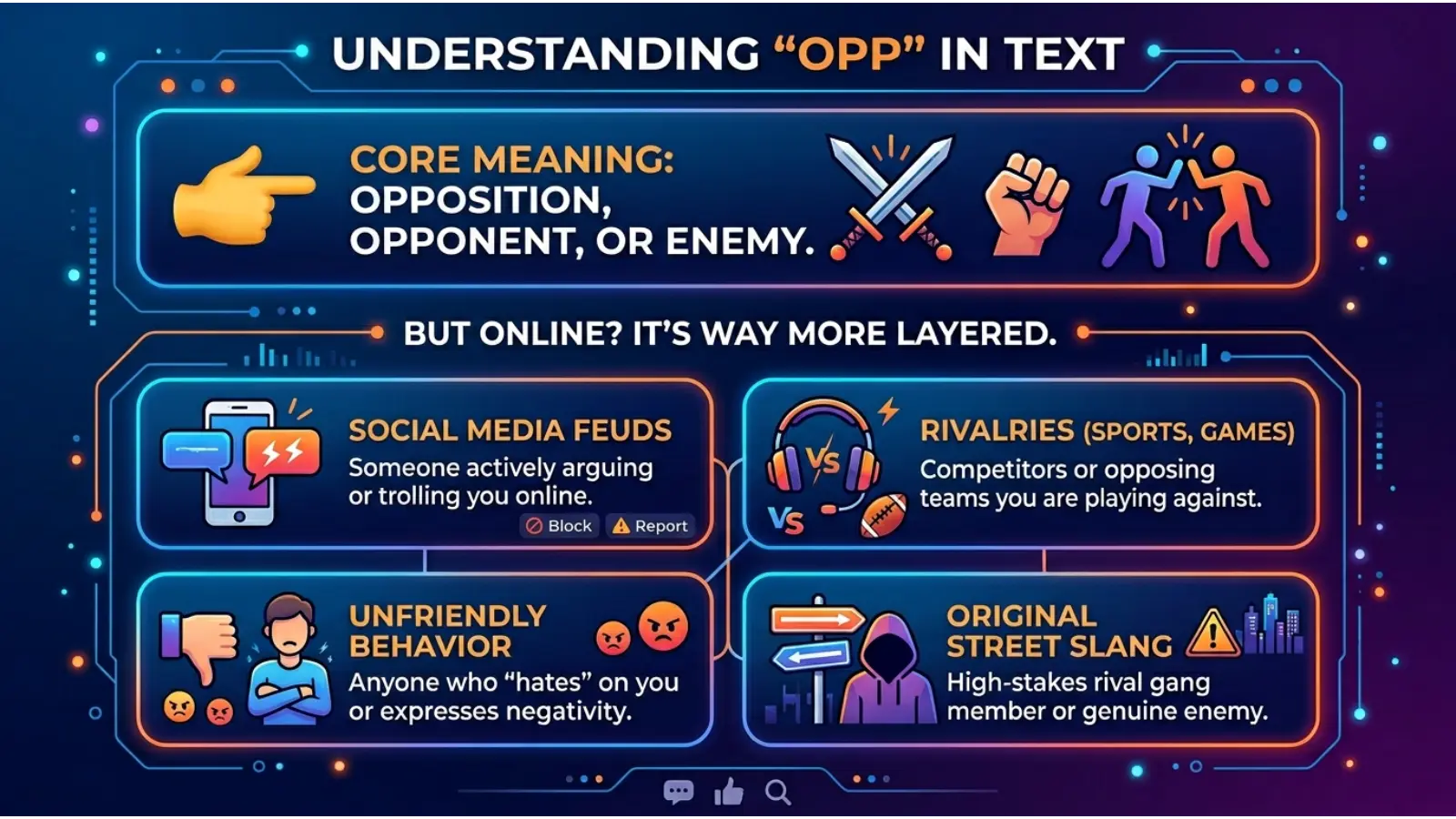
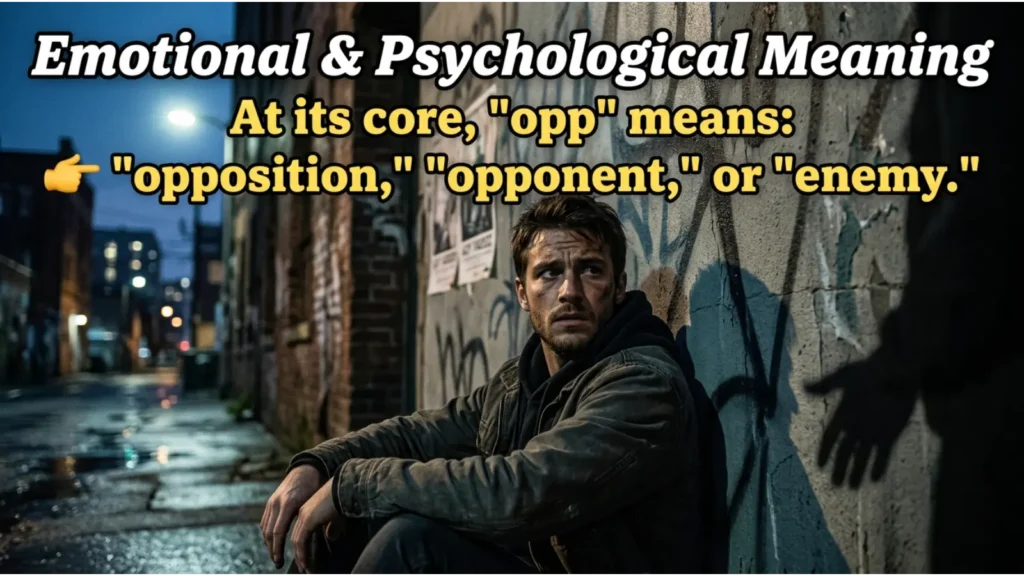
At its core, “opp” means:
👉 “opposition,” “opponent,” or “enemy.”
But online? It’s way more layered.
Opp = Enemy or Rival
Someone you’re against, dislike, or don’t trust.
Example: “He’s my opp, I don’t mess with him.”
Opps = Group of Enemies
Used especially in plural form.
Example: “We can’t post that… the opps will see.”
Opp (Online Context Confusion)
Sometimes people confuse it with “OP” (Original Poster), but that’s a different thing entirely.
👉 Core emotional meaning: “someone not on your side.”
What Does opp meaning in text Mean in Text?
In texting, opp meaning in text depends heavily on tone:
• Serious → real conflict or dislike
• Playful → teasing or joking rivalry
• Dramatic → exaggerating minor issues
• Social media → signaling loyalty vs betrayal
Example:
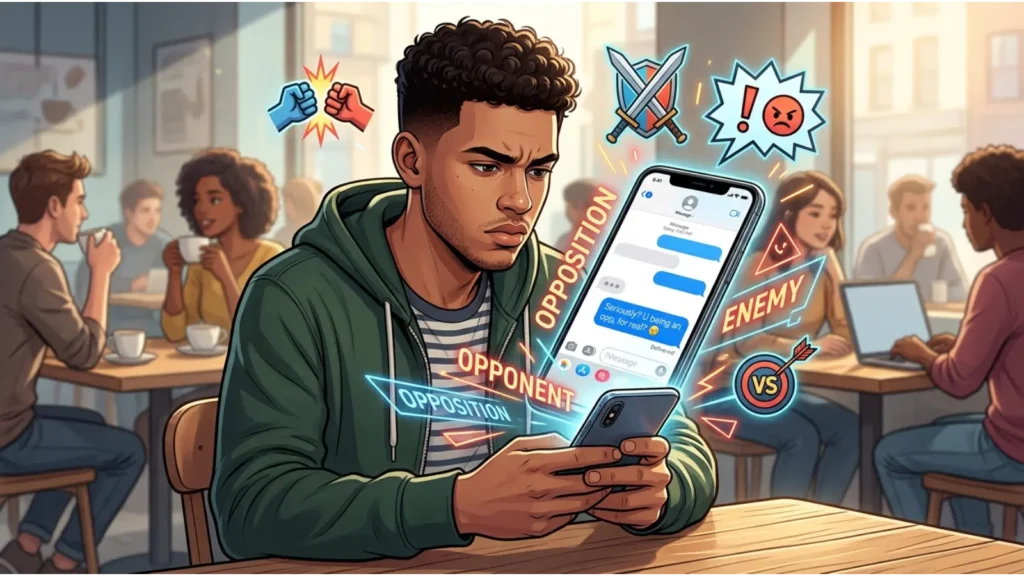
“Why you laughing with my opp??”
→ Not just a question… it’s emotional.
Origin & Background
“Opp” comes from street slang, especially in hip-hop and urban communities, where it originally meant real-life rivals or enemies.
Then social media did what it always does:
• TikTok made it viral
• Memes made it funny
• Gen Z made it flexible
Now? It can describe anything from serious beef to petty drama.
Language online evolves fast. What once meant danger can now mean drama.
Real-Life Conversations
👉 WhatsApp
“Don’t add him to the group, he’s an opp.”
Instagram DM
“You really following my opp now? 😭”
TikTok Comments
“The opps in the comments watching 😂”
Group Chat
“Act normal… the opps might see this.”
Text Message
“She switched sides… she with the opps now.”
These aren’t just words—they signal loyalty, trust, and social boundaries.
Emotional & Psychological Meaning
Calling someone an “opp” isn’t just labeling them.
It reveals:
• Us vs Them mindset
• Fear of betrayal
• Need for loyalty
• Social awareness
Sometimes it’s serious. Sometimes it’s exaggerated for humor.
I once saw a friend call someone an “opp” just because they liked a rival football team. Was it deep? Not really. But emotionally? It still created distance.
Using “opp” creates a line.
👉 That’s the deeper psychology behind it.
Usage in Different Contexts
Social Media
Used dramatically or humorously.
“The opps watching my story 👀”
Friends & Relationships
Signals loyalty issues.
“You talking to my opp?”
Work or Professional Settings
Almost never appropriate. Feels immature or confusing.
Casual vs Serious Tone
Casual → playful rivalry
Serious → real conflict or distrust
Context changes everything.
When NOT to Use It
Avoid using “opp” in:
• Formal conversations
• Professional emails
• Serious emotional conflicts
• Talking to older people unfamiliar with slang
• Cross-cultural communication
👉 Context protects meaning.
Common Misunderstandings
• ❌ It always means a dangerous enemy
→ Sometimes it’s just playful drama
It’s the same as “OP”
Completely different
It’s always rude
Tone decides that
literal
Often exaggerated for effect
Comparison Table
| Expression | Meaning | Tone | Usage Context |
|---|---|---|---|
| Opp | Enemy / rival | Serious or playful | Social media, texting |
| Hater | Someone negative | Slightly aggressive | General slang |
| Enemy | Direct conflict | Serious | Formal & informal |
| Rival | Competition | Neutral | Sports, work |
| OP | Original Poster | Neutral | Online forums |
👉 “Opp” feels more emotional and socially charged than the others.
Variations & Types
• Opps → multiple enemies
• Fake opp → someone pretending
• Secret opp → hidden disloyal person
• “He an opp fr” → emphasizing seriousness
• Meme usage → exaggerated drama
Each variation adds tone, humor, or intensity.
How to Respond When Someone Uses It
Casual Replies
“😂 not the opps again”
Funny Replies
“I didn’t know I had enemies like that 😭”
Mature Replies
“It’s not that deep, relax.”
Respectful Replies
“I understand why you feel that way.”
Matching energy matters more than words.
Regional & Cultural Usage
Western Culture
Very common in hip-hop and TikTok culture
Asian Culture
Used mostly online, less in real-life speech
Middle Eastern Culture
Growing through social media influence
Global Internet Usage
Now universal, thanks to memes and viral content
Generational Differences
• Gen Z → uses it daily, often jokingly
• Millennials → understand but use less
• Older generations → may find it confusing
Language reflects identity—and Gen Z speaks fast.
Is It Safe for Kids?
Mostly yes, but with caution:
• Can be harmless joking
• May encourage “us vs them” thinking
• Tone can turn negative quickly
Parents should focus on context and intent, not just the word.
FAQs
What does opp mean in texting?
It means an opponent, enemy, or someone not on your side.
Is opp always serious?
No, it’s often used jokingly or dramatically.
Is calling someone an opp rude?
It depends on tone—it can be playful or insulting.
What’s the difference between opp and OP?
“Opp” means enemy. “OP” means Original Poster.
Why is opp popular on TikTok?
Because it fits drama, humor, and storytelling culture.
Can I use opp at work?
Not recommended—it sounds too informal.
Conclusion
opp meaning in text goes far beyond just “opponent” or “enemy.” It reflects how we see loyalty, trust, and social circles in the digital age.
Sometimes it’s serious. Sometimes it’s just vibes. But every time it’s used, it draws a line—who’s in, and who’s out.
And in today’s online world, that line matters more than ever.
Because sometimes… calling someone an “opp” isn’t about them.
It’s about how you feel.

I’m Grace Punston, a playful writer with a passion for clever puns and joyful wordplay. I love crafting witty lines that make readers grin and giggle. My goal is to spread laughter through smart, lighthearted writing. Every pun I share is a little spark of fun meant to brighten your day.