You’re scrolling through your messages and suddenly you see:
“Bro this If PMO fr 😤”
“Hey, can you PMO with that playlist?”
“We need to align with the PMO before launch.”
Same three letters. Completely different vibes.
So now you’re sitting there thinking… wait, is this person mad? asking for help? or talking about work?
That confusion is exactly why people search PMO Mean in Text , because this one acronym lives three totally different lives depending on context.
And honestly? That’s peak internet language.
Let’s break it down in a way that actually makes sense.
Quick Answer:
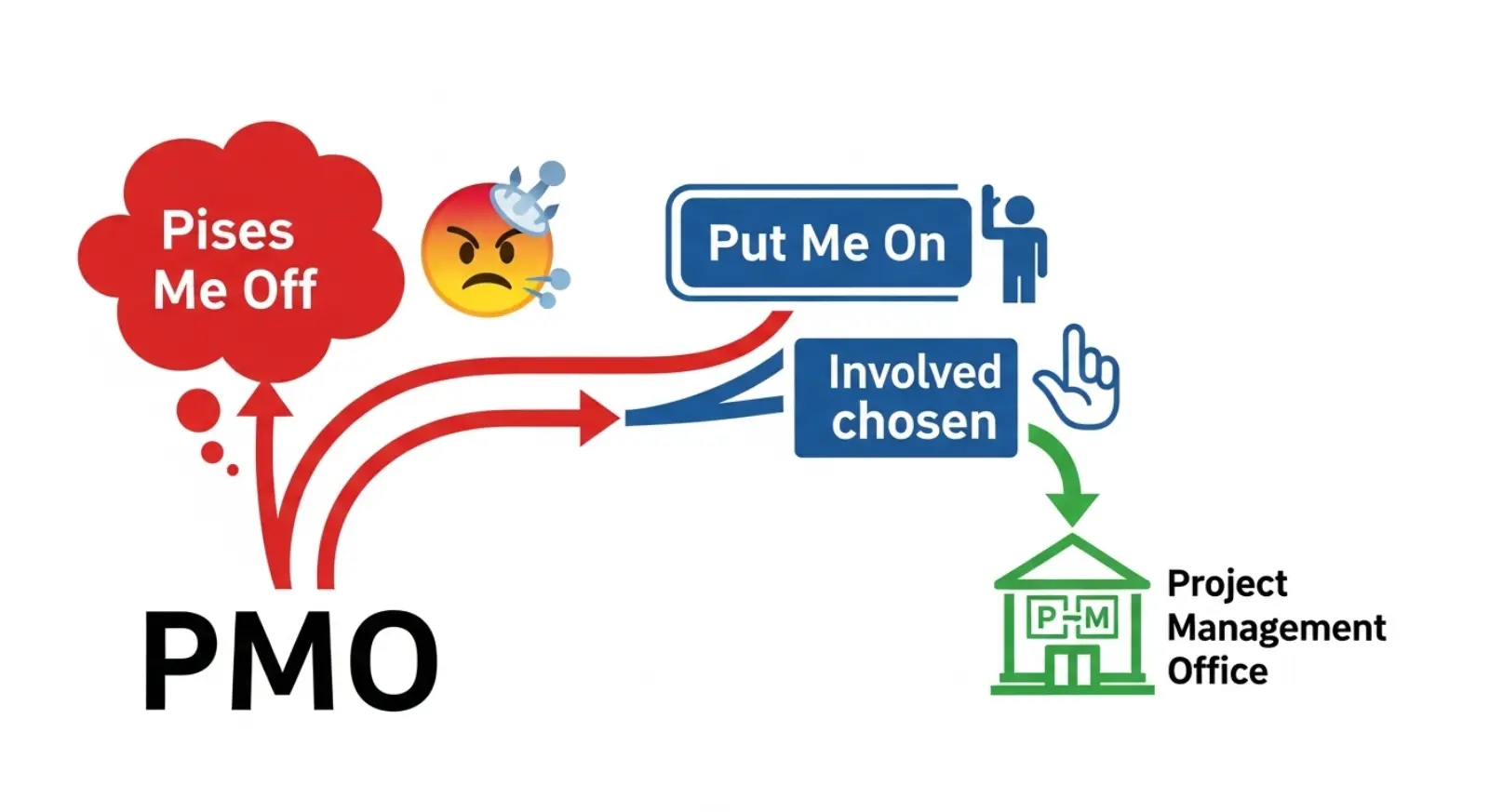
PMO is a multi-meaning slang and acronym that changes depending on tone, platform, and context.
It can mean:
- Pisses Me Off → frustration, anger, annoyance
- Put Me On → asking for recommendations or access
- Project Management Office → professional/business context
Quick Examples:
- “This lag PMO so bad 😡” → I’m annoyed
- “Yo PMO to that new song 🔥” → Put me on / recommend it
- “The PMO approved the timeline” → corporate usage
At its core, PMO is about expression — either emotional (anger), social (connection), or professional (structure).
What Does PMO Mean in Text
In texting, PMO usually leans emotional or social, not corporate.
Most common meanings:
- Emotional reaction → “This app PMO” (I’m irritated)
- Social curiosity → “PMO to your skincare routine” (teach me / share)
So when someone uses PMO in text, ask yourself:
👉 Are they reacting… or asking?
That’s the key.
PMO Meaning: “Pisses Me Off”
This is the most emotionally charged version of PMO.
It’s raw. It’s impulsive. It usually shows up when someone is slightly annoyed—or fully fed up.
Examples:
- “Slow internet PMO 😤”
- “People who chew loud PMO”
- “This game glitch PMO fr”
Emotional Intent:
This version isn’t always deep anger. Sometimes it’s just casual complaining with attitude.
It’s like saying:
👉 “This is annoying me more than it should.”
There’s a subtle relatability baked into it. People use it because they expect others to agree.
PMO Meaning: “Put Me On”
Now the energy flips completely.
Here, PMO becomes curious, social, and slightly vulnerable.
Examples:
- “PMO to some good Netflix shows”
- “That outfit fire, PMO where you got it”
- “PMO to your playlist 🔥”
Emotional Intent:
This isn’t just asking. It’s trust-based asking.
You’re basically saying:
👉 “I value your taste—put me on.”
It builds connection. It creates small social bonds.
And honestly, this version feels warmer, more human.
PMO Meaning: “Project Management Office”
Now we’re in a completely different world.
This is the corporate, structured, zero-slang version.
Examples:
- “The PMO will review the project scope”
- “Send updates to the PMO team”
- “PMO approval is required before execution”
Emotional Intent:
None. It’s purely functional.
But here’s the interesting part:
The same acronym that expresses frustration online… represents organization and control at work.
That contrast says a lot about how flexible language has become.
Origin & Background
PMO didn’t start as slang.
- “Project Management Office” has existed in business for decades
- “Pisses Me Off” came from informal texting culture
- “Put Me On” grew from hip-hop and street language, where “putting someone on” meant giving them access, knowledge, or opportunity
Then came social media.
Platforms like TikTok, Instagram, and group chats blurred everything together.
Now:
- Gamers use PMO to vent
- Friends use it to bond
- Professionals use it in emails
That’s internet language evolution in real time.
👉 Language online doesn’t stay in one lane—it mutates fast.
Real-Life Conversations
WhatsApp Chat
A: “This heat PMO 😭”
B: “Same bro I’m melting”
Instagram DMs
A: “That cafe looks nice”
B: “Yeah it is”
A: “PMO the location 👀”
TikTok Comments
“People who don’t use headphones PMO fr”
Group Chat
“PMO to some underrated artists pls”
Emotional Pattern
- “Pisses Me Off” → shared frustration
- “Put Me On” → social curiosity + connection
People use PMO to either release emotion or build connection.
Emotional & Psychological Meaning
This is where it gets interesting.
Using PMO says something about how someone communicates.
When someone says “PMO” (anger version):
- They’re expressive
- They want validation
- They’re releasing small frustrations safely
When someone says “PMO” (Put Me On):
- They trust your taste
- They’re open to influence
- They want inclusion
Mini Story
You’re in a group chat. Someone drops:
“PMO to good shoes brands”
One person replies instantly.
That small interaction?
It creates a micro-bond.
Now they share similar taste. Maybe even future conversations.
👉 That’s the deeper psychology behind it.
Usage in Different Contexts
Social Media
- “This trend PMO” → frustration
- “PMO to good content creators” → curiosity
Friends & Relationships
- “You always late, you PMO 😭” → playful annoyance
- “PMO your playlist” → bonding
Work or Professional Settings
- Strictly Project Management Office
- No slang meaning here
Casual vs Serious Tone
- Casual → slang meanings dominate
- Serious → corporate meaning only
Context changes everything.
When NOT to Use It
Avoid using PMO when:
- You’re in formal emails
- Talking to older or non-internet users
- During serious emotional arguments
- In professional presentations
It can confuse or sound inappropriate.
👉 Context protects meaning.
Common Misunderstandings
- Thinking PMO always means anger
- Assuming it’s rude every time
- Missing the “Put Me On” meaning
- Misreading tone in text
Truth is, PMO is context-dependent slang.
Comparison Table
| Expression | Meaning | Tone | Usage Context |
|---|---|---|---|
| PMO | Multiple meanings | Emotional / Social / Professional | Text, social, work |
| IMO | In my opinion | Neutral | Discussions |
| SMH | Shaking my head | Disappointed | Reactions |
| Put me on | Recommend/share | Friendly | Social |
| This annoys me | Literal frustration | Direct | Formal/informal |
Insight
PMO is more flexible and emotional than most slang—it shifts identity depending on use.
Variations & Types
- PMO fr → stronger emotion
- This really PMO → emphasis
- PMO pls → softer request
- PMO asap 😭 → urgent curiosity
- Lowkey PMO → mild annoyance
Each variation tweaks the emotional intensity.
How to Respond When Someone Uses It
Casual Replies
- “Same 😭”
- “I feel you”
Funny Replies
- “Calm down bro it’s not that deep 💀”
Mature Replies
- “Yeah that’s annoying honestly”
Respectful Replies
- “Sure, I’ll send you some recommendations”
Matching energy matters socially.
Regional & Cultural Usage
Western Culture
Heavy use in slang and texting
Asian Culture
More selective, mostly among younger users
Middle Eastern Culture
Growing through TikTok and Instagram influence
Global Internet Usage
PMO is now globally recognized, but meaning varies by exposure to internet culture
Generational Differences
- Gen Z → uses all meanings fluently
- Millennials → mostly understand slang meanings
- Older generations → recognize only corporate meaning
Language reflects identity.
Is It Safe for Kids
- “Put Me On” → harmless
- “Pisses Me Off” → mild negativity
- Depends on tone and frequency
It’s not dangerous—but it shapes emotional expression.
FAQs
What does PMO mean in texting?
It usually means “Pisses Me Off” or “Put Me On”, depending on context.
Is PMO rude?
Not always. It can be casual frustration or friendly conversation.
What does PMO mean on TikTok?
Mostly “Put Me On” or “Pisses Me Off”.
Can PMO be used professionally?
Yes, but only as Project Management Office.
How do I know which meaning is used?
Look at tone, sentence, and situation.
Do all generations understand PMO?
No—Gen Z uses it most flexibly.
Conclusion
Understanding PMO Mean in Text is really about understanding people.
Because whether it means:
- “Pisses Me Off” → emotional release
- “Put Me On” → social connection
- “Project Management Office” → structured communication
…it shows how one small phrase can carry completely different emotional worlds.
That’s modern communication.
It’s fast. It’s layered.
And sometimes… just three letters are enough to say everything.

I’m Laim Carter, a creative writer who enjoys blending humor and heart in every piece. I love sharing clever puns and inspiring messages that brighten people’s moods. Writing allows me to connect through laughter, positivity, and wordplay. My goal is to make every reader smile and see the joy hidden in simple words.