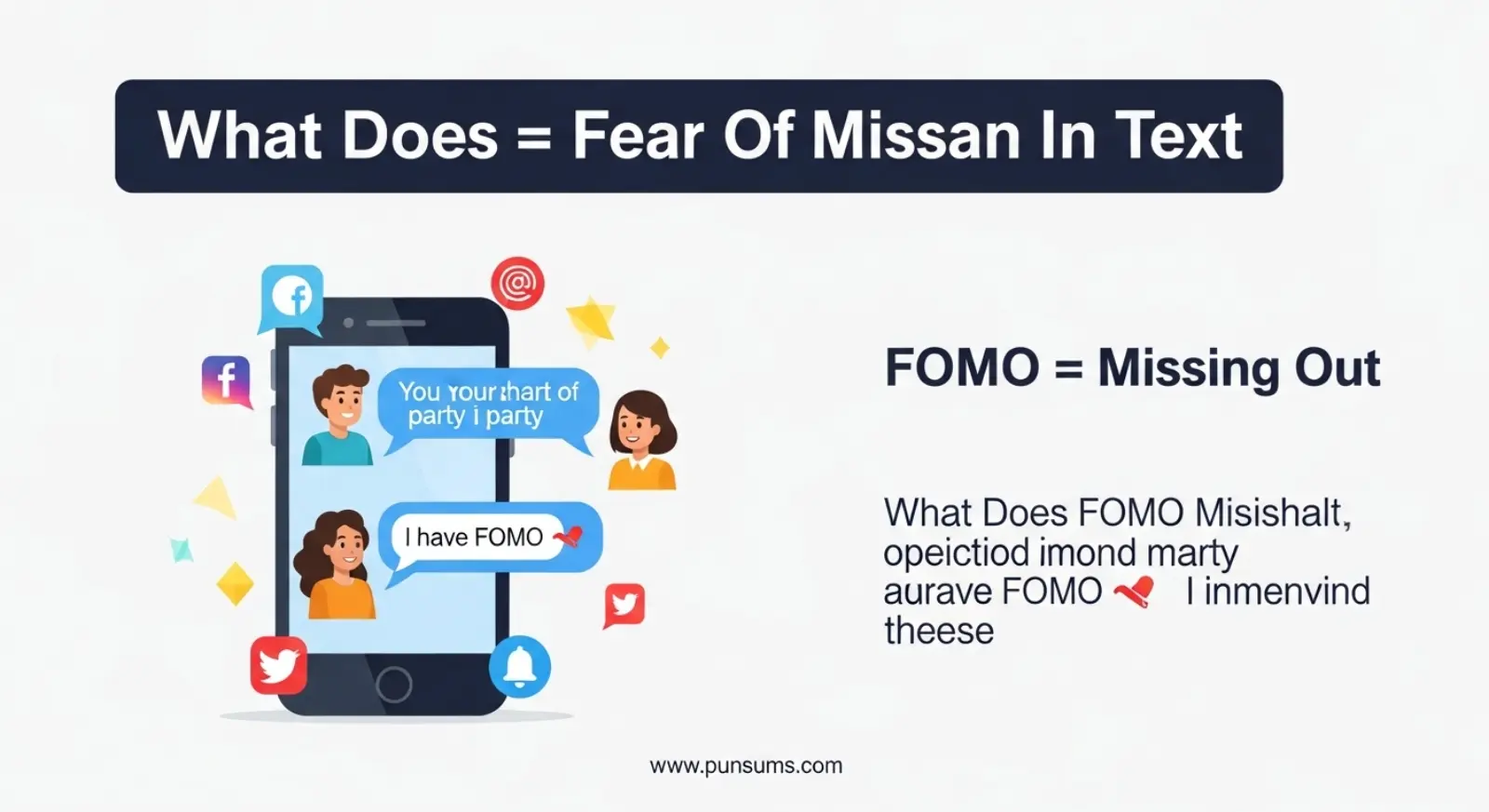
The keyword “What Does FOMO Mean in Text meaning in text” is one of the most searched slang explanations online because people often see it in chats, social media posts, and comments.
Internet slang changes quickly, and FOMO is one of those popular terms that everyone seems to use but not everyone fully understands.
FOMO is commonly used by teenagers, young adults, and even brands on social media to describe a feeling of anxiety or worry about missing out on something interesting or important. You might see it in messages like “I have FOMO” or “Don’t give me FOMO.”
In simple terms, FOMO describes a feeling when someone thinks others are having fun without them, and they don’t want to be left out.
Quick Answer:
FOMO means “Fear Of Missing Out,” a feeling of anxiety that others are enjoying something without you.
What does FOMO mean in text?
FOMO in text means the emotional feeling of being worried or anxious that you are missing something exciting happening somewhere else. It is often used in casual conversations, especially online.
People use it when they see friends attending events, traveling, or enjoying experiences that they are not part of. It reflects a strong desire to stay connected and involved in everything happening around them.
For example:
- “I’m getting FOMO seeing your vacation pics!”
Full form / definition of FOMO
The full form of FOMO is:
Fear Of Missing Out
It is a modern slang term that describes:
- Anxiety about missing experiences
- Desire to stay updated with social activities
- Emotional discomfort when excluded
So when someone says “I have FOMO,” they mean they feel they are missing something fun or important.
Is FOMO rude, offensive, or neutral?
FOMO is completely neutral slang. It is not rude or offensive.
However, tone matters:
- Friendly use: “I have FOMO seeing your party photos 😊”
- Negative tone: “You’re giving me FOMO and it’s annoying”
In most cases, it is used in a light, emotional, or humorous way.
Where is FOMO commonly used?
FOMO is widely used in:
- Social media (Instagram, TikTok, Facebook)
- Text messages and chats
- Online gaming communities
- Marketing campaigns and ads
- Casual conversations
Brands also use FOMO in marketing to encourage quick decisions, like “Limited offer – don’t miss out!”
Real-life examples of usage
Here are some natural examples of how people use FOMO in different situations:
- “Everyone is going to the concert tonight, I’m seriously feeling FOMO.”
- “Stop posting food pictures, you’re giving me FOMO!”
- “I skipped the trip and now I have FOMO seeing their stories.”
- “This game event is live, don’t miss it or you’ll get FOMO.”
Origin and background of FOMO
FOMO became popular in the early 2000s, especially with the rise of social media platforms.
Before social media, people still felt left out, but they didn’t have constant updates from friends. With platforms like Instagram and Facebook, people can now see everything others are doing in real time, which increased the feeling of missing out.
The term was popularized in marketing and psychology studies describing modern digital anxiety.
Comparison with similar slang
| Slang | Meaning | Feeling |
|---|---|---|
| FOMO | Fear Of Missing Out | Anxiety about missing events |
| JOMO | Joy Of Missing Out | Happiness in staying away |
| YOLO | You Only Live Once | Encourages taking risks |
| FOMOMO | Fear Of Missing More Out | Extreme FOMO (rare slang) |
FOMO is more about anxiety, while JOMO is about peace and relaxation.
When to avoid using FOMO
Even though FOMO is common, avoid using it in:
- Formal emails or work reports
- Professional business communication
- Serious or sensitive conversations
- Academic writing
It is best suited for casual and friendly conversations only.
Polite alternatives to FOMO
If you want more formal or softer expressions, you can use:
- “I feel left out”
- “I wish I could join”
- “I regret missing it”
- “Sounds like I missed something fun”
These alternatives are more appropriate in professional settings.
Why people use FOMO
People use FOMO because it quickly describes a complex emotion in a simple word.
Main reasons:
- Easy to express emotions
- Popular on social media
- Relatable feeling
- Saves time in conversations
It helps people connect emotionally without long explanations.
Impact of using slang in communication
Slang like FOMO has changed digital communication:
Positive impacts:
- Makes conversations more relatable
- Speeds up communication
- Builds online culture
Negative impacts:
- Can confuse older audiences
- Not suitable for formal writing
- May reduce clarity in professional contexts
Is FOMO safe for social media?
Yes, FOMO is completely safe to use on social media.
It is widely used in:
- Posts
- Captions
- Comments
- Stories
However, overusing it may make content feel repetitive or less professional for brand communication.
Examples of FOMO in different tones
Friendly tone
- “Your picnic photos are amazing, I have serious FOMO!”
Casual tone
- “Everyone’s hanging out without me again… FOMO hits hard.”
Argumentative tone
- “You always post fun stuff when I’m busy, giving me FOMO on purpose!”
Gaming context
- “New season dropped and I’m not playing yet—major FOMO!”
Social media tone
- “Scrolling through Insta and getting nonstop FOMO today.”
What Does FOMO Mean in English?
FOMO stands for “Fear of Missing Out.”
Simple Definition
It describes the feeling of anxiety or worry that others are having fun, experiencing something exciting, or gaining opportunities without you being part of it.
How It’s Used in Real Life
People often use FOMO when talking about:
- Social events they couldn’t attend
- Trending activities or viral moments
- Opportunities they feel they missed
Example Sentences
- “I had serious FOMO seeing their party stories.”
- “Join us, don’t get FOMO!”
Why FOMO Happens
FOMO is closely linked to:
- Social media use (seeing others’ highlights)
- Desire for belonging
- Fear of regret or missing opportunities
Key Takeaway
FOMO = the emotional feeling of not wanting to be left out of something important, fun, or rewarding.
Comparison table of slang terms
| Term | Full Form | Usage | Emotion |
|---|---|---|---|
| FOMO | Fear Of Missing Out | Missing events | Anxiety |
| JOMO | Joy Of Missing Out | Staying away | Happiness |
| YOLO | You Only Live Once | Risk-taking | Excitement |
| IMO | In My Opinion | Sharing views | Neutral |
FAQs:
What does FOMO mean in text messages?
FOMO means “Fear of Missing Out,” which refers to the anxious feeling that others are experiencing something exciting without you.
What is the full form of FOMO in chat?
The full form of FOMO is Fear Of Missing Out, commonly used in texting and social media conversations.
Why do people use FOMO in texting?
People use FOMO to express feelings of being left out or missing fun events, trends, or opportunities.
Is FOMO a positive or negative slang term?
FOMO is generally negative, as it describes anxiety or insecurity about missing experiences.
How is FOMO used in a sentence in text?
Example: “Everyone went to the party, and now I’ve got serious FOMO.”
Does FOMO only relate to social media?
No, FOMO can apply to real-life events, career opportunities, or financial decisions, not just social media.
What causes FOMO in texting and online chats?
FOMO is often triggered by seeing others’ updates, stories, or posts showing enjoyable activities.
Is FOMO common among teenagers?
Yes, FOMO is very common among teens and young adults due to heavy social media use.
What does it mean if a girl says FOMO in a text?
It usually means she feels left out or wishes she could join an event or experience you mentioned.
Can FOMO be used in a funny way in chats?
Yes, people often use FOMO humorously to exaggerate missing small or trivial things.
What is the difference between FOMO and jealousy?
FOMO is about missing experiences, while jealousy is about wanting what others have.
When should you use FOMO in texting?
Use FOMO when talking about missed events, plans, trends, or opportunities in a casual conversation.
Is FOMO used worldwide in texting slang?
Yes, FOMO is a globally recognized slang term used across many countries and platforms.
What are some similar slang terms to FOMO?
Common related slang includes JOMO (Joy of Missing Out) and YOLO (You Only Live Once).
Can FOMO affect mental health?
Yes, excessive FOMO can lead to stress, anxiety, and constant comparison with others.
Why is FOMO so popular on Instagram and TikTok?
Because these platforms highlight exciting moments, making users feel they might be missing out.
Is FOMO only used in informal texting?
Mostly yes, but it is also used in marketing, psychology, and professional discussions.
How do you respond when someone says FOMO?
You can respond by inviting them, reassuring them, or joking about the situation.
Can FOMO be used in business or finance contexts?
Yes, FOMO is often used to describe fear of missing investment or career opportunities.
What is the opposite of FOMO in texting?
The opposite is JOMO (Joy of Missing Out), meaning enjoying staying out of events.
Conclusion
Understanding What Does FOMO Mean in Text meaning in text helps you stay updated with modern internet slang and communicate better online. FOMO simply means Fear Of Missing Out, a common feeling in today’s social media-driven world.
It is widely used in casual chats, posts, and online conversations, but should be avoided in formal communication. Knowing when and how to use it ensures your message is clear, natural, and context-appropriate.

I’m Grace Punston, a playful writer with a passion for clever puns and joyful wordplay. I love crafting witty lines that make readers grin and giggle. My goal is to spread laughter through smart, lighthearted writing. Every pun I share is a little spark of fun meant to brighten your day.