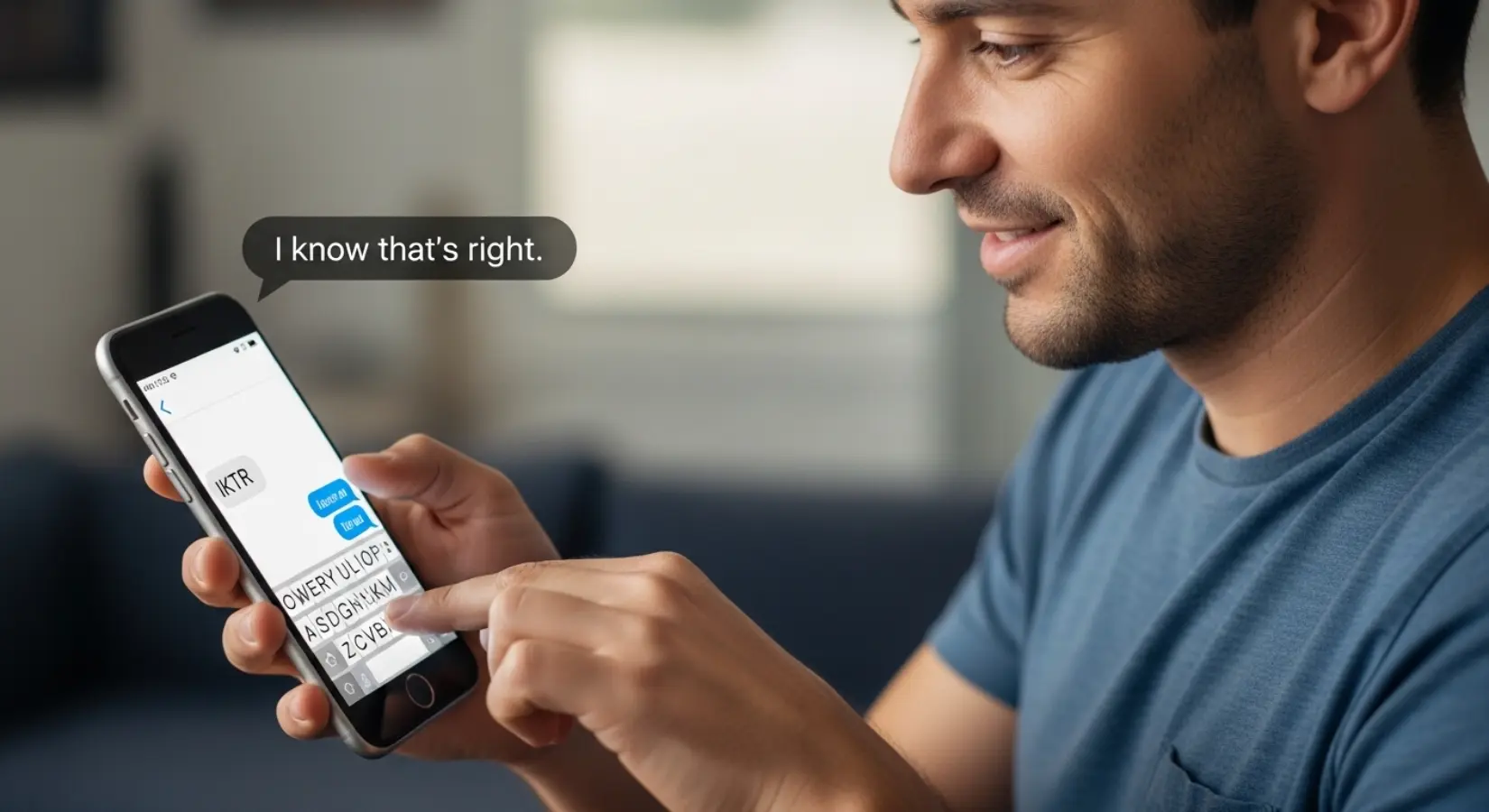
You’re scrolling through your messages… everything’s normal… then suddenly someone replies:
“you ate that 🔥 iktr”
Or maybe:
“she finally stood up for herself… IKTR 👏”
And you pause.
Wait… IKTR Meaning in Text… what does that even mean? Is it praise? Sarcasm? A joke? A vibe?
You’re not alone. This is exactly why people search for IKTR Mean in Text , because it shows up in emotional, high-energy moments where tone matters more than words.
At its core, IKTR means “I Know That’s Right.” But emotionally? It’s way deeper than just agreement.
👉 Let’s break it down in a way that actually makes sense.
Quick Answer:
IKTR = “I Know That’s Right”
It’s a slang expression used to:
• strongly agree with someone
• hype them up or support them
• react to something bold or confident
• celebrate a truth being spoken
• show emotional validation
• sometimes add playful sass or attitude
Simple Examples
• “I’m done chasing people who don’t value me.”
→ “IKTR 👏”
• “I got the job AND the raise.”
→ “IKTR 🔥”
“He thought I’d beg… I blocked him instead.”
→ “IKTR 😌”
Core Emotional Meaning
IKTR isn’t just agreement.
It’s agreement with energy, confidence, and emotional backing.
It says:
👉 “Yes… and I feel that deeply.”
What Does IKTR Mean in Text
In texting, IKTR meaning in text depends heavily on tone and context.
It can mean:
• “Exactly!”
• “That’s 100% true”
• “Say it louder!”
• “You’re absolutely right”
• “I support that energy”
But here’s the key…
IKTR is rarely neutral.
It usually carries emotion, attitude, or personality.
For example:
• Calm agreement → “yeah true”
• IKTR → “YES and I LOVE that for you”
It’s louder. Bolder. More expressive.
Origin & Background
IKTR didn’t just appear randomly—it comes from Black American Vernacular English (AAVE), where expressive phrases like “I know that’s right” have long been used in conversation to show strong agreement and cultural rhythm.
Over time:
• It moved into Twitter/X culture
• Spread through TikTok reactions and comment sections
• Became popular in meme culture and stan communities
• Got shortened into “IKTR” for fast texting
TikTok especially amplified it. You’d hear creators say something bold or empowering, and comments would flood with:
👉 “IKTR!!!”
This is how internet language evolves:
Shorter. Faster. More expressive. More emotional.
And honestly? It changes almost overnight.
Real-Life Conversations
WhatsApp Chat
Friend: “I finally told my boss I deserve better pay.”
You: “IKTR 👏👏”
Instagram DM
“She left him after all that drama.”
“IKTR, about time 😭”
TikTok Comment
“She said ‘I’m not chasing, I’m attracting’”
→ “IKTR 🔥”
Group Chat
“I’m not replying to dry texters anymore.”
“IKTR!!! we’re done with that energy 😤”
Text Message
“I chose myself this time.”
“IKTR… proud of you fr 💯”
Emotional Pattern Behind It
IKTR shows up when:
• someone speaks truth
• someone shows confidence
• someone breaks a toxic pattern
• something feels relatable and real
It’s not just a reply.
It’s emotional alignment.
Emotional & Psychological Meaning
IKTR is a small phrase… but psychologically, it says a lot.
When someone uses IKTR, they’re signaling:
• awareness (“I see what you’re saying”)
• validation (“you’re right”)
• emotional connection (“I feel that too”)
• social intelligence (“I understand the situation”)
It’s also a subtle form of:
• confidence reinforcement
• group bonding
• shared mindset signaling
Mini Story
Imagine your friend finally leaves a toxic relationship.
They text:
“I realized I deserve peace.”
You reply:
“IKTR.”
That one phrase does three things:
• supports their decision
• validates their growth
• emotionally stands beside them
No long paragraph needed.
👉 That’s the deeper psychology behind it.
Usage in Different Contexts
Social Media
Highly expressive.
Used in comments to hype people up or react emotionally.
Example:
“She bought her own house at 23”
→ “IKTR 🔥🔥”
Friends & Relationships
Used casually but emotionally supportive.
Example:
“I’m done tolerating disrespect.”
→ “IKTR. period.”
Work or Professional Settings
Not appropriate in most cases.
Instead of IKTR, people use:
• “I agree”
• “That’s a valid point”
Casual vs Serious Tone
• Casual → hype, jokes, reactions
• Serious → emotional validation, support
Tone depends on context and emojis.
When NOT to Use It
Avoid IKTR when:
• you’re in formal communication
• someone doesn’t understand slang
• during serious conflicts (can feel dismissive)
• speaking to older or non-internet audiences
• cross-cultural conversations where tone may confuse
Because slang without context can feel unclear.
👉 Context protects meaning.
Common Misunderstandings
1. It always means agreement
Not always—it can include attitude or sarcasm depending on tone.
2. It’s rude or aggressive
No—it’s usually supportive, but can feel loud or bold.
3. It has one fixed meaning
It shifts based on emotion, situation, and delivery.
4. It’s just a trend word
It’s actually rooted in cultural expression and communication style.
Comparison Table
| Expression | Meaning | Tone | Usage Context |
|---|---|---|---|
| IKTR | Strong agreement | Bold, expressive | Social media, chats |
| Facts | Agreement | Neutral | Casual conversation |
| Period | Final agreement | Assertive | Debates, opinions |
| Exactly | Simple agreement | Calm | Everyday speech |
| Say less | Understood/agree | Cool, confident | Gen Z slang |
Insight
IKTR stands out because it mixes:
👉 agreement + emotion + personality
It’s not just about being right—it’s about feeling right together.
Variations & Types
You’ll often see different forms:
• “IKTR!!!” → high excitement
• “iktr…” → softer, knowing tone
• “IKTR 😭” → emotional or dramatic
• “IKTR PERIOD” → strong emphasis
• “IKTRRRR” → exaggerated hype
Each variation changes the emotional intensity.
How to Respond When Someone Uses It
Casual Replies
• “you already know 😌”
• “right??”
• “exactly”
Funny Replies
• “I been knew 😂”
• “say it louder for the people in the back”
• “not me being right again 😭”
Mature Replies
• “I appreciate that”
• “glad you understand”
Respectful Replies
• “means a lot that you agree”
• “thank you for the support”
Matching energy matters.
If someone is hyping you—you can either match it… or ground it.
Regional & Cultural Usage
Western Culture
Very common, especially in Black and Gen Z communities.
Asian Culture
Used mostly online, especially among English-speaking users.
Middle Eastern Culture
Growing through TikTok and meme pages.
Global Internet Usage
Now widely understood across platforms.
Social media erased borders—but not always tone.
Generational Differences
Gen Z
Uses IKTR naturally, emotionally, and often.
Millennials
Understand it but use it less frequently.
Older Generations
May find it confusing or overly expressive.
Language reflects identity.
And IKTR? It reflects a digitally expressive generation.
Is It Safe for Kids
Mostly, yes.
IKTR is:
• not offensive
• not harmful by itself
• used for support and reactions
But:
• tone can become sarcastic
• kids may copy emotional intensity without context
So awareness matters.
FAQs
What does IKTR mean in texting?
It means “I Know That’s Right,” used to strongly agree or support someone emotionally.
Is IKTR rude?
No, it’s usually supportive—but tone and context matter.
Is IKTR used on TikTok?
Yes, very commonly in comments and reactions.
Can IKTR be sarcastic?
Yes, depending on delivery—but mostly it’s positive.
Do adults use IKTR?
Mostly younger generations, but older users are starting to understand it.
Can I use IKTR at work?
Not recommended—keep it professional.
Conclusion
The phrase IKTR Mean in Text goes far beyond its literal definition of “I Know That’s Right.”
It represents:
• emotional agreement
• social awareness
• confidence
• shared understanding
In a world where conversations are shorter but emotions are louder, IKTR captures something powerful:
👉 the feeling of being seen, understood, and supported… instantly.
Because sometimes, you don’t need a long message.
Sometimes all it takes is:
👉 “IKTR.”

I’m Maya Giggles, a writer who lives to make people laugh through clever wordplay and cheerful wit. I find joy in creating puns that bring smiles and brighten dull days. Every line I write is crafted to tickle your funny bone and lift your spirits. Through humor and heart, I love spreading laughter one giggle at a time.