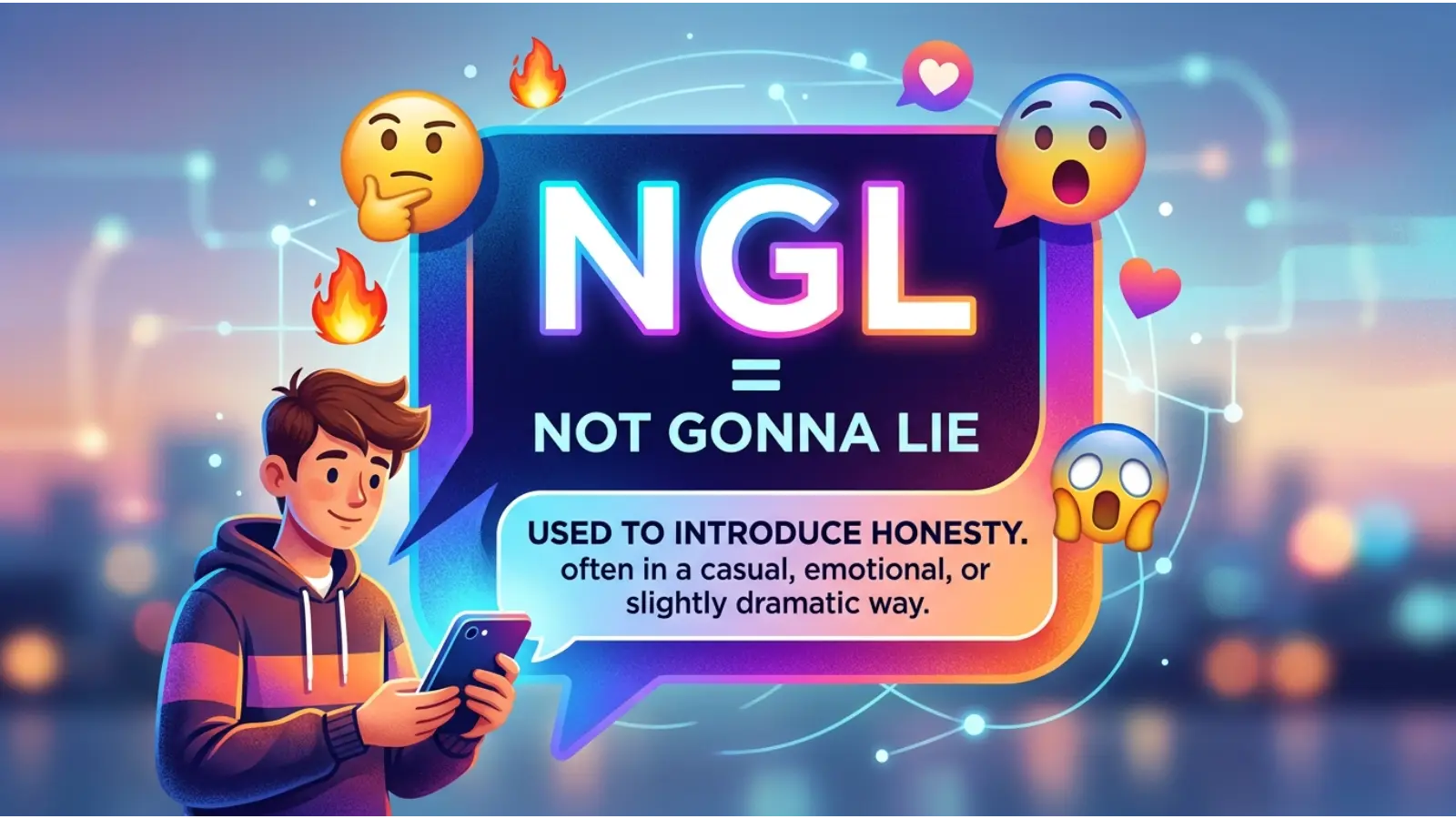
NGL Meaning in Text “not gonna lie” — you’ve probably seen it pop up in a message like:
“ngl that outfit looks amazing on you”
“ngl I didn’t expect that ending 💀”
“ngl you kinda hurt my feelings”
And suddenly… you pause.
Are they being honest? Sarcastic? Flirting? Judging you?
That tiny phrase carries way more emotional weight than it looks. It’s not just words—it’s a signal. A vibe. A moment of truth wrapped in casual texting culture.
People search this because they don’t just want the meaning… they want to understand the intent behind it.
👉 Let’s break it down in a way that actually makes sense.
“not gonna lie” – Quick Definition
“ngl” = “not gonna lie”
It’s used to introduce honesty, often in a casual, emotional, or slightly dramatic way.
It is as Honest Expression
“ngl, I really miss you”
→ raw, emotional truth
It is as Reaction
“ngl that was wild 😳”
→ genuine reaction
It is as Compliment
“ngl you look good today”
→ soft, slightly shy praise
It is as Insult
“ngl that idea is kinda bad”
→ honesty with a risk
It is as Joke
“ngl I thought I was the main character 😂”
→ playful exaggeration
It is as Exposure
“ngl you switched up real quick”
→ calling someone out
It’s as Flirting
“ngl you’re kinda my type 👀”
→ indirect attraction
👉 At its core, ngl signals emotional honesty—but with a social filter.
What Does ngl meaning in text “not gonna lie” Mean in Text?
In texting, ngl works like a warning label for truth.
It prepares the other person for:
- honesty
- vulnerability
- opinion
- confession
It softens the impact of what comes next.
Instead of saying:
“You hurt me”
People say:
“ngl that kinda hurt”
It feels less aggressive, more human.
Origin & Background
“Not gonna lie” existed long before texting. People used it in real conversations to signal honesty.
But the internet changed everything.
- Early forums → casual honesty phrases
- Twitter → short emotional expressions
- TikTok → dramatic storytelling
- Memes → exaggeration + relatability
Suddenly, “ngl” became:
- shorter
- sharper
- more expressive
TikTok especially turned it into a confession starter.
“ngl I used to do this as a kid…”
“ngl this trend is lowkey annoying”
👉 Online language evolves fast—what once sounded formal now feels deeply personal and casual.
👉 Real-Life Conversations
A: “Did you like the party?”
B: “ngl it was kinda boring”
Instagram DM
“ngl your last post hit different 🔥”
TikTok Comments
“ngl this made me emotional”
Text Message
“ngl I thought you forgot about me”
Group Chat
“ngl we all knew this would happen 😂”
Emotional Pattern
Notice something?
People use “ngl” when:
- they want to sound honest
- but not too harsh
- vulnerable, but still protected
It’s honesty… with a cushion.
Emotional & Psychological Meaning
“ngl” is more than slang—it’s emotional strategy.
It helps people:
- express truth safely
- reduce judgment
- appear real and relatable
- balance confidence and vulnerability
Why People Use It
- Emotional Protection
It softens strong feelings - Social Intelligence
It shows awareness of tone - Authenticity Signal
People want to seem “real” - Low-Risk Honesty
Say the truth without sounding aggressive
Mini Story
You text a friend:
“ngl I felt left out yesterday”
That “ngl” changes everything.
Without it → accusation
With it → vulnerability
👉 That’s the deeper psychology behind it.
Usage in Different Contexts
Social Media
“ngl this trend is getting old”
→ opinion + relatability
Friends & Relationships
“ngl I miss hanging out with you”
→ emotional connection
Work or Professional Settings
Avoid it. It feels too casual.
Casual vs Serious Tone
Casual:
“ngl that was funny 😂”
Serious:
“ngl that really affected me”
👉 Same phrase, completely different emotional weight.
When NOT to Use It
Avoid “ngl” in:
- professional emails
- serious arguments
- formal communication
- talking to older audiences unfamiliar with slang
- cross-cultural situations where tone may be misunderstood
Because sometimes, honesty needs clarity—not slang.
👉 Context protects meaning.
Common Misunderstandings
- It always means honesty
Not always—can be sarcastic - It’s rude
No, it depends on tone - It’s always serious
Sometimes it’s playful - It’s unnecessary filler
Actually, it changes emotional tone
Comparison Table
| Expression | Meaning | Tone | Usage Context |
|---|---|---|---|
| NGL | Not gonna lie | Honest, casual | Text, social media |
| TBH | To be honest | Direct, slightly blunt | Opinions |
| FR | For real | Agreement, emphasis | Casual chats |
| IMO | In my opinion | Neutral, logical | Discussions |
| Lowkey | Slightly, secretly | Subtle, emotional | Social media |
👉 “ngl” feels more personal than “IMO” and softer than “TBH”.
Variations & Types
- “ngl tho” → extra emphasis
- “ngl fr” → strong honesty
- “ngl I can’t even lie” → dramatic honesty
- “ngl this ain’t it” → criticism
- “ngl you ate that” → praise
Each version shifts tone slightly—from playful to intense.
How to Respond When Someone Uses It
Casual Replies
“fair enough”
“yeah I get that”
Funny Replies
“ngl you’re not wrong 😂”
Mature Replies
“thanks for being honest”
Respectful Replies
“I appreciate you saying that”
👉 Matching energy matters more than the words.
Regional & Cultural Usage
Western Culture
Very common in daily texting
Asian Culture
Used mostly in online spaces, not real-life conversations
Middle Eastern Culture
Growing through social media influence
Global Internet Usage
Universal among Gen Z
👉 Social media erased borders—slang travels fast.
Generational Differences
Gen Z
Uses it naturally, emotionally
Millennials
Use it occasionally
Older Generations
May not understand it fully
Language = identity.
“ngl” signals you’re part of internet culture.
Is It Safe for Kids
Mostly yes.
But:
- can be used for teasing
- may soften hurtful comments
- kids may not understand emotional nuance
It’s harmless—but context matters.
FAQs
What does ngl mean in texting?
It means “not gonna lie,” used to express honesty or opinion.
Is ngl rude?
No, but tone can make it sound harsh.
Is ngl used for flirting?
Yes—often in a subtle, indirect way.
Why do people say ngl?
To sound honest, relatable, and emotionally aware.
Is ngl popular on TikTok?
Very—especially in storytelling and reactions.
Can I use ngl at work?
Not recommended—it’s too casual.
Conclusion
The phrase ngl meaning in text “not gonna lie” isn’t just slang—it’s a reflection of how people communicate emotions in a digital world.
It shows:
- honesty with softness
- vulnerability with control
- truth with social awareness
In a world where messages are short, “ngl” adds depth.
Because sometimes…
people don’t just want to say the truth—
they want to feel safe saying it.
And that’s exactly what “ngl” does.

I’m Maya Giggles, a writer who lives to make people laugh through clever wordplay and cheerful wit. I find joy in creating puns that bring smiles and brighten dull days. Every line I write is crafted to tickle your funny bone and lift your spirits. Through humor and heart, I love spreading laughter one giggle at a time.