You’re scrolling TikTok… someone comments “bro finally locked in 😤”.
Your friend texts you “I gotta lock in tonight, no distractions.”
And suddenly you’re wondering… is this about motivation? Focus? Pressure? Or something deeper?
The phrase “lock in meaning slang” is everywhere right now—and it doesn’t just mean focus. It carries a whole emotional vibe: discipline, urgency, and sometimes even quiet desperation.
So why are people using it so much? And what are they really trying to say?
Let’s break it down in a way that actually makes sense.
Quick Answer:
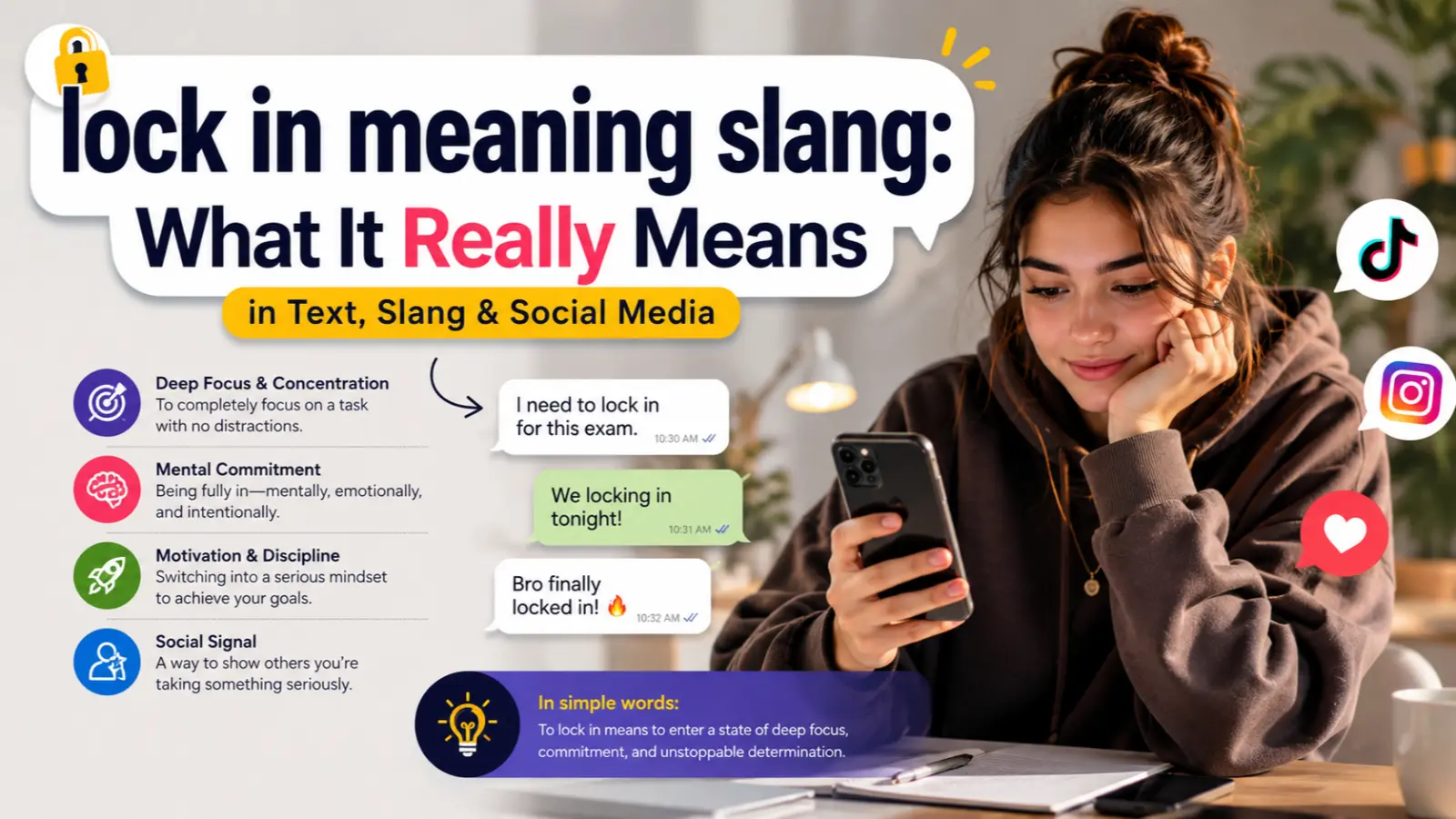
At its core, “lock in” in slang means:
👉 To enter a state of deep focus, concentration, and mental commitment.
But depending on tone and context, it can express different emotional layers:
lock in meaning slang as Focus
When someone says “I need to lock in,” they mean they’re about to get serious and fully concentrate.
Example:
“I’ve been slacking all week… time to lock in.”
lock in meaning slang as Motivation
It can signal a mindset shift—like flipping a switch from lazy to disciplined.
Example:
“New month, new goals. I’m locked in.”
lock in meaning slang as Pressure
Sometimes it reflects stress or urgency.
Example:
“Exams tomorrow… I gotta lock in or I’m done 💀”
lock in meaning slang as Commitment
It can mean someone is mentally all-in on something.
Example:
“He’s locked in with his grind—no distractions.”
lock in meaning slang as Social Signal
Online, it can also mean: “I respect this effort” or “they’re serious now.”
👉 Overall, the emotional core of “lock in” is about mental intensity, discipline, and intentional focus.
What Does lock in meaning slang Mean in Text
In texting, “lock in” usually means:
👉 “I’m focusing now”
👉 “I’m done playing around”
👉 “I’m taking this seriously”
But tone changes everything.
Examples in text:
- “I’ll reply later, I need to lock in.”
- “We locking in tonight or what?”
- “He finally locked in after messing up.”
It can feel:
- Motivational
- Slightly intense
- Sometimes even dramatic (in a funny way)
And honestly? That drama is part of why people love using it.
Origin & Background
“Lock in” didn’t just appear randomly—it evolved from everyday language.
Originally, “lock in” meant:
- To secure something physically
- To commit to a decision
But online culture reshaped it.
It gained momentum through:
- Gaming communities (focus mode, no distractions)
- Sports culture (mental preparation)
- Hustle culture (discipline and grind mindset)
Then came TikTok.
Short videos showing:
- Study routines
- Gym transformations
- Late-night grinding
…all started using “lock in” as a mantra.
And like most internet slang, it spread fast because it felt relatable.
👉 Online language evolves quickly because it reflects how people feel in the moment, not just what words technically mean.
Real-Life Conversations
WhatsApp Chat
“Bro stop scrolling”
“I know 😭 I’m about to lock in fr”
Instagram DM
“You still working on that project?”
“Yeah, I’m locked in rn. Talk later.”
TikTok Comments
“POV: you finally lock in after wasting 3 hours”
Group Chat
“Gym at 6am tomorrow. No excuses.”
“Say less. We locked in 💪”
Text Message
“I’ll call you later. Need to lock in for this test.”
👉 The pattern is clear:
People use “lock in” when shifting from distraction → focus.
It’s almost like announcing a mindset change publicly.
Emotional & Psychological Meaning
“Lock in” isn’t just about focus—it’s about identity.
When someone says it, they’re often signaling:
- “I’m serious now”
- “I care about this”
- “I need control over my time”
It reflects:
- Discipline
- Self-awareness
- A desire to improve
But there’s also a deeper layer.
Sometimes, “lock in” hides:
- Stress
- Fear of failure
- Pressure to succeed
Mini-story:
A friend keeps procrastinating. Jokes around all week. Then suddenly posts:
“Enough. Time to lock in.”
That post isn’t just motivation.
It’s frustration… mixed with hope.
👉 That’s the deeper psychology behind it.
Usage in Different Contexts
Social Media
Used as motivation or public accountability.
“Day 1. Locked in.”
Friends & Relationships
Can be playful or serious.
“Stop texting her and lock in 😭”
Work or Professional Settings
Less common—but used casually.
“I’m locking in for this deadline.”
Casual vs Serious Tone
- Casual: funny, dramatic
- Serious: disciplined, focused
Context changes everything.
When NOT to Use It
Avoid using “lock in” when:
- Talking in formal emails
- During serious emotional conflicts
- Communicating with older audiences unfamiliar with slang
- In professional presentations
It may sound:
- Too casual
- Confusing
- Or even immature
👉 Context protects meaning.
Common Misunderstandings
Misconception 1: It only means focus
No—it also includes emotional commitment.
Misconception 2: It’s always serious
It can be playful or exaggerated.
3: It’s aggressive
Not necessarily—it’s often motivational.
4: It’s rude
Only if used in the wrong tone.
Comparison Table
| Expression | Meaning | Tone | Usage Context |
|---|---|---|---|
| Lock in | Deep focus & commitment | Intense / Motivational | Study, work, goals |
| Focus up | Pay attention | Direct | Casual reminders |
| Locked in | Already focused | Confident | Self-expression |
| Grind mode | Working hard | Hustle vibe | Fitness/work |
| Dialed in | Fully prepared | Calm confidence | Sports/work |
👉 “Lock in” feels more emotional and urgent compared to others.
Variations & Types
- Locked in – Already focused
- Locking in – Currently focusing
- Time to lock in – Motivational trigger
- Locked in fr – Emphasized seriousness
- “Lock in or fail” memes – Dramatic humor
Each variation shifts tone slightly—from serious to funny.
How to Respond When Someone Uses It
Casual Replies
“Alright, go crazy 🔥”
Funny Replies
“Bro acting like a main character 😭”
Mature Replies
“Good. Stay consistent.”
Respectful Replies
“Hope it goes well. You got this.”
👉 Matching energy matters socially.
Regional & Cultural Usage
Western Culture
Strong in hustle, gym, and productivity culture.
Asian Culture
Often tied to study discipline and exams.
Middle Eastern Culture
Used in youth slang, especially online.
Global Internet Usage
TikTok and memes made it universal.
Different cultures interpret it slightly differently—but the core idea stays the same.
Generational Differences
Gen Z
Uses it constantly. Emotional + humorous.
Millennials
Understand it but use it less.
Older Generations
May find it confusing or unnecessary.
Language reflects identity—and Gen Z loves expressive slang.
Is It Safe for Kids
Mostly yes.
But:
- It can create pressure to “always be productive”
- Can turn into self-criticism if overused
Healthy use = motivation
Unhealthy use = stress
Balance matters.
FAQs
What does “lock in” mean in slang?
It means entering a state of deep focus and commitment.
Is “lock in” rude?
No, it’s usually motivational or neutral.
What does “locked in” mean in text?
It means someone is already focused or committed.
Why do people say “lock in” on TikTok?
To show discipline, effort, or mindset shifts.
Can I use “lock in” at work?
Only in casual conversations—not formal settings.
Do all generations understand it?
Mostly younger people, older audiences may not.
Conclusion
The phrase “lock in meaning slang” goes beyond just “focus.”
It represents a moment, a decision ,to take control, get serious, and show up fully.
In today’s fast, distracted world, saying “lock in” is almost like making a promise to yourself.
It’s not just about concentration.
It’s about intention.
And maybe that’s why it hits so hard.
👉 Because sometimes, all it takes is one moment… to finally lock in.

I’m Grace Punston, a playful writer with a passion for clever puns and joyful wordplay. I love crafting witty lines that make readers grin and giggle. My goal is to spread laughter through smart, lighthearted writing. Every pun I share is a little spark of fun meant to brighten your day.