You’re scrolling through your messages late at night, half-awake, and someone texts:
“that movie was boring asf”
“bro I’m tired asf rn”
“she cute asf 😭”
You pause for a second.
Wait… what does “asf” even mean here? Is it serious? It rude? Is it just hype?
If you’ve ever searched “asf meaning in text”, you’re not alone. This tiny three-letter slang shows up everywhere ,TikTok, Instagram, WhatsApp ,and somehow carries a lot of emotional weight.
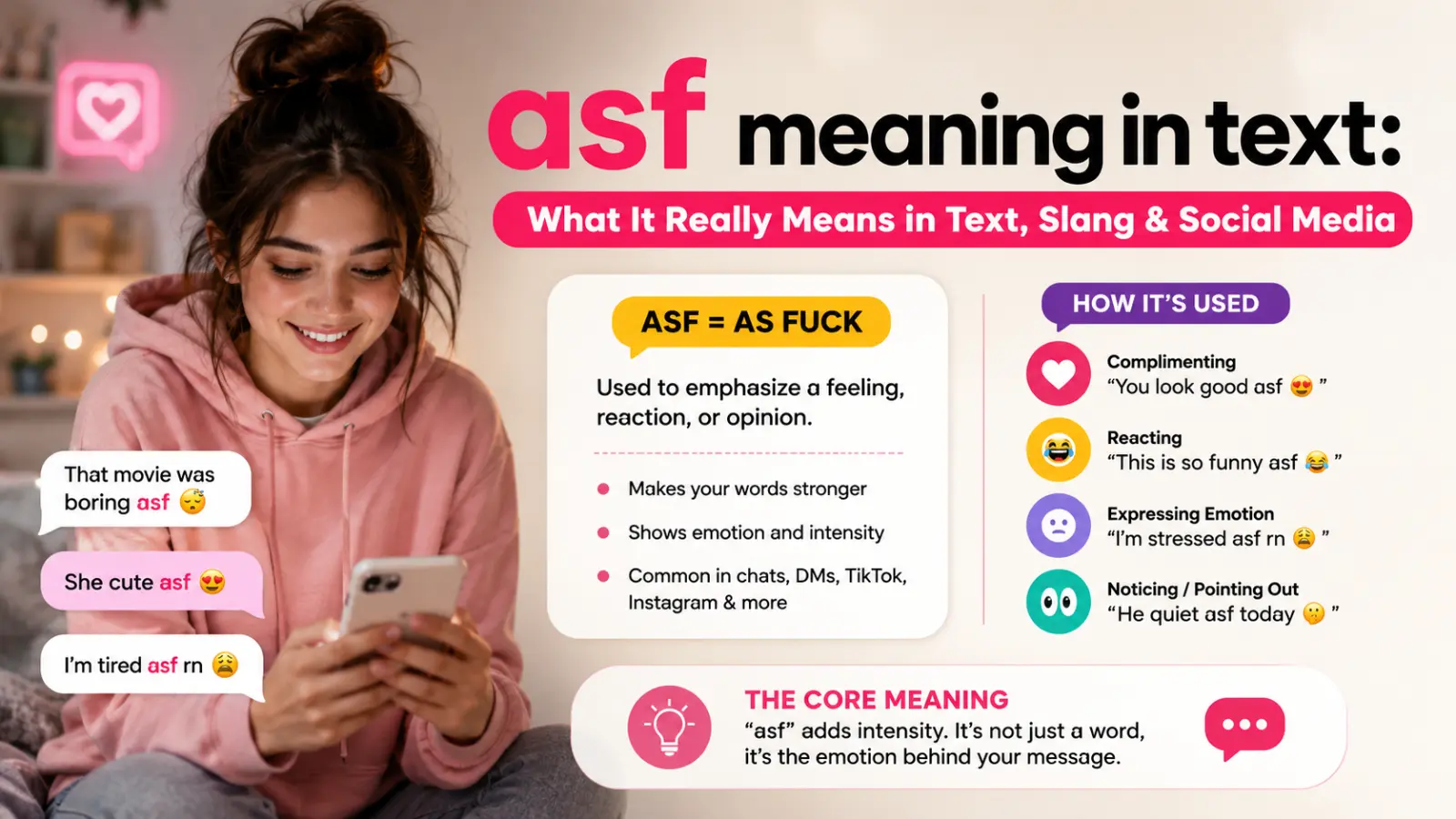
👉 At its core, “asf” means “as fuck” , but the way people use it? That’s where things get interesting.
Let’s break it down in a way that actually makes sense.
Quick Answer:
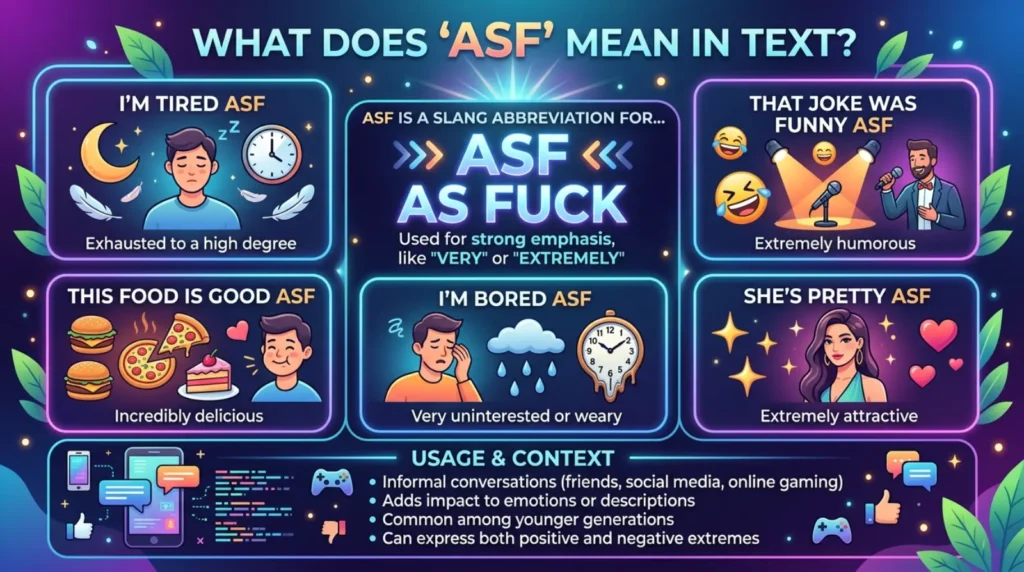
“asf” = “as fuck”
It’s used to intensify a feeling, reaction, or opinion.
Think of it like turning the volume all the way up.
But here’s the key: it’s not just about emphasis, it’s about emotion.
Depending on the situation, “asf” can mean:
- Noticing → “he quiet asf” (you’re observing something)
- Reacting → “this funny asf” (strong reaction)
- Complimenting → “she pretty asf” (intense admiration)
- Insulting → “that dumb asf” (harsh judgment)
- Joking → exaggerated for humor
- Flirting → “you cute asf 👀”
- Expressing emotion → “I’m stressed asf”
Simple examples:
- “I’m hungry asf” → extremely hungry
- “This song good asf” → really love it
- “He weird asf” → strong negative opinion
👉 Core emotional meaning:
“asf” = I feel this strongly, and I want you to feel it too.
what does asf meaning in text
When people use “asf” in text, they’re not just describing something—they’re amplifying their emotion.
It replaces longer expressions like:
- “very”
- “extremely”
- “so much”
But unlike those words, “asf” feels:
- more raw
- more real
- more internet-native
Example:
- “I’m tired” → neutral
- “I’m tired asf” → emotionally loaded
It’s not just information—it’s energy.
Origin & Background
“Asf” comes directly from the phrase “as fuck”, which has existed in spoken English for decades as an intensifier.
But the abbreviation?
That’s pure internet culture.
It started gaining traction through:
- texting culture (shortening everything)
- Twitter character limits
- meme culture
- Gen Z communication style
Then came TikTok, where exaggeration is everything.
People started saying things like:
- “this awkward asf 💀”
- “I look ugly asf today”
And suddenly, “asf” became part of everyday digital language.
👉 One important insight:
Online language evolves fast because people don’t just communicate—they perform emotions.
“Asf” fits perfectly into that.
Real-Life Conversations
Let’s look at how this actually shows up:
WhatsApp Chat:
- A: “bro exam kal hai 😭”
- B: “I’m not ready asf”
Instagram DM:
- “you looked good asf in that pic 👀”
TikTok Comment:
- “this relatable asf 💀”
Group Chat:
- “he lying asf don’t believe him”
Text Message:
- “I miss you asf”
Now notice the pattern…
👉 “asf” always adds emotional intensity.
It turns normal sentences into something more expressive, more human.
Emotional & Psychological Meaning
Here’s where it gets deeper.
Using “asf” signals something about you.
It shows:
- emotional openness → you’re not hiding how you feel
- confidence → you’re comfortable being direct
- humor awareness → exaggeration = relatability
- social intelligence → you understand internet tone
But sometimes, it also reflects:
- insecurity (“I look bad asf today”)
- vulnerability (“I miss you asf”)
- subtle flirting (“you fine asf”)
A quick real-life moment
Imagine you’re texting someone you like.
You could say:
- “you look nice”
Or:
- “you look good asf”
The second one hits differently.
It feels:
- more genuine
- more emotional
- more real
👉 That’s the deeper psychology behind it.
Usage in Different Contexts
Social Media
On TikTok, Instagram, Snapchat:
- used for exaggeration
- boosts relatability
- often paired with emojis
Example:
“this awkward asf 💀”
Friends & Relationships
More casual, expressive:
- “you funny asf”
- “I’m bored asf”
Used for bonding and emotional honesty.
Work or Professional Settings
Not appropriate.
Saying:
“this meeting long asf”
…is a quick way to look unprofessional.
Casual vs Serious Tone
- Casual → funny, light, relatable
- Serious → emotional, intense
Example:
“I’m tired asf” → casual
“I miss you asf” → emotional
Context changes everything.
When NOT to Use It
Avoid “asf” in:
- formal emails
- job interviews
- academic writing
- serious arguments
- talking to older or unfamiliar audiences
It can come off as:
- disrespectful
- immature
- confusing
👉 Context protects meaning.
Common Misunderstandings
1. “It’s always rude”
Not true. It depends on tone.
2. “It literally means something offensive”
Technically yes, but most users don’t think about it that way anymore.
3. “It’s only negative”
No—it’s used for compliments a lot.
4. “It’s always serious”
Often it’s just exaggeration for humor.
Comparison Table
| Expression | Meaning | Tone | Usage Context |
|---|---|---|---|
| asf | extremely / very | emotional, raw | casual chats, social media |
| very | standard emphasis | neutral | formal + informal |
| so | emotional emphasis | soft, expressive | texting, speech |
| hella | very (slang) | playful | regional slang |
| mad (slang) | very | hype, urban tone | casual speech |
👉 “asf” feels the most intense and unfiltered among them.
Variations & Types
You’ll see different versions like:
- “funny asffff” → exaggerated humor
- “tired asf rn” → real-time feeling
- “ugly asf 😭” → self-deprecating
- “fine asf 👀” → flirting
- “dead asf 💀” → meme exaggeration
Each variation changes tone slightly:
- more letters = more emotion
- emojis = clearer intent
How to Respond When Someone Uses It
Casual Replies
- “same 😭”
- “fr asf”
Funny Replies
- “why you always dramatic asf 💀”
- “relatable asf not gonna lie”
Mature Replies
- “yeah I get that”
- “sounds like you’re really feeling it”
Respectful Replies
- “I understand”
- “that makes sense”
👉 Matching energy matters. If someone is expressive, respond with similar tone.
Regional & Cultural Usage
Western Culture
Very common. Especially among Gen Z.
Asian Culture
Used mostly in English-speaking online spaces.
Middle Eastern Culture
Growing through TikTok and Instagram usage.
Global Internet Usage
Now worldwide due to:
- memes
- influencers
- viral content
👉 Social media has erased language borders.
Generational Differences
Gen Z
- uses “asf” naturally
- part of daily language
Millennials
- understand it
- use it selectively
Older Generations
- may find it confusing or inappropriate
👉 Language reflects identity—and Gen Z prefers emotional, expressive communication.
Is It Safe for Kids
Mostly harmless—but depends on context.
Pros:
- expressive
- relatable
- socially engaging
Risks:
- can sound inappropriate
- may normalize casual profanity
- tone can be misunderstood
Balance is key.
FAQs
1. What does asf mean in text?
It means “as fuck,” used to strongly emphasize a feeling or opinion.
2. Is “asf” rude?
Not always. It depends on tone and context.
3. Can I use asf in texting?
Yes, in casual conversations—but not in formal situations.
4. What does asf mean on TikTok?
Same meaning, but often used for humor, exaggeration, and relatability.
5. Is asf used for flirting?
Yes. “you cute asf” is a common flirty line.
6. Can I use asf at work?
No—it’s too informal and may seem unprofessional.
Conclusion
Understanding “asf meaning in text” isn’t just about translation—it’s about emotion.
👉 “asf” = “as fuck”
But more importantly, it means:
“I feel this strongly, and I want you to feel it too.”
It’s part of a bigger shift in how we communicate online:
- shorter words
- stronger emotions
- deeper relatability
Modern slang like this isn’t random—it reflects how people connect, joke, flirt, and express themselves in real time.
And honestly?
Sometimes, one tiny word like “asf” says more than a whole paragraph ever could.

I’m Grace Punston, a playful writer with a passion for clever puns and joyful wordplay. I love crafting witty lines that make readers grin and giggle. My goal is to spread laughter through smart, lighthearted writing. Every pun I share is a little spark of fun meant to brighten your day.