DW meaning in text is one of those internet abbreviations you’ve probably seen in a WhatsApp message, Instagram DM, or TikTok comment section and wondered, “Wait… what does DW mean here?”
Imagine these conversations:
Friend: “Sorry I’m running 10 minutes late.”
You: “DW 😊”
Or:
Husband: “DW made my favorite dinner tonight.”
Or even:
Fan: “Can’t wait for the new DW episode!”
The same two letters suddenly have completely different meanings depending on who’s talking.
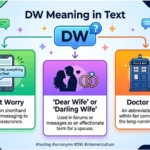
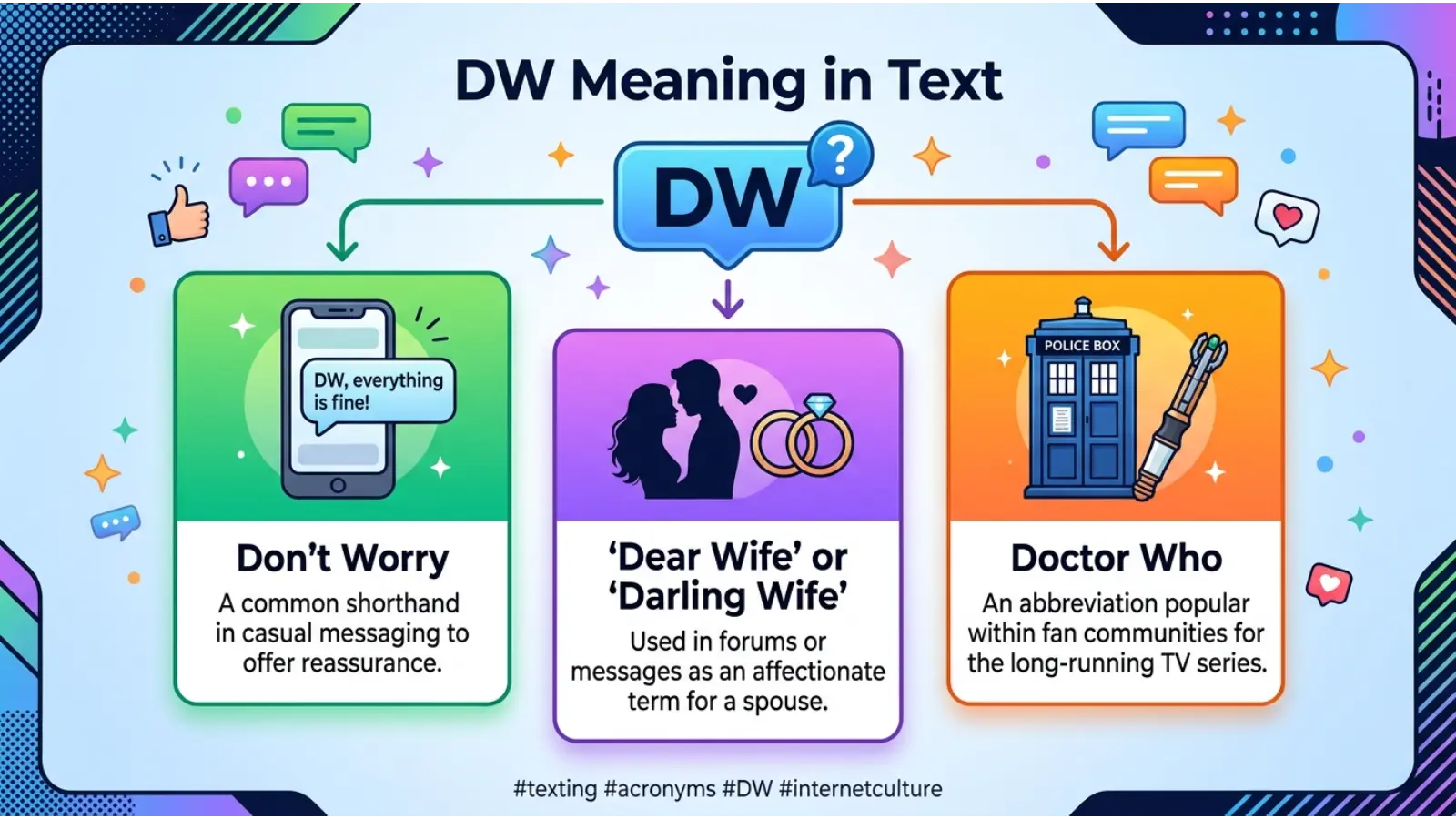
That’s exactly why so many people search for DW meaning in text. Sometimes it means “Don’t Worry,” other times it’s short for “Dear Wife” or “Darling Wife,” and in certain fan communities, DW refers to the legendary TV series Doctor Who.
Internet slang isn’t just about saving time—it’s also about expressing emotion, relationships, identity, and shared culture in only a few characters.
Let’s break it down in a way that actually makes sense.
DW Meaning in Text – Quick Definition
The most common meaning of DW in texting is:
DW = Don’t Worry
It’s a quick way to comfort, reassure, or reduce someone’s stress.
However, depending on the conversation, DW can also mean:
- Don’t Worry (most common)
- Dear Wife
- Darling Wife
- Doctor Who
The emotional meaning changes with context.
For example:
- DW, everything is fine. → Reassuring
- My DW surprised me today. → Talking about a spouse
- DW Season 15 was amazing! → Referring to Doctor Who
At its heart, DW is usually about making communication faster while still expressing emotion or shared understanding.
DW Means “Don’t Worry”
This is by far the most popular meaning online.
People use DW when they want someone to relax.
Examples:
- DW, I already finished it.
- DW about the bill.
- DW, you’ll do great.
- DW, mistakes happen.
Emotionally, this phrase tells someone:
“You’re safe. Everything’s okay.”
Instead of typing an entire comforting sentence, two letters instantly reduce tension.
DW Means “Dear Wife”
In relationship conversations and parenting forums, DW often means Dear Wife.
Examples:
- My DW loves traveling.
- Going shopping with my DW.
- DW picked up the kids today.
This abbreviation became popular on parenting websites and family discussion boards.
Here, DW reflects affection rather than reassurance.
DW Means “Darling Wife”
Some couples use DW as Darling Wife, making it slightly more romantic.
Example:
- My DW always supports me.
The emotional tone is warmer than simply saying “wife.”
It’s often used when expressing appreciation.
DW Means “Doctor Who”
Among TV fans, DW usually stands for Doctor Who.
Examples:
- Have you watched the latest DW episode?
- DW has one of the best sci-fi stories ever.
Inside fandoms, abbreviations help communities communicate quickly.
Context makes this meaning obvious.
What Does DW Mean in Text?
In everyday texting, DW almost always means Don’t Worry.
It reassures someone that:
- everything is okay
- mistakes aren’t a big deal
- stress isn’t necessary
- the situation is under control
Rather than sounding cold, DW often feels friendly because it’s short, casual, and comforting.
Think of it as a digital version of someone smiling and saying,
“Relax—I got this.”
Origin & Background
The abbreviation DW became popular during the early years of SMS texting when people had limited characters.
People naturally shortened common phrases.
Instead of typing:
“Don’t worry about it.”
they simply wrote:
“DW.”
As messaging apps grew—from MSN Messenger to Facebook Messenger, WhatsApp, Snapchat, Discord, and TikTok—the abbreviation spread across nearly every online platform.
Relationship communities later adopted DW for Dear Wife, while entertainment fans used it for Doctor Who.
TikTok accelerated this trend because short captions and comments reward quick communication.
Internet language constantly evolves.
Today’s slang often begins inside a niche community before becoming global within months.
That’s the fascinating reality of online communication.
Real-Life Conversations
A: Sorry I forgot your charger.
B: DW, I already borrowed one.
Instagram DM
Friend: I think I embarrassed myself.
You: DW 😂 Nobody noticed.
TikTok Comments
User 1: I can’t stop watching this.
User 2: DW, none of us can.
Text Messages
Mom: Did you eat?
Son: DW, I already had dinner.
Group Chat
Friend: I accidentally sent the wrong meme.
Everyone: DW 😂
Across these conversations, the emotional pattern stays consistent.
DW reduces anxiety, lightens awkward situations, and keeps conversations moving naturally.
The Emotional & Psychological Meaning
When someone types DW, they’re usually doing much more than shortening words.
They’re protecting someone’s emotions.
Instead of allowing embarrassment or guilt to grow, they quickly offer reassurance.
That tiny abbreviation can communicate:
- empathy
- patience
- confidence
- emotional safety
Imagine missing an important meeting.
You apologize repeatedly.
Your coworker simply replies:
“DW—we already handled it.”
Instantly your stress drops.
That’s emotional intelligence in digital communication.
Similarly, friends use DW to avoid making situations feel dramatic.
Even in dating, saying “DW ❤️” often sounds warmer than writing a long explanation.
The abbreviation creates emotional efficiency.
That’s the deeper psychology behind it.
Usage in Different Contexts
Social Media
On TikTok, Instagram, and X, DW usually means Don’t Worry.
Example:
DW, everyone failed this trend first.
Friends & Relationships
Friends use DW constantly.
Example:
DW, we’ll figure it out together.
Partners may also use DW as Dear Wife.
Work or Professional Settings
In casual workplace chats:
DW, I’ll finish the report.
However, professional emails usually avoid abbreviations.
Casual vs Serious Tone
Casual:
DW 😂
Serious:
DW. I’m here if you need help.
Adding emojis completely changes the emotional tone.
When NOT to Use It
Avoid using DW in:
- formal emails
- job applications
- legal communication
- customer service responses
- conversations with people unfamiliar with texting slang
- emotionally sensitive situations requiring detailed reassurance
Some older audiences may misunderstand it completely.
Cross-cultural communication may also create confusion.
Context protects meaning.
Common Misunderstandings
Many people assume DW always means one thing.
That’s incorrect.
Common misconceptions include:
“DW only means Don’t Worry.”
Not true—it can also mean Dear Wife, Darling Wife, or Doctor Who.
“DW sounds rude.”
Actually, it’s usually comforting.
“It’s always sarcastic.”
Only if the conversation suggests sarcasm.
“Everyone knows what DW means.”
Many people still don’t, especially outside internet culture.
Comparison Table
| Expression | Meaning | Tone | Usage Context |
|---|---|---|---|
| DW | Don’t Worry | Reassuring | Texting, chats |
| NVM | Never Mind | Neutral | Ending conversations |
| IDC | I Don’t Care | Indifferent | Casual chats |
| TBH | To Be Honest | Honest | Opinions |
| FYI | For Your Information | Informative | Work and texting |
| BRB | Be Right Back | Temporary | Live chats |
Although these abbreviations save time, DW stands out because it often carries emotional reassurance rather than simply sharing information.
Variations & Types
Internet users love adapting abbreviations.
Common variations include:
- DW!!
- Dwww
- DW 😂
- DW bro
- DW girl
- DW ❤️
- dw (lowercase)
- DW fr
- DW, I got you.
Each version changes emotional intensity.
Adding emojis often makes it feel warmer.
Using all caps may emphasize urgency.
How to Respond When Someone Uses It
Casual Replies
- Thanks!
- Okay!
- Appreciate it.
- Sounds good.
Funny Replies
- You saved my day 😂
- You’re the real MVP.
- Crisis officially canceled.
Mature Replies
- Thank you for understanding.
- I really appreciate your support.
- That means a lot.
Respectful Replies
- Thanks for reassuring me.
- I’ll keep that in mind.
- I appreciate your patience.
Matching someone’s emotional energy helps conversations feel more genuine.
Regional & Cultural Usage
Western Culture
DW is widely understood as Don’t Worry in texting.
Asian Culture
Young internet users recognize it through global social media, although local abbreviations are still common.
Middle Eastern Culture
English-speaking online communities frequently use DW alongside Arabic texting.
Global Internet Usage
Platforms like TikTok, Discord, Instagram, Reddit, and WhatsApp have made DW internationally recognizable.
Social media continues breaking language barriers faster than ever.
Generational Differences
Gen Z
Uses DW naturally every day.
Often paired with emojis and memes.
Millennials
Comfortable using DW in texting but may switch to full phrases professionally.
Older Generations
Some recognize it, while others prefer writing “Don’t worry” completely.
Language reflects identity, and every generation shapes internet communication differently.
Is It Safe for Kids?
Yes.
The most common meaning—Don’t Worry—is completely harmless.
However, children should still understand context because:
- abbreviations can have multiple meanings
- sarcasm may confuse younger users
- online communities sometimes use slang differently
Teaching kids context is more valuable than simply teaching abbreviations.
FAQs
What does DW mean in text?
It most commonly means Don’t Worry, although it can also mean Dear Wife, Darling Wife, or Doctor Who depending on context.
Is DW rude?
No. It’s generally used to reassure someone and create a relaxed atmosphere.
Why do people use DW instead of “Don’t Worry”?
It’s quicker, feels casual, and matches modern texting habits.
What does DW mean on TikTok?
On TikTok, it almost always means Don’t Worry, especially in comments and captions.
Do Gen Z use DW often?
Yes. Gen Z regularly uses DW in texting, gaming, and social media conversations.
Can I use DW at work?
Only in informal chats with coworkers. Avoid it in formal emails or professional documents.
Conclusion
Understanding DW meaning in text helps you communicate more confidently across today’s digital world. If it stands for “Don’t Worry,” “Dear Wife,” “Darling Wife,” or “Doctor Who,” the correct interpretation always depends on context.
Modern internet language isn’t just about typing faster. It’s about expressing reassurance, affection, identity, and shared culture in the smallest possible space.
The next time someone sends you DW, you’ll know they’re probably saying “Don’t Worry“—or referring to someone or something meaningful in their own community.
In the ever-changing language of the internet, sometimes two simple letters can carry far more emotion than an entire sentence.

I’m Lila Wordsmith, a writer who finds magic in clever wordplay and heartfelt expressions. I love crafting puns, wishes, and quotes that make people feel connected and inspired. Every line I write is designed to bring a smile or spark a thought. Through my words, I hope to turn simple moments into something truly memorable.